Finding Meaningful Work in a Life Coaching Career

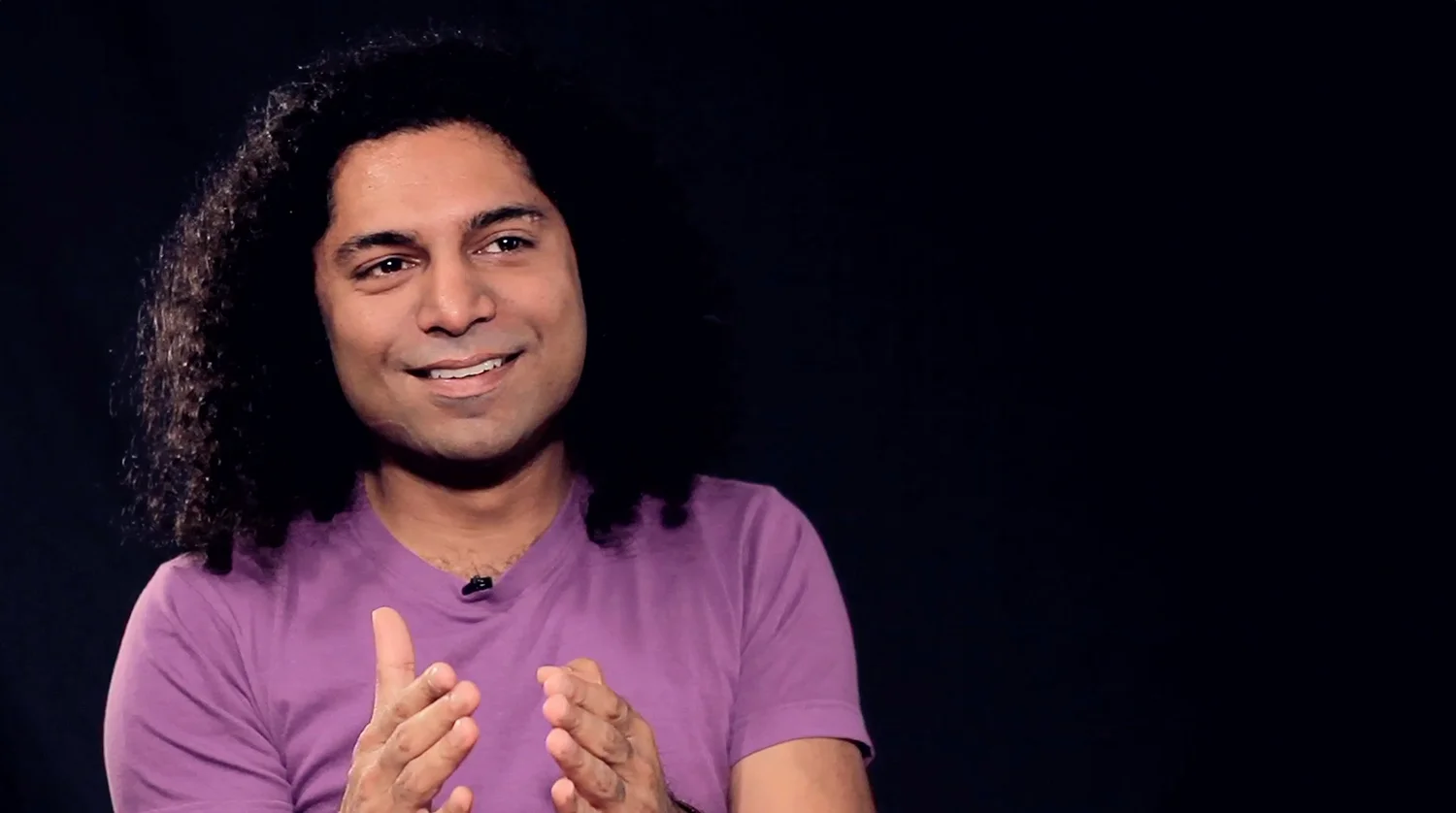
In Chapter 6 of 15 in his 2012 Capture Your Flag interview, business and personal coach Garren Katz answers "What Makes Your Work Meaningful?"  Katz finds the selflessness serving others as a career and life coach more rewarding than anything he has ever done.  Training and experience help him to bring out energy, competence and confidence in his clients and work with them to find new jobs and accomplish life goals. 

Garren Katz is a business and personal coach based in State College, PA and advises his national client base on small business management, entrepreneurship, relationships, and personal finances.  He is also an active angel investor in several business ventures.  He earned his BA from Western Michigan University. 

Garren Katz on Why Travel to Distant and Unfamiliar Places

In Chapter 7 of 15 in his 2012 Capture Your Flag interview, business and personal coach Garren Katz answers "What Have You Found Most Rewarding About Traveling to New Places?"  Traveling to distant and unfamiliar places teaches Katz about people.  He finds this is something he is unable to get by watching TV or movies - being present in a foreign place connects him not only to people he meets but also to humanity in general. 

Garren Katz is a business and personal coach based in State College, PA and advises his national client base on small business management, entrepreneurship, relationships, and personal finances.  He is also an active angel investor in several business ventures.  He earned his BA from Western Michigan University. 

Garren Katz on How Personal Priorities Change With Age

In Chapter 8 of 15 in his 2012 Capture Your Flag interview, business and personal coach Garren Katz answers "How Are Your Personal Priorities Changing as You Get Older?"  Katz notes how getting older influences his decision to more often choose what is healthier over what is fun.  This ties into his increasing focus on physical health, mental health, and spirituality. 

Garren Katz is a business and personal coach based in State College, PA and advises his national client base on small business management, entrepreneurship, relationships, and personal finances.  He is also an active angel investor in several business ventures.  He earned his BA from Western Michigan University. 

Garren Katz on How Family Relationships Change With Age

In Chapter 9 of 15 in his 2012 Capture Your Flag interview, business and personal coach Garren Katz answers "How Are Your Family Relationships Changing As You Get Older?"  Katz is an only child that comes from a small family.  He notes how in his 20s his family was the centerpiece for holiday travel.  As Katz gets engaged, gets married and thinks about starting a family, he sees how he and the family he and his wife create will become more the centerpiece for family gatherings. 

Garren Katz is a business and personal coach based in State College, PA and advises his national client base on small business management, entrepreneurship, relationships, and personal finances.  He is also an active angel investor in several business ventures.  He earned his BA from Western Michigan University. 

Garren Katz on Helping Cancer Survivors Achieve Life Goals

In Chapter 10 of 15 in his 2012 Capture Your Flag interview, business and personal coach Garren Katz answers "Where Can Cancer Survivors Benefit From Life Coaching?"  After coaching multiple clients and also helping friends and family through cancer, Katz finds cancer survivors do not lack passion; rather, they often lack focus.  As a coach, Katz works with cancer survivors on defining where they want to direct their energy and putting a plan in place to achieve those goals. 

Garren Katz is a business and personal coach based in State College, PA and advises his national client base on small business management, entrepreneurship, relationships, and personal finances.  He is also an active angel investor in several business ventures.  He earned his BA from Western Michigan University. 

Garren Katz on How Life Coaching Goals Change With Experience

In Chapter 11 of 15 in his 2012 Capture Your Flag interview, business and personal coach Garren Katz answers "How Are Your Coaching Aspirations Changing as Your Experience Grows?"  Katz finds reward building on his 1-to-1 coaching and looking for group coaching, from working with couples to working with business units.  He finds the collective energy a powerful complement to the intimacy he receives in a 1-to-1 relationship. 

Garren Katz is a business and personal coach based in State College, PA and advises his national client base on small business management, entrepreneurship, relationships, and personal finances.  He is also an active angel investor in several business ventures.  He earned his BA from Western Michigan University. 

How to Stop Being Busy and Better Manage Time Commitments

In Chapter 12 of 15 in his 2012 Capture Your Flag interview, business and personal coach Garren Katz answers "How Are You Learning to Better Manage Your Time and Commitments?"  Katz shares how he has worked to change his behavior over time.  He finds himself in an "always busy" mode focused on minutiae and avoiding what was important.  He learns to clear out the busy work and focus on priorities that provide the greatest benefit for his energy. 

Garren Katz is a business and personal coach based in State College, PA and advises his national client base on small business management, entrepreneurship, relationships, and personal finances.  He is also an active angel investor in several business ventures.  He earned his BA from Western Michigan University. 

Transcript: 

Erik Michielsen: How are you learning to better manage your time and commitments? 

Garren Katz: That’s making the assumption that I am learning to manage my time and commitments better. I would say I used to make myself extremely busy, which I never realized what I was, in essence, doing, was doing a fantastic job of avoiding, avoiding what truly is important, or what I deem is important, the priority that I’ve made it. When you clear out the busy-ness and it’s amazing when you actually look at how you spend your time or when I would look—speaking specifically for myself, how I would spend my time, a great deal of my time was spent working on things that really weren’t significant, just busy work, you know, the difference between, you know, being in action and being active. I’m more focused now on what my priorities are and that’s made making time commitments actually much easier because I’m taking on less. 

Erik Michielsen: And what were those priorities before and what are those priorities now?

Garren Katz: The priorities before were, you know, the squeaky hinge, whatever happened to be in front of me, that’s what I would take on, or whatever popped into my head. Now, taking a moment and pausing, and really thinking: what is the benefit of this action? Is this necessary? Could my time be better spent dedicated to something else? Whether it’s a 5-minute project or a week-long activity, where would I benefit the most—where would my partner and I benefit the most? Where should my energy go? That’s how—that’s the decision making process I go through now— not always, of course, but that’s what I go through now whereas before it was whatever the flavor of the week was, whatever the flavor of the moment was, chasing as opposed to really having a focus.

Garren Katz on Using Rewards to Achieve Personal Finance Goals

In Chapter 13 of 15 in his 2012 Capture Your Flag interview, business and personal coach Garren Katz answers "How Do You Set Personal Finance Goals?"  Katz talks about how he sends small amounts of money to his investments by playing games.  In short, he tries to match his spending on travel, restaurants, etc. with equal amounts to his investments.  He finds playing the game emotionally rewarding and also highly effective reaching his goals. 

Garren Katz is a business and personal coach based in State College, PA and advises his national client base on small business management, entrepreneurship, relationships, and personal finances.  He is also an active angel investor in several business ventures.  He earned his BA from Western Michigan University. 

Transcript: 

Erik Michielsen How do you set personal finance goals?

Garren Katz: I don’t necessarily like sending big chunks of money off to my investments. To me, emotionally, it feels like it just kind of disappears into my investments, so for me, I’ll play a game where say for every trip that I plan for a year, whatever the trip cost, I will put—I will send an equal amount off to my investment. So, if India was a $2500-trip, let’s say, I will send $2500 off to the investment, and so in essence, emotionally, it feels like I’ve taken a $5000-trip. I’m having the experience, I make a connection to that great experience with the $5000 and so sending that money off, it feels different emotionally, it works well for me.

Or even a purchase, even smaller things, you know. Anytime I go out to dinner, whatever the meal cost, I will send an equal amount to my investments, and in this day and age obviously with—it’s so easy to do, it’s not hard at all to hop online and send off $75, so that might not seem, you know, significant to someone, but I go out to dinner a lot so, you know, it adds up and all of a sudden it’s—it can be 3, 4, $500 a month that wouldn’t have happened otherwise, and so that’s a game I like to play. I like to connect something like investing to something that I can enjoy in the moment and meld them together. So it feels I’m excited to invest. I’m not looking out on that time horizon of 20 or 30 years before I’m going to reap those benefits. To me, it’s—I get that satisfaction, that reward instantly because, in essence, I’m playing a game with myself.

Garren Katz: Why to Invest Savings in Friends and Not Stocks

In Chapter 14 of 15 in his 2012 Capture Your Flag interview, business and personal coach Garren Katz answers "How Has Being Open to New Opportunities Shaped Your Investing Experience?"  Katz shares his progression from traditional investing - Roth IRA, SEP IRA, securities - in his 20s to investing in friends in his 30s.  He notes how more and more of his friends have been starting businesses and why he is choosing more and more to invest in these people rather than those traditional outlets. 

Garren Katz is a business and personal coach based in State College, PA and advises his national client base on small business management, entrepreneurship, relationships, and personal finances.  He is also an active angel investor in several business ventures.  He earned his BA from Western Michigan University. 

Transcript: 

Erik Michielsen: How has being open to new opportunities shaped your investing experience?

Garren Katz: Wow, I would say when I was in my 20s, I invested very traditionally, Roth IRA, SEP-IRA, in securities and that type of thing. You know, we live in a time now where more than likely somebody you know, or a buddy or a friend or a family member, they’re up to something. And they’re up to a neat idea. And they probably could use some money to help them along.  

So I’ve really shifted some of my money that goes towards investments into a pool where I want to invest in people, especially friends, folks you know. It’s so much more rewarding on so many different levels, if I invest in a stock and that stock does well, that feeds my ego a bit, and it’s kind of a one-dimensional satisfaction, whereas putting money into a project that a friend’s working on is rewarding on a multitude of levels, and honestly, I would have to say I get more satisfaction out of investing in a friend or a friend’s project that might not float than I do out of a successful stock transaction because it’s—it creates a new element to our relationship. So I really, really enjoy investing in other people’s passions, what other people are up to, what other people are taking on, I love being a part of it.

Garren Katz on How to Get Started Investing in Small Business Ideas

In Chapter 15 of 15 in his 2012 Capture Your Flag interview, business and personal coach Garren Katz answers "How Are You Learning to Make Better Investment Decisions?"  Katz notes it is as much or more related to the growing abilities of those he invests in as it is his own skills.  He learns from experiences investing in others and benefits from the relationships he builds over time by investing in others' ideas.  He mentions the importance of approachability in investing, i.e. it does not take much money to help someone move an idea toward actualization.  Katz finds joy learning about others' ideas and offering to fund those investments.  He notes many ideas take a relatively small amount of money to support an idea and turn it into a business.  Katz sets an intention to tangibly support what others do while also looking for monetary gain. 

Garren Katz is a business and personal coach based in State College, PA and advises his national client base on small business management, entrepreneurship, relationships, and personal finances.  He is also an active angel investor in several business ventures.  He earned his BA from Western Michigan University. 

Transcript: 

Erik Michielsen: How are you learning to make better investment decisions?

Garren Katz: I don’t necessarily know that I’m getting better in my investment decisions, I would say that the folks I invest in are getting better at executing on what they’re taking on. My investment decisions are working out more often than not but I wouldn’t say that’s directly related to my process, I’d say it’s more very fortunate to know folks that are up to some really, really neat things. An example would be investing in—I love to invest in ideas and they’re sitting all around us all the time, and so I actually had dinner with a friend of mine a couple of weeks ago and he was—he’s got what I think is a fantastic idea, I think it fits his personality perfectly, and I simply asked him. I said, boy, I said, I think you have a fantastic idea, I’d love to—if the opportunity presents itself, I would love to invest.

And it doesn’t have to be on a significant level, I think so many folks have this idea that if you’re going to invest, you have to have a tremendous amount of money. Well, there’s a lot of smaller projects out there. There’s a lot of little ideas that have the potential to be big, so a relatively small amount of money can get you into a place where you’re supporting that idea and I think that’s important to think about is what is your intention with an investment? You know, my intention—sure, on the backend, it’d be neat if it makes me some money, but my intention is truly to tangibly support what that person is up to. And I set that intention inside of myself at this point with any investment that I make, and that’s not a feeling I get when I buy a stock or something like that. I can only—At least for me, I’ve only been able to find that or have that feeling that my intention is support when I’m supporting a person or a small organization and what they’re up to.

Stacie Bloom on Finding a New Job in Neuroscience Education

In Chapter 1 of 18 in her 2012 Capture Your Flag interview, Neuroscience Institute Executive Director Stacie Grossman Bloom answers "Since We Last Spoke, What Has Been the Most Exciting Thing to Happen in Your Life?"  Bloom details how she was presented an opportunity - in between her Year 1 and Year 2 Capture Your Flag interviews - to leave the New York Academy of Sciences (NYAS) for an executive position at NYU and why she accepted it. 

Stacie Grossman Bloom is Executive Director for the Neuroscience Institute at the NYU Langone Medical Center.  Previously, she was VP and Scientific Director at the New York Academy of Sciences (NYAS) and, before that, held editorial roles at the Journal of Clinical Investigation and Nature Medicine.  She earned her BA in chemistry and psychology from the University of Delaware, her PhD in Neurobiology and Cell Biology at Georgetown University and did post-doctoral training in Paul Greengard's Nobel Laboratory of Molecular & Cellular Neuroscience at Rockefeller University. 

Transcript: 

Erik Michielsen:  Since we last spoke, what has been the most exciting thing to happen in your life?

Stacie Grossman Bloom:  I would say that I really got this amazing new job about one year ago. And I think it happened very shortly after I got the chance to interview for you the last time. This is not something that I was expecting to necessarily get or wasn’t really even looking for it at the time. I think I was ready in my last position to explore new possibilities but I hadn’t even really thought much about what those possibilities could be. And then this opportunity presented itself to me and it just really sounded like a great fit.

Erik Michielsen:  Could you tell me more about the opportunity?

Stacie Grossman Bloom:  Sure. So my new position is as executive director for the NYU Neuroscience Institute, which is a new entity that we’re currently in the process of building at NYU up at the medical center.

Erik Michielsen:  Now, is that part of the university or is it part of—How does that work within the context of the university and the medical center?

Stacie Grossman Bloom:  Yeah, NYU is interesting in terms of that relationship, so the main part of NYU—what people think of as NYU is all located around Washington Square. We call it Downtown. And the hospital and the medical center are in the 30’s and we call it Uptown. You know, obviously, they’re the same umbrella organization, although they have a slightly different governance structure and different tax identification numbers, making them a little bit fiscally independent, from what I understand.

Stacie Bloom on Developing Manager Skills in a Science Career

In Chapter 2 of 18 in her 2012 Capture Your Flag interview, Neuroscience Institute Executive Director Stacie Grossman Bloom answers "How Are Your Responsibilities Changing As Your Career Evolves?"  Bloom notes how she is becoming more detached from the daily work and more involved managing the people doing the daily work.  Bloom now overseas organizational finances and sees this as a natural progression in her career.  Bloom shares how  her science career background supports her strategic, operational and financial management responsibilities plans running the organization. 

Stacie Grossman Bloom is Executive Director for the Neuroscience Institute at the NYU Langone Medical Center.  Previously, she was VP and Scientific Director at the New York Academy of Sciences (NYAS) and, before that, held editorial roles at the Journal of Clinical Investigation and Nature Medicine.  She earned her BA in chemistry and psychology from the University of Delaware, her PhD in Neurobiology and Cell Biology at Georgetown University and did post-doctoral training in Paul Greengard's Nobel Laboratory of Molecular & Cellular Neuroscience at Rockefeller University.

Transcript: 

Erik Michielsen:  How are your responsibilities changing as your career evolves?

Stacie Grossman Bloom:  I would say I’ve become more detached from the actual daily work of the place and more involved in the management of the people who are really doing the amazing work. I would say I’m more involved in managing the finances than I was in my last position where we had a whole department doing that and now that operation rolls up to me for the first time, so I would say you know as my career evolves, taking a higher level position overseeing the entire organization, which I don’t think is a unique position for someone whose career is evolving necessarily. 

Erik Michielsen:  How is your science career experience most useful in your current role? 

Stacie Grossman Bloom:  I think that I couldn’t do my current role without my science career experience. And it’s a really—it’s been a very interesting evolution for me. So my position as executive director of the NYU Neuroscience Institute, in that role, I’m really overseeing the strategic financial and operational plans to actually run this, what my scientific experience gives me that makes it such a special position for me is just the ability to understand everything that’s going on there. So when we’re interviewing a potential faculty candidate, I fully understand the science, how that fits into the existing infrastructure of scientists and clinicians who we have and how that person can build bridges and really foster translational progress that will bring, you know, hopefully new therapies to neurological and psychiatric patients, so that scientific background, I think it gives me credibility, I hope it gives me credibility but certainly it gives me the ability to truly understand at the most molecular level all the work that we’re doing. 

Stacie Bloom on Leaving a Nonprofit Job to Work in Higher Education

In Chapter 3 of 18 in her 2012 Capture Your Flag interview, Neuroscience Institute Executive Director Stacie Grossman Bloom answers "What New Challenges Are You Facing in Your Career?"  Bloom notes the challenges she has faced transitioning out of a relatively small nonprofit and into an 18,000 employee-strong university, NYU.  She also details the challenge of understanding the governance and leadership structure of the organization. 

Stacie Grossman Bloom is Executive Director for the Neuroscience Institute at the NYU Langone Medical Center.  Previously, she was VP and Scientific Director at the New York Academy of Sciences (NYAS) and, before that, held editorial roles at the Journal of Clinical Investigation and Nature Medicine.  She earned her BA in chemistry and psychology from the University of Delaware, her PhD in Neurobiology and Cell Biology at Georgetown University and did post-doctoral training in Paul Greengard's Nobel Laboratory of Molecular & Cellular Neuroscience at Rockefeller University. 

Transcript: 

Erik Michielsen:  What new challenges are you facing in your career?

Stacie Grossman Bloom:  There are a lot of new challenges in this job, I would say understanding how a very large university system works has been an interesting challenge. I was previously working in a small not-for-profit organization, maybe 65 people, all of a sudden, I’m at this medical center, 18,000 people. It’s a very different type of organization, so I’m going from a place where I sort of knew everyone, if I had an HR question, I would walk to HR, there was 2 people working in there. You know, now, it’s a situation where if I have an HR question, I’m sending an email to a vague email address and getting a response from a person who I’ve never met before. 

I think also in a very large organization, things move at a different pace, because there are a lot of levels, sort of checkpoints to get through and a lot of policies and procedures, of course. I think also understanding the governance and the—how the leadership is organized at such a big place was a little bit challenging for me coming in. It’s not as simple as a CEO, a COO, a CFO, and some directors and vice presidents, it’s an incredibly large organization with a very diverse and big leadership structure. 

Stacie Bloom on What Gets Easier and What Gets Harder

In Chapter 4 of 18 in her 2012 Capture Your Flag interview, Neuroscience Institute Executive Director Stacie Grossman Bloom answers "What is Getting Easier and What is Getting Harder in Your Life?"  Bloom notes it is more about how things are changing rather than what is getting easier or harder.  She notes her three children are getting older, which presents new approaches to raising them.  As the children get older, raising them does not get easier; rather it is more about their needs changing.  She notes her job change and the additional responsibility and accountability that come with her work. 

Stacie Grossman Bloom is Executive Director for the Neuroscience Institute at the NYU Langone Medical Center.  Previously, she was VP and Scientific Director at the New York Academy of Sciences (NYAS) and, before that, held editorial roles at the Journal of Clinical Investigation and Nature Medicine.  She earned her BA in chemistry and psychology from the University of Delaware, her PhD in Neurobiology and Cell Biology at Georgetown University and did post-doctoral training in Paul Greengard's Nobel Laboratory of Molecular & Cellular Neuroscience at Rockefeller University.

Transcript: 

Erik Michielsen:  What is getting easier and what is getting harder in your life?

Stacie Grossman Bloom: I wouldn’t say that things are necessarily getting harder and easier so much as they’re changing. I think my children are getting older, that’s a little easier in some ways but harder in other ways. I’ve changed jobs. I would say that this new job that I have comes with a higher level of responsibility. I would say that there’s just more accountability in this position that I have currently. And that I feel that burden or that weight on me more than I did in my previous work. 

Erik Michielsen:  And how about the children, like when you talk about getting them older and making it easier but also harder, what do you mean?

Stacie Grossman Bloom:  You know, when they’re babies, they have specific needs, and it’s hard to raise children. It’s hard to take care of babies. You know, it’s hard to know why they’re crying, or changing diapers all the time, and you think it will get easier as they get older because they’ll become more self-sufficient but the truth is they have other needs, they need you for other things. They’re more interested in pursuing different activities. It becomes this situation where, you know, one wants to take a swim class, one wants to take a soccer class, one wants to take a music class and suddenly you become one of those parents who are really running all over the place on the weekends, doing all of these things that you could never have imagined when they were 6 months old.

Stacie Bloom: How Working Parent Priorities Change

In Chapter 5 of 18 in her 2012 Capture Your Flag interview, Neuroscience Institute Executive Director Stacie Grossman Bloom answers "How Are Your Personal Priorities Changing as You Get Older?"  Bloom notes how she works to maintain balance around her ambitious career focus while raising three kids.  She notes the daily struggle she goes through being present both in the office and in the home and working through the emotions and decisions that play into finding that balance. 

Stacie Grossman Bloom is Executive Director for the Neuroscience Institute at the NYU Langone Medical Center.  Previously, she was VP and Scientific Director at the New York Academy of Sciences (NYAS) and, before that, held editorial roles at the Journal of Clinical Investigation and Nature Medicine.  She earned her BA in chemistry and psychology from the University of Delaware, her PhD in Neurobiology and Cell Biology at Georgetown University and did post-doctoral training in Paul Greengard's Nobel Laboratory of Molecular & Cellular Neuroscience at Rockefeller University. 

Transcript: 

Erik Michielsen:  How are your personal priorities changing as you get older?

Stacie Grossman Bloom:  My personal priorities have changed because I have a family. So, you know, I’ve always been a very ambitious career-focused person, and I still am, I still am. I think in that aspect, nothing has changed. But I can’t really stay at the office until 9:00 at night anymore. I can’t even stay at the office until 7:00 at night anymore. And so, you know, I just have to find the right balance. And I struggle with it every day. I’m always really self-conscious when I’m walking out the door at 5:00 and my whole team is still there working really hard, but on the other hand, my kids are really important, and they’re not going to be living in my house for a very long time, and I wanna have dinner with them every night, so my priorities have changed because, although I’ve always been very career focused, I now have another big major focus, and I wanna give as much of myself to each of those things as possible. 

Stacie Bloom on Learning to Balance Family and Career

In Chapter 6 of 18 in her 2012 Capture Your Flag interview, Neuroscience Institute Executive Director Stacie Grossman Bloom answers "At This Moment in Your Life, Where are You Seeking Advice and Coaching?"  Bloom shares her struggle trying to find balance and her desire to find someone in her life who has done it before.  As it stands, Bloom notes she does not have a female figure in her life to provide that advice and support on raising three kids while working a full-time job. 

Stacie Grossman Bloom is Executive Director for the Neuroscience Institute at the NYU Langone Medical Center.  Previously, she was VP and Scientific Director at the New York Academy of Sciences (NYAS) and, before that, held editorial roles at the Journal of Clinical Investigation and Nature Medicine.  She earned her BA in chemistry and psychology from the University of Delaware, her PhD in Neurobiology and Cell Biology at Georgetown University and did post-doctoral training in Paul Greengard's Nobel Laboratory of Molecular & Cellular Neuroscience at Rockefeller University. 

Transcript: 

Erik Michielsen:  At this moment in your life, where are you seeking advice and coaching? 

Stacie Grossman Bloom:  At this moment in my life, I think it would be really great to have some advice or some coaching about how to balance it all. And you know, like I said, every day I think is a little bit of a struggle for me. I do feel a lot of guilt. You know, I’m not the mom who’s going on all of the field trips, but I go on some. I think it would be great to have someone in my life who has sort of done this, who has had the great big wonderful job and the great big wonderful family, and sort of did all. But I—right now, I don’t really have a person like that, and I kind of wish that I did.

Erik Michielsen:  Are you actively seeking something like that? Like, by reaching out and—

Stacie Grossman Bloom:  No, I’m not. I mean I think that if I had come across someone like that I would probably latch onto them a little bit. I do, you know, come across women sometimes who have raised 3 kids and who have done these amazing things, and I do tend to corner them and ask them a lot of questions, but I’m not pushy enough to continue to follow up over and over again. But I especially think it’s challenging. I have 3 daughters, and I think that that’s a really big challenge, raising girls I think is tricky, and I would love to know, you know, how do you raise 3 girls, have a job, make sure that they’re well-adjusted, confident, smart girls who are making smart decisions, but you know what? Even if I stayed home, and didn’t have a job, I think I’d have that same problem.

Stacie Bloom on Finding Purpose Working in Neuroscience

In Chapter 7 of 18 in her 2012 Capture Your Flag interview, Neuroscience Institute Executive Director Stacie Grossman Bloom answers "What Makes Your Work Meaningful?"  Bloom hopes that the research work done at the NYU Neuroscience Institute will translate into some kinds of new therapies that improve patient outcomes.  She notes how an aging patient population is generating increases in neurological diseases - autism, Alzheimer's, Parkinson's - is creating economic and psychological challenges and how her work at the NYU Neuroscience Institute aims to foster research science and clinical science collaboration to create new therapies for the diseases. 

Stacie Grossman Bloom is Executive Director for the Neuroscience Institute at the NYU Langone Medical Center.  Previously, she was VP and Scientific Director at the New York Academy of Sciences (NYAS) and, before that, held editorial roles at the Journal of Clinical Investigation and Nature Medicine.  She earned her BA in chemistry and psychology from the University of Delaware, her PhD in Neurobiology and Cell Biology at Georgetown University and did post-doctoral training in Paul Greengard's Nobel Laboratory of Molecular & Cellular Neuroscience at Rockefeller University. 

Transcript: 

Erik Michielsen:  What makes your work meaningful?

Stacie Grossman Bloom:  What makes my work meaningful is the hope that what we’re doing will someday reach the patient. The expectation that the research that’s going on at the NYU Neuroscience Institute will have a translational component to it that will allow it to be developed into some kind of a new therapy and that will ultimately be able to improve patient health and patient outcomes especially as the patient population and the population in general is just aging. The affliction of neurological disease like Alzheimer’s disease and Parkinson’s disease, the increase in the prevalence of autism in our population, these things are having such a big societal impact on us economically, as well as psychologically. And the hope that the work that we’re doing and what we’re building will have an impact on  alleviating some of that.

Erik Michielsen:  What are some of the signals or some of the steps you look for in working toward that, that goal? 

Stacie Grossman Bloom:  I mean the purpose of the institute is really to build bridges between the basic scientists and the clinicians, to really become a very translational entity. And by translational, I mean it’s a sort of pedestrian phrase but bench to bedside, so everybody talks about the lab work that’s being done at the bench with all of the pipettes and the chemicals but that actually reaching the bedside in the hospital and actually reaching the patient. And one of the purposes of one of the big goals of the NYU Neuroscience Institute because we have both of those populations, we have the basic scientists and we have these amazing clinicians, one of the goals is to bring those 2 populations together and to foster the types of collaborations and conversations that can push the field forward in that kind of a way.

Stacie Bloom: When to Step Back and Think About the Big Picture

In Chapter 8 of 18 in her 2012 Capture Your Flag interview, Neuroscience Institute Executive Director Stacie Grossman Bloom answers "When Are You at Your Best?"  Bloom notes how she benefits from taking a step back from the minutiae of daily live to get a strategic, big picture perspective and make decisions.  While she enjoys performing under pressure she notes the importance of gathering different insights to make the decision. She shares the experience of putting together the Neuroscience Institute for NYU Langone Medical Center. 

Stacie Grossman Bloom is Executive Director for the Neuroscience Institute at the NYU Langone Medical Center.  Previously, she was VP and Scientific Director at the New York Academy of Sciences (NYAS) and, before that, held editorial roles at the Journal of Clinical Investigation and Nature Medicine.  She earned her BA in chemistry and psychology from the University of Delaware, her PhD in Neurobiology and Cell Biology at Georgetown University and did post-doctoral training in Paul Greengard's Nobel Laboratory of Molecular & Cellular Neuroscience at Rockefeller University. 

Transcript: 

Erik Michielsen:  When are you at your best? 

Stacie Grossman Bloom:  I think I’m at my best when I’m under pressure. I think I’m at my best when I have the opportunity to think strategically and take a step back and look at the full picture. I think you know it’s very easy in any job to get very wrapped up in the day-to-day minutiae and all of the little details, it’s not so often that you have the opportunity to just take a deep breath, take a step back, assess the overall picture and make very strategic and important decisions. And I think those are the times when I’m at my best. 

Erik Michielsen:  How have you come to realize that over time? 

Stacie Grossman Bloom:  You know, I think when I started this job as executive director of the NYU Neuroscience Institute, there wasn’t a lot going on at the very, very beginning. We had to lay out all these plans and that was the time that I was thinking most big picture strategically, and then as it was rolling out we were hiring people, I was putting together the administrative infrastructure, we started recruiting the faculty and life became more about, you know, how do we on board this person? Where are the fire exits? You know, I have to go through this checklist for human resources and train all of these people? How do I get them on payroll? What are their scientific areas of interest? How do I transfer their grants over? And I realized, wow, I’m gonna get really wrapped up in these daily details, at least once a week, I need to stop, and think back at why are we here? What’s our vision? What’s our mission? How are we accomplishing it? What are the steps that we’re making? What are our major accomplishments? What are our goals? And allow myself the opportunity to think that way and give myself the time to work like that.