Stacie Bloom on Breaking Out of a Comfort Zone

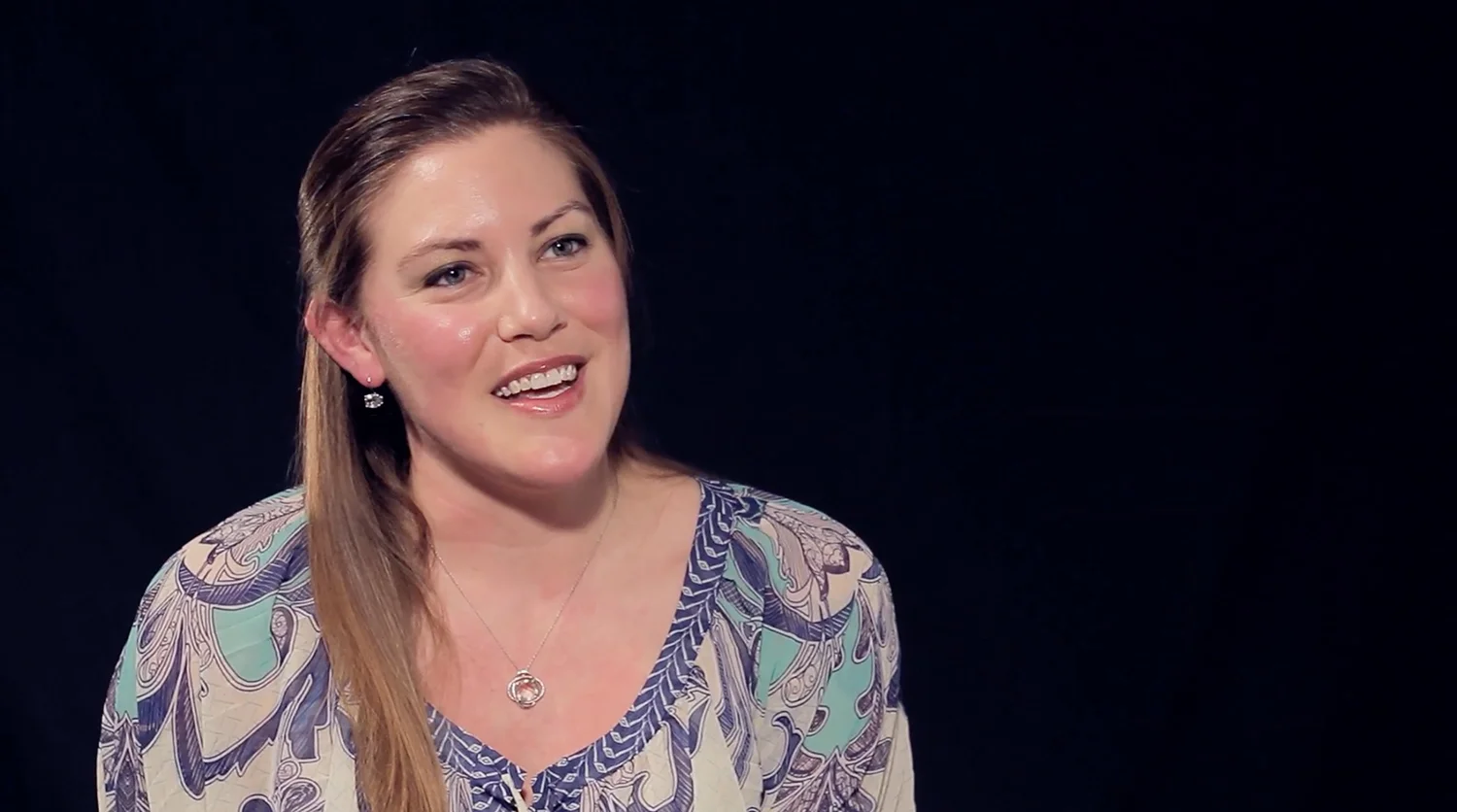
In Chapter 9 of 18 in her 2012 Capture Your Flag interview, Neuroscience Institute Executive Director Stacie Grossman Bloom answers "Where is Your Comfort Zone and What Do You Do to Break Free of Living in It?"  Bloom notes she feels comfortable in a broad range of situations.  She learns over time to push through situations where she feels self-conscious or uncomfortable, such as speaking up at a meeting with someone very senior in her field.  

Stacie Grossman Bloom is Executive Director for the Neuroscience Institute at the NYU Langone Medical Center.  Previously, she was VP and Scientific Director at the New York Academy of Sciences (NYAS) and, before that, held editorial roles at the Journal of Clinical Investigation and Nature Medicine.  She earned her BA in chemistry and psychology from the University of Delaware, her PhD in Neurobiology and Cell Biology at Georgetown University and did post-doctoral training in Paul Greengard's Nobel Laboratory of Molecular & Cellular Neuroscience at Rockefeller University. 

Transcript: 

Erik Michielsen:  Where is your comfort zone and what do you do to break free of living in it?

Stacie Grossman Bloom:  My comfort zone is pretty big. I would say that it takes a lot to get me out of my comfort zone. I think one of my best characteristics, one of the things that’s helped me the most is that I feel comfortable in a really broad range of situations. To break out of it, you know, I sort of force myself sometimes to do things that I’m not necessarily comfortable with. I’ll force myself to speak up at a meeting where, you know, there’s the head of the FDA sitting across the table from me. Those are situations that might make me feel self-conscious or uncomfortable. At work, you know, I very often have to have difficult conversations with people that are a little bit outside my comfort zone, I just make myself do it, I don’t usually hesitate very much, I’ll just usually go in guns a-blazing.

Stacie Bloom on Learning to Manage High Potential Employees

In Chapter 10 of 18 in her 2012 Capture Your Flag interview, Neuroscience Institute Executive Director Stacie Grossman Bloom answers "What Leadership Skills are Becoming More Relevant to You as Your Career Progresses?"  Bloom notes why management skill development is central to her current growth.  As she gains management experience, she gets more comfortable making difficult decisions and helping high potential employees flourish. 

Stacie Grossman Bloom is Executive Director for the Neuroscience Institute at the NYU Langone Medical Center.  Previously, she was VP and Scientific Director at the New York Academy of Sciences (NYAS) and, before that, held editorial roles at the Journal of Clinical Investigation and Nature Medicine.  She earned her BA in chemistry and psychology from the University of Delaware, her PhD in Neurobiology and Cell Biology at Georgetown University and did post-doctoral training in Paul Greengard's Nobel Laboratory of Molecular & Cellular Neuroscience at Rockefeller University. 

Transcript: 

Erik Michielsen:  What leadership skills are becoming more relevant to you as your career progresses?

Stacie Grossman Bloom:  The leadership skills that are becoming more relevant to me as my career progresses are definitely those associated with management. Managing a larger and more diverse team of individuals. I would say there’s a lot of different personalities, there are a lot of very difficult conversations, I think for me a few years ago, having those difficult conversations was unbelievably taxing, it was so stressful. I’m at the point now—I don’t love to have a difficult conversation with an employee, nobody does. But I’m certainly at the point now where I feel a lot more comfortable. I know what needs to be done. 

And that’s part of management, putting people on a professional development career path is something that’s become more important as I’m supervising higher levels of individuals, really talented people who I’m hoping they’ll stay with me for 2 or 3 years but I know that they’re not gonna stay with me forever, these are the people who are gonna have my job and more, very soon. Mentoring those people is really, really important to me. Making sure that they understand that they’re on a path where they’re gonna be able to accomplish great things. And I really take that mentorship very, very personally and very seriously.

Stacie Bloom on How to Be a Better Mentor

In Chapter 11 of 18 in her 2012 Capture Your Flag interview, Neuroscience Institute Executive Director Stacie Grossman Bloom answers "What Do You Find To Be the Most Important Elements of a Mentorship Experience?"  Bloom shares how mentors have shaped her non-traditional science career outside the laboratory.  She notes the importance of respect, trust, open communication, selflessness, and dedication to your personal network and knowledge development.  She also makes it clear a good mentor does not necessarily need to dedicate a large amount of time to the relationship; rather it just needs to be focused and dedicated. 

Stacie Grossman Bloom is Executive Director for the Neuroscience Institute at the NYU Langone Medical Center.  Previously, she was VP and Scientific Director at the New York Academy of Sciences (NYAS) and, before that, held editorial roles at the Journal of Clinical Investigation and Nature Medicine.  She earned her BA in chemistry and psychology from the University of Delaware, her PhD in Neurobiology and Cell Biology at Georgetown University and did post-doctoral training in Paul Greengard's Nobel Laboratory of Molecular & Cellular Neuroscience at Rockefeller University.

Transcript: 

Erik Michielsen:  What do you find to be the most important elements of a mentorship experience?

Stacie Grossman Bloom:  You know I think a relationship with a mentor is really important. For me, it was really key in helping to shape my career, I try really hard to be a good mentor, in particular to people with PhD’s who are looking for careers outside of the laboratory, so outside of that very traditional career path. And I’ve hired a lot of those kinds of individuals and they’ve gone on to do amazing things. I think a lot of communication, open communication, having a mentor who you really respect and trust is really important, someone who’s really selflessly being helpful to you and not undermining you. And I think someone who can help you build your network, someone who will take you to places where you can meet people who may be able to help you in your career. I really think of a relationship with a mentor as being like a lifelong relationship.

Erik Michielsen:  And how do you set aside time to be a mentor? 

Stacie Grossman Bloom:  I don’t think it takes a lot of time to be a mentor. I don’t necessarily say, okay, today I’m gonna set aside an hour of my time to being a mentor, but I get contacted by a lot of people. I’ve spoken at a lot of conferences and I’m invited to give talks at a lot of universities about my career, and afterwards I’m contacted a lot. I also have hired a lot of PhD scientists who have worked for me and I’ve spent a lot of time with those individuals. I don’t think that you necessarily need to set aside time, but I do think that it’s really important to take the time to help people like that, so I get a lot of cold calls, I get a lot of emails, I’m always trying to respond, if I can’t respond to an email directly then I usually ask someone who’s worked with me or -- and for me, to help me and maybe they can step up and be a mentor to that individual. I think it’s very hard to field all the calls and all the emails but I do try to make an effort to get back to everybody. Because I think my career path has been unique and I think that it’s a really—that it’s a career path that a lot of people could pursue, I don’t think that I’m so special, but I think knowing how to do it and how to navigate it is really important.

Stacie Bloom on Reflection-Informed Personal Growth

In Chapter 12 of 18 in her 2012 Capture Your Flag interview, Neuroscience Institute Executive Director Stacie Grossman Bloom answers "What Role Has Reflection Played in Shaping Your Personal Growth?"  Bloom shares how reflection has become more important as she gets older.  Now in her 30s, Bloom uses reflection to set more clear priorities in her work and her relationships. 

Stacie Grossman Bloom is Executive Director for the Neuroscience Institute at the NYU Langone Medical Center.  Previously, she was VP and Scientific Director at the New York Academy of Sciences (NYAS) and, before that, held editorial roles at the Journal of Clinical Investigation and Nature Medicine.  She earned her BA in chemistry and psychology from the University of Delaware, her PhD in Neurobiology and Cell Biology at Georgetown University and did post-doctoral training in Paul Greengard's Nobel Laboratory of Molecular & Cellular Neuroscience at Rockefeller University. 

Transcript: 

Erik Michielsen:  What role has reflection played in shaping your personal growth? 

Stacie Grossman Bloom:  I’ve become a much more sort of reflective person over time. I think, you know, I was in my 20’s, I was running around all the time, I was doing a million things, I didn’t really think about my actions, I just sort of lived for the moment. And now I realize I wanna create a legacy, and I wanna build a great Neuroscience Institute at NYU, I wanna help contribute to an effort that really will bring benefit to people’s lives, and in my own personal life. I want to have a successful relationship with my husband, and I wanna raise great kids. And a lot of that is looking into myself and my actions and my behaviors, and trying to make the best decisions that I can to make sure that I’m gonna be proud of my life.

Stacie Bloom on What Makes a World Class Science Institution

In Chapter 13 of 18 in her 2012 Capture Your Flag interview, Neuroscience Institute Executive Director Stacie Grossman Bloom answers "What Is Your Experience Teaching You About What It Takes to Build a World Class Scientific Organization?"  Bloom notes it requires being 1) Global; 2) Excellent; and 3) Multi-Sectoral.  Bloom notes "world class" requires working across global cultural boundaries, across scientific disciplines, and doing so  while consistently performing at the top quartile or better of a peer group. 

Stacie Grossman Bloom is Executive Director for the Neuroscience Institute at the NYU Langone Medical Center.  Previously, she was VP and Scientific Director at the New York Academy of Sciences (NYAS) and, before that, held editorial roles at the Journal of Clinical Investigation and Nature Medicine.  She earned her BA in chemistry and psychology from the University of Delaware, her PhD in Neurobiology and Cell Biology at Georgetown University and did post-doctoral training in Paul Greengard's Nobel Laboratory of Molecular & Cellular Neuroscience at Rockefeller University. 

Transcript: 

Erik Michielsen:  What is your experience teaching you about what it takes to build a world-class scientific organization? 

Stacie Grossman Bloom:  I think in order to be really a world-class institution, you know it’s very easy to tout yourself as, oh, we’re world-class, to be truly world-class, you have to really be global, and you have to be excellent, and you have to be multi-sectoral. I think that you can’t really have a world-class institution or you can’t call yourself a world-class institution if you’re very isolated or insular or siloed you have to work across boundaries, scientific boundaries, cultural boundaries, you have to be metric oriented, you have to prove yourself to be in the top quartile of performers, internationally. And I think only then can you say that you’re really world-class. 

Stacie Bloom on How Problem Solving Skills Improve Your Life

In Chapter 14 of 18 in her 2012 Capture Your Flag interview, Neuroscience Institute Executive Director Stacie Grossman Bloom answers "How Are You Applying Your Problem Solving Skills in Your New Role?"  Bloom notes how problem solving is the skill she uses from her PhD studies more than any other.  She uses the skills to manager her life, clearly delineating the problem and putting a plan in action to solve it, across her work and raising her three kids at home. 

Stacie Grossman Bloom is Executive Director for the Neuroscience Institute at the NYU Langone Medical Center.  Previously, she was VP and Scientific Director at the New York Academy of Sciences (NYAS) and, before that, held editorial roles at the Journal of Clinical Investigation and Nature Medicine.  She earned her BA in chemistry and psychology from the University of Delaware, her PhD in Neurobiology and Cell Biology at Georgetown University and did post-doctoral training in Paul Greengard's Nobel Laboratory of Molecular & Cellular Neuroscience at Rockefeller University. 

Transcript: 

Erik Michielsen:  How are you applying your problem solving skills in your new role?

Stacie Grossman Bloom:  I am a problem solver. I mean I feel like people who are trained as scientists are problem solvers. That’s what your training gives you, besides from your scientific knowledge, the ability to navigate a problem and figure out how to solve it independently. I think that that’s the one skill from having a PhD that I use more than anything else, and I use it at work, I use it at home, I use it with my children, I use it as a working mother. I definitely think that I apply problem-solving skills to—maybe a little bit too much I think. My husband would complain about it a little bit. But I do think that I can very clearly delineate the problem and put a plan in action to solve it. 

Erik Michielsen:  How are you applying your problem solving skills in new ways?

Stacie Grossman Bloom:  I would say that my life is more complicated and busier than it probably ever has been before. My job is pretty intense. I have 3 kids at home. There’s a lot to manage. And I would say that I use my problem solving skills to manage my life. I’m a really organized person. I sort of start each day with a plan of attack, a plan of action. And having good problem solving skills and the ability to stay organized just help me do all of these things that I sort of need to get done.

Stacie Bloom on How Increasing Diversity Improves Communities

In Chapter 15 of 18 in her 2012 Capture Your Flag interview, Neuroscience Institute Executive Director Stacie Grossman Bloom answers "What Have You Found to Be the Keys to Build More Effective Communities?"  Bloom feels more effective communities can be built with multi-sector stakeholders.  The background diversity helps the community learn from each other from its different backgrounds, experiences and problem solving approaches. 

Stacie Grossman Bloom is Executive Director for the Neuroscience Institute at the NYU Langone Medical Center.  Previously, she was VP and Scientific Director at the New York Academy of Sciences (NYAS) and, before that, held editorial roles at the Journal of Clinical Investigation and Nature Medicine.  She earned her BA in chemistry and psychology from the University of Delaware, her PhD in Neurobiology and Cell Biology at Georgetown University and did post-doctoral training in Paul Greengard's Nobel Laboratory of Molecular & Cellular Neuroscience at Rockefeller University. 

Transcript: 

Erik Michielsen:  What have you found to be the keys to building more effective communities?

Stacie Grossman Bloom:  I think more effective communities are built when you bring multi-sector stakeholders to the table. I think an effective community is one that comprises individuals with all sorts of backgrounds who can bring their own experiences and their own perspectives to the table. I think usually that’s a community who can really learn from each other, who really represent a broad spectrum of ideas and experiences and problem solving techniques, so those multi-sector communities, I think are really the most effective.

Stacie Bloom on Managing Across Work Disciplines

In Chapter 16 of 18 in her 2012 Capture Your Flag interview, Neuroscience Institute Executive Director Stacie Grossman Bloom answers "How Are You Learning to Work More Effectively Across Different Disciplines?"  For Bloom it starts with respecting the different cultures within each discipline.  This allows her to then find better ways to encourage and support collaboration across disciplines.  She shares her experience doing so encouraging translational research between basic scientists and clinical scientists. 

Stacie Grossman Bloom is Executive Director for the Neuroscience Institute at the NYU Langone Medical Center.  Previously, she was VP and Scientific Director at the New York Academy of Sciences (NYAS) and, before that, held editorial roles at the Journal of Clinical Investigation and Nature Medicine.  She earned her BA in chemistry and psychology from the University of Delaware, her PhD in Neurobiology and Cell Biology at Georgetown University and did post-doctoral training in Paul Greengard's Nobel Laboratory of Molecular & Cellular Neuroscience at Rockefeller University. 

Transcript: 

Erik Michielsen:  How are you learning to work more effectively across different disciplines?

Stacie Grossman Bloom:  I think I’m learning to work more effectively across different disciplines simply by virtue of having a better understanding of the perspectives of those different disciplines. Understanding that different disciplines have different cultures, and learning as a supervisor or a manager how to serve role with that, how to adapt my expectations to that, how to encourage collaborations between people who have different perspectives.

You know, one specific example is, and it’s funny, it’s just very timely, so we had this meeting last week, it was called the translational interface committee, and this is a group of department chairs, from the basic science side and from the clinical side, so the chairman of Neurology and a Neuroscience researcher, a big meeting, and we talked a lot about how do we encourage translational research, how can we get clinicians into the labs, to understand the basic science so that they can go back and treat the patient with schizophrenia or Parkinson’s disease. 

Those cultures are really different, the culture of a clinical scientist is very different from the culture of a basic scientist, and it’s very interesting to put those populations of people together. It’s usually very successful, it’s very collaborative, it’s—ends up being very collegial but there might be a little bit hesitance on the clinician’s part to go into the lab because the science can be a little bit intimidating. These are very smart people but it’s a different training, it’s a little bit of a different background and from the basic scientist part, the clinician may be a little bit intimidating, you know, that’s the person who’s going head-to-head with the patient and solving the problems in the clinic. 

So I think breaking down that wall and showing people that what you, sort of what you perceive to be intimidating or what you perceive to be a cultural difference, you know, in reality when you get two people in a room they’re usually okay.

Stacie Bloom on How Life Science Career Paths Are Changing

In Chapter 17 of 18 in her 2012 Capture Your Flag interview, Neuroscience Institute Executive Director Stacie Grossman Bloom answers "What Has Your Experience Taught You About How Science Careers are Changing?"  Bloom notes that with more life science PhDs being awarded then ever before, there is a supply and demand mismatch for purely academic jobs.  Bloom notes that people trained as scientists are not aware what else they can do with a PhD.  Bloom calls for more scientific or education training for alternative science careers. 

Stacie Grossman Bloom is Executive Director for the Neuroscience Institute at the NYU Langone Medical Center.  Previously, she was VP and Scientific Director at the New York Academy of Sciences (NYAS) and, before that, held editorial roles at the Journal of Clinical Investigation and Nature Medicine.  She earned her BA in chemistry and psychology from the University of Delaware, her PhD in Neurobiology and Cell Biology at Georgetown University and did post-doctoral training in Paul Greengard's Nobel Laboratory of Molecular & Cellular Neuroscience at Rockefeller University. 

Transcript: 

Erik Michielsen:  What has your experience taught you about how science careers are changing?

Stacie Grossman Bloom:  I think my experiences just being involved in the scientific fields, especially in life science, has shown me that we’re awarding more PhD’s than ever before, there are a lot of people who just by virtue of sheer numbers cannot follow that traditional academic path, cannot end up in that in that ivory tower, and there are a lot of people who are there for either by choice or simply by virtue of the fact that they just can’t compete off looking for alternative types of careers, and by alternative I just mean anything outside of the traditional lab, whether it be academic or pharmaceutical company, biotech, what I see and sort of what I hear is that people trained as scientists aren’t really aware of what the possibilities are for them. What else can you do with a PhD and the truth is you can do a lot, but having the ability to take your skill set and adjust it for a new career, people with PhD’s aren’t being trained to do that, and the academic institutions may be a little bit hesitant to provide that training because the head of the lab wants to train the next Nobel prize winner, I don’t know if they’re as interested in training the next executive director of  the NYU Neuroscience Institute, or the next editor of Nature Medicine, they want to get the biggest return on their investment in you, and they’re investing a lot in you, so I think that there’s a great need to educate people with science backgrounds on other things that they can do, alternative types of careers and I don’t think we’re really providing enough of that just yet. 

Erik Michielsen:  What do you think would help get that process started?

Stacie Grossman Bloom:  So that process is starting a little bit. So when you go to a large scientific meeting, there’s usually one session about alternative careers and the room is usually packed and I’ve been a speaker at a lot of these. At NYU, we have a bi-annual event called “What can you be with a PHD” where there are panels of people who are doing really interesting other things, and that event is attended by almost 2,000 people, I think, the last one. So there’s obviously this great need for it and I think also some of the big scientific journals like Nature, I know for example has nature jobs network that’s not just focused on, you know, where to get a postdoc, where to get a professorship, so it’s starting, and I think as more of us end up in high-profile alternative careers and can be mentors to other people, you know, you hope that you’re the beginning of a larger group that’s going to encourage this kind of thing.

Stacie Bloom on Planning a STEM Career in Scientific Research

In Chapter 18 of 18 in her 2012 Capture Your Flag interview, Neuroscience Institute Executive Director Stacie Grossman Bloom answers "What Opportunities Do You See to Better Encourage People to Careers in the Sciences?"  Bloom notes the push toward promoting STEM - science, technology, engineering, and math - careers.  She also notes the need for role models.  She then details the distinct challenges presented in scientific research careers, from the competitive education constraints to the financial constraints of National Institute of Health (NIH) early career salaries. 

Stacie Grossman Bloom is Executive Director for the Neuroscience Institute at the NYU Langone Medical Center.  Previously, she was VP and Scientific Director at the New York Academy of Sciences (NYAS) and, before that, held editorial roles at the Journal of Clinical Investigation and Nature Medicine.  She earned her BA in chemistry and psychology from the University of Delaware, her PhD in Neurobiology and Cell Biology at Georgetown University and did post-doctoral training in Paul Greengard's Nobel Laboratory of Molecular & Cellular Neuroscience at Rockefeller University.

Transcript: 

Erik Michielsen:  What opportunities do you see to better encourage people to pursue careers in the sciences? 

Stacie Grossman Bloom:  So, you know, in this country, I think there’s a big emphasis now on trying to improve STEM: science, technology, engineering, and mathematics education in younger people. I think that in order to pursue a career in research, there have to be role models and incentives, it’s not the same as law or finance or business where you know that you can go out and become a very successful person. A life in scientific research is unbelievably daunting and challenging, for a lot of reasons, I mean first of all, it’s hard. You go to school for a very long time, but when you get out of school, after 5 years, for doing a PhD, at that point, you’re generally about 30 years old, sometimes older, sometimes younger, you still have to go and do a postdoc, and postdoc salaries are really dictated by the NIH, by the National Institutes of Health. And those salaries are very hard to live on. 

So a starting postdoc, a 30-year-old person with a PhD might be making $42,000 a year, and you can see why many people maybe wouldn’t choose that path, but even if you do choose that path, and you are gonna live on $42,000 a year in a place like New York City, which—a lot of people do it. Obviously I did it. And at the time, not even making $42,000 a year, I think my salary was $33,000 a year. You know, you still have a very challenging future ahead of you if you’re on the track that where you’re pursuing the traditional scientific career, where you do a postdoc, maybe you do a second postdoc, and then you interview for an assistant professor, tenure track assistant professor job, and get on, you know, the path to a tenured full professor position, maybe even a chairman position. 

There’s a big drop off at the postdoc stage because making that transition to the next phase is really, really difficult because you have to be unbelievably successful scientifically, you have to publish your work. It would be great if you were funded independently as a researcher, and then those positions for assistant professors, associate professors, full professors, they just don’t come up very often. So it’s hard to be positively reinforced I think, and it’s hard to succeed. I mean it’s hard to compete with the giant pool of postdocs that are out there.

Erik Michielsen:  Where’s the inflection point, how do you make it easier?

Stacie Grossman Bloom:  I don’t think it’s going to become easier until the NIH changes their funding structure. The budget for the NIH has been basically flat for a while, which doesn’t give you a lot of incentive to go that route. I mean the success of your grand proposal is not very promising. I think there have to be big changes in the way that we support scientists and fund scientists in this country.

Simon Sinek on How Parents Support Career Change Decision

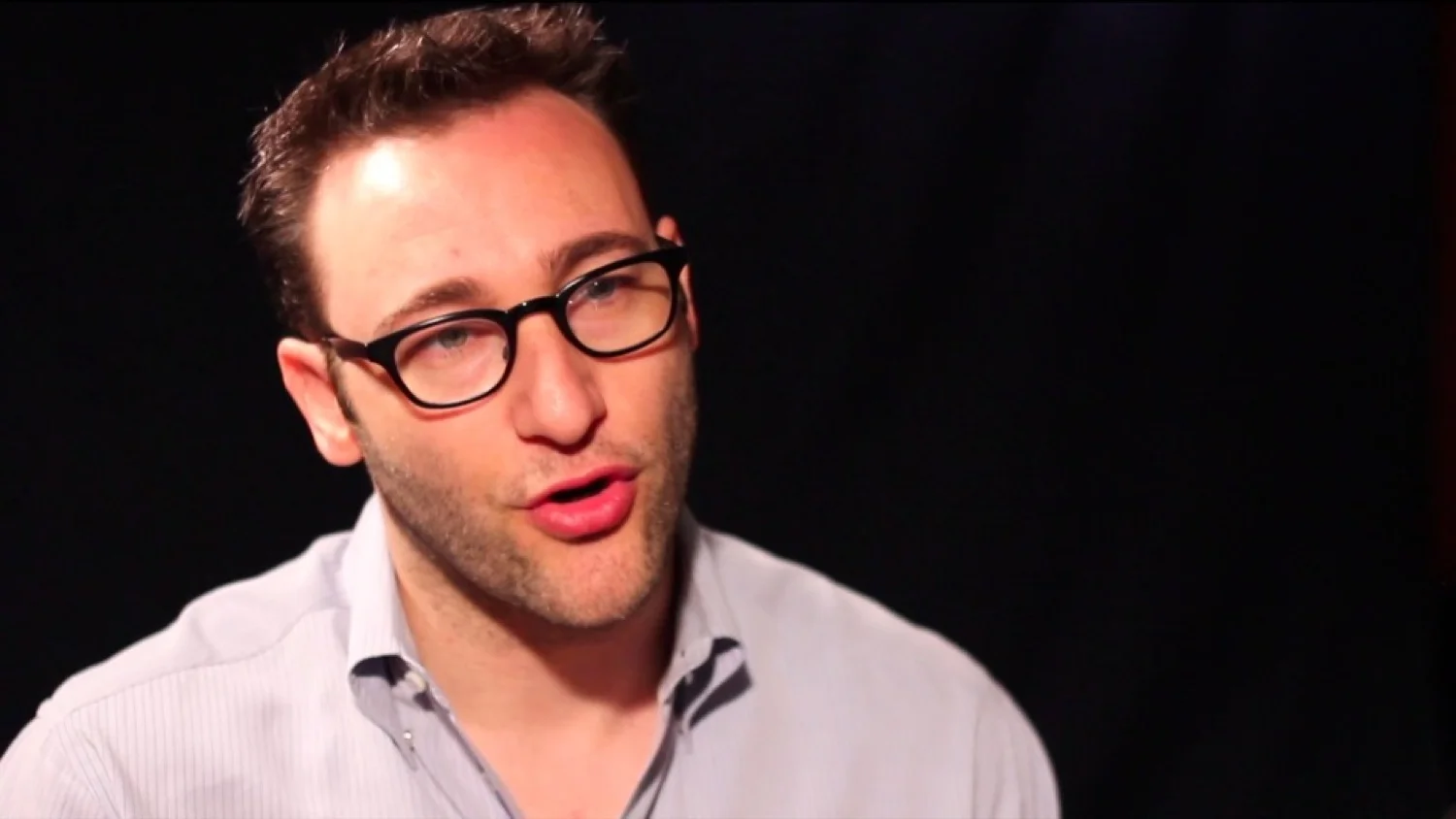
In Chapter 1 of 16 in his 2012 Capture Your Flag interview, author and public speaker Simon Sinek answers "Where Has Your Family Been Most Supportive in Your Career Development?"  Sinek talks about his time studying law in London and deciding to drop out of law school for a career in advertising.  He notes that while his parents did much to influence Sinek to stay in school, ultimately they gave him space to make his own decision and, once decided, supported him in that decision.  Simon Sinek teaches leaders and organizations how to inspire people.  His goal is to "inspire people to do the things that inspire them" and help others find fulfillment in their work.  Sinek is the author of "Start With Why: How Great Leaders Inspire Everyone to Take Action".  He works regularly with the United States Military, United States Congress, and many organizations, agencies and entrepreneurs.  Sinek is an adjunct professor at Columbia University and an adjunct staff member at the think tank RAND Corporation.  Sinek earned a BA in Cultural Anthropology from Brandeis University.

Transcript

Erik Michielsen:  Where has your family been most supportive in your career development?

Simon Sinek:  When I graduated college, I went to law school. And after not quite a year of law school, I realized that I didn’t wanna be a lawyer. And so I decided that I was gonna drop out of law school. And I never fought so much with my parents than during this time and to make it even worse, I was living in London, going to law school there, and so they—I didn’t see them everything was over the phone, and I remember my parents tried everything. They played good cop-bad cop. They tried bribing me. They tried saying, we’re your parents and you’re gonna do this. They tried being my friend like, look, just get your law degree, then you can do anything you want. I mean, every strategy that exists, they tried, right? They tried ganging up on me, they tried leaving me alone. I mean, everything. You name it.

And my dad came to—And at the time I wanted to go in to marketing. I wanted to go into—join the ad world, right? And my dad was in England on a business trip, at about the time that I had to re-enroll, and he sits down with me, and says, so? I remember it. We were sitting in our friend’s house, a mutual friend of his, we were sitting in their house in their living room. I remember this scene exactly. And he says to me, so? And I said, I didn’t re-enroll. And the first words out of his mouth were, right, let’s get you into advertising then.

My parents were 100% against me until the decision was made, then after that point they’re 100% supportive and never, ever, ever raised it ever again. They never said, wouldn’t it have been nice or I guess this was—they literally never mentioned it again. And so I have to say, my—I’ve been very lucky in my life which is my parents will give advice, my parents will give strong advice, my parents will try and push and move you know where they would like their children to go but ultimately, once the kids have made the decision they’re 100% supportive. And so I’ve been very lucky.

Simon Sinek on How Family Relationships Change With Age

In Chapter 2 of 16 in his 2012 Capture Your Flag interview, author and public speaker Simon Sinek answers "How Are Your Family Relationships Changing as You Get Older?"  Sinek notes how he and his sister now have the adult conversations, including asking each other for advice, that once was reserved for asking their parents.  Sinek also transitions from his parents treating him like a child to a more balanced, grown-up, peer-based relationship built on mutual respect and sharing.  Simon Sinek teaches leaders and organizations how to inspire people.  His goal is to "inspire people to do the things that inspire them" and help others find fulfillment in their work.  Sinek is the author of "Start With Why: How Great Leaders Inspire Everyone to Take Action".  He works regularly with the United States Military, United States Congress, and many organizations, agencies and entrepreneurs.  Sinek is an adjunct professor at Columbia University and an adjunct staff member at the think tank RAND Corporation.  Sinek earned a BA in Cultural Anthropology from Brandeis University.

Transcript

Erik Michielsen:  How are your family relationships changing as you get older?

Simon Sinek:  My sister and I are adults now. And so we have adult conversations, we will ask each other all kinds of advice that we used to ask our parents about, career advice, relationship advice, things that we used to go to our parents, you know, we go to each other now. And also you know on some level, there’s a click when you grow up at home, you’re at home, from you know, zero to 18, and then whether you go to college or go on to do something else. You leave.

And the problem is, is you keep growing up, or at least I can speak for myself, I kept growing up, but my parents knew me from when I left the house at 18, and so they would still treat me very much like the 18-year-old even though I was still growing up. And they would give me some credit as I sort of entered the workforce, you know, but they still treated me like the person they knew very, very well, even though things had changed, I’ve matured in some ways and—less mature in other ways but the point is that for a good chunk of time most of my 20’s I would say they kind of had a little warped vision of who I was because they’re treating me like the thing they knew, right?

And so I think what has happened now is it’s evened out, which is my parents are still my parents, and there’s that wonderful dynamic but we’re peers much more now. And we treat each other as peers, which is nice. It’s an amazing experience when your parents come to you for advice about something that they’re dealing with, or that my dad and I will have a business conversation, it’s just not me asking him for advice, it’s now him asking me for advice, and that’s been sort of incredible to be able to have that kind of dynamic with my parents. Yeah, huge respect, huge mutual respect. And not sort of the traditional sort of parental respect, oh, you’re my parents. But respect for each other for who we are, not just for the role we play.


Simon Sinek on How Growing Up All Over World Shapes Family Values

In Chapter 3 of 16 in his 2012 Capture Your Flag interview, author and public speaker Simon Sinek answers "What Childhood Experiences Have Been Most Fundamental in Shaping Who You Are Today?"  By the age of 10, Sinek had lived on four continents - North America, Europe, Africa, and Asia.  Moving frequently, Simon and his sister do not develop traditional roots and friendships.  Instead, Simon and his family become very close and learn to rely on and support one another.  Simon Sinek teaches leaders and organizations how to inspire people.  His goal is to "inspire people to do the things that inspire them" and help others find fulfillment in their work.  Sinek is the author of "Start With Why: How Great Leaders Inspire Everyone to Take Action".  He works regularly with the United States Military, United States Congress, and many organizations, agencies and entrepreneurs.  Sinek is an adjunct professor at Columbia University and an adjunct staff member at the think tank RAND Corporation.  Sinek earned a BA in Cultural Anthropology from Brandeis University.

Transcript

Erik Michielsen:  How are your family relationships changing as you get older?

Simon Sinek:  My sister and I are adults now. And so we have adult conversations, we will ask each other all kinds of advice that we used to ask our parents about, career advice, relationship advice, things that we used to go to our parents, you know, we go to each other now. And also you know on some level, there’s a click when you grow up at home, you’re at home, from you know, zero to 18, and then whether you go to college or go on to do something else. You leave.

And the problem is, is you keep growing up, or at least I can speak for myself, I kept growing up, but my parents knew me from when I left the house at 18, and so they would still treat me very much like the 18-year-old even though I was still growing up. And they would give me some credit as I sort of entered the workforce, you know, but they still treated me like the person they knew very, very well, even though things had changed, I’ve matured in some ways and—less mature in other ways but the point is that for a good chunk of time most of my 20’s I would say they kind of had a little warped vision of who I was because they’re treating me like the thing they knew, right?

And so I think what has happened now is it’s evened out, which is my parents are still my parents, and there’s that wonderful dynamic but we’re peers much more now. And we treat each other as peers, which is nice. It’s an amazing experience when your parents come to you for advice about something that they’re dealing with, or that my dad and I will have a business conversation, it’s just not me asking him for advice, it’s now him asking me for advice, and that’s been sort of incredible to be able to have that kind of dynamic with my parents. Yeah, huge respect, huge mutual respect. And not sort of the traditional sort of parental respect, oh, you’re my parents. But respect for each other for who we are, not just for the role we play.


Simon Sinek on Why Travel to Distant and Unfamiliar Places

In Chapter 4 of 16 in his 2012 Capture Your Flag interview, author and public speaker Simon Sinek answers "What Have You Found Most Rewarding About Traveling to New Places?"  Sinek notes how anytime you go somewhere new, exotic or not, takes you away from your day to day life.  Getting exposed to people who think differently and see the world differently you learn new things.  Sinek finds this keeps his mind open while still making close, personal connections in his travels.  Sinek also points out the single most important leadership quality is curiosity.  Simon Sinek teaches leaders and organizations how to inspire people.  His goal is to "inspire people to do the things that inspire them" and help others find fulfillment in their work.  Sinek is the author of "Start With Why: How Great Leaders Inspire Everyone to Take Action".  He works regularly with the United States Military, United States Congress, and many organizations, agencies and entrepreneurs.  Sinek is an adjunct professor at Columbia University and an adjunct staff member at the think tank RAND Corporation.  Sinek earned a BA in Cultural Anthropology from Brandeis University.

Transcript

Erik Michielsen:  What have you found most rewarding about traveling to new places?

Simon Sinek:  I mean, any time you go somewhere new, it takes you away from your desk, right? And you can’t learn anything when you’re sitting at home seeing the same thing every day. And so, traveling to new places, they don’t have to be exotic places, you can go to, you know, the middle of the country, you know? If you live in New York, that is an exotic place, but—you know, when you’re exposed to the way – to different people who think differently, see the world differently, you know, you learn new things. You find things that you—that have been there plainly obviously before but you never saw them before, right? And so it keeps your mind open, and more importantly, you also find that no matter where you go, you’ll find people that you connect with on a deep personal level. Any culture, any language, you can find close personal connections. And I think that’s—you know, if anybody who’s sort of afraid to venture, it’s the most eye opening thing you could do is to go away. Not to mention the fact that the single most important quality of leadership is curiosity. And so those who are curious about others and curious about the world, it only benefits you in everything else you do.


Simon Sinek on Finding Joy in Serving Others

In Chapter 5 of 16 in his 2012 Capture Your Flag interview, author and public speaker Simon Sinek answers "What Do You Enjoy Most About What You Do?"  Sinek finds it magical to give an individual something that impacts his or her life.  To serve and give your time and energy to enliven others gives Sinek that magical feeling and satisfaction in why he does what he does.  Simon Sinek teaches leaders and organizations how to inspire people.  His goal is to "inspire people to do the things that inspire them" and help others find fulfillment in their work.  Sinek is the author of "Start With Why: How Great Leaders Inspire Everyone to Take Action".  He works regularly with the United States Military, United States Congress, and many organizations, agencies and entrepreneurs.  Sinek is an adjunct professor at Columbia University and an adjunct staff member at the think tank RAND Corporation.  Sinek earned a BA in Cultural Anthropology from Brandeis University.

Transcript

Erik Michielsen:  What do you enjoy most about what you do?

Simon Sinek:  There is something magical about being able to give people something that impacts their lives. It’s more powerful than you know throwing a few coins in the cup of someone homeless. It’s when you go and you know build a house for somebody who doesn’t have a home. You know, it’s that kind of thing. It’s being in service to someone. And being able to give your time and give your energy to people and to see them, I mean live, you see them come alive and to—and when people come up to you and—it’s funny, people say the same thing to me because you’ve probably heard this a hundred times they say, and it doesn’t matter because every time I hear it, it is—it’s what fuels me. Yeah. That’s magic.

Simon Sinek on Finding Meaningful Work by Doing What Inspires You

In Chapter 6 of 16 in his 2012 Capture Your Flag interview, author and public speaker Simon Sinek answers "What Makes Your Work Meaningful?"  Sinek first starts by doing something specific each day.  For him it is "inspiring others to do what inspires them."  What gives his life meaning is when he is able to fulfill that cause or do the thing that drives and inspires him.  Simon Sinek teaches leaders and organizations how to inspire people.  His goal is to "inspire people to do the things that inspire them" and help others find fulfillment in their work.  Sinek is the author of "Start With Why: How Great Leaders Inspire Everyone to Take Action".  He works regularly with the United States Military, United States Congress, and many organizations, agencies and entrepreneurs.  Sinek is an adjunct professor at Columbia University and an adjunct staff member at the think tank RAND Corporation.  Sinek earned a BA in Cultural Anthropology from Brandeis University.

Transcript

Erik Michielsen:  What makes your work meaningful?

Simon Sinek:  What makes my work meaningful is that I set out to do something specific, in other words, I wake up every single day to inspire people to do what inspires them, right? And I know why I got out of bed in the morning. What gives my life meaning is if I fulfill that cause. Every single one of us has a ‘why.’ Every single one of us has a reason to get out bed. We have something deep, deep inside us that is formed when we’re young, that drives us, that drives everything we do. And if you’re able to put it into words, then it’s actionable, right? And this is the thing that I discovered, this thing called the ‘why’ that can be put into words. And so I know why I wake up every day and so the meaning I get is if I actually do the thing that I know inspires and drives me. I mean that’s what meaning is, right? Is when your life has purpose, and the purpose I have is to inspire and so when I get to do that I’m good.


Simon Sinek on How Reflection Informs Personal Growth

In Chapter 7 of 16 in his 2012 Capture Your Flag interview, author and public speaker Simon Sinek answers "What Role Has Reflection Played in Shaping Your Personal Growth?"  Sinek notes the importance of looking internally at his past actions and decisions and evaluating his performance.  Using the example of sales training, Sinek notes how the observer often learns the most.  He applies this to his life to inform his approach to making more optimal future choices and avoiding pitfalls.  Simon Sinek teaches leaders and organizations how to inspire people.  His goal is to "inspire people to do the things that inspire them" and help others find fulfillment in their work.  Sinek is the author of "Start With Why: How Great Leaders Inspire Everyone to Take Action".  He works regularly with the United States Military, United States Congress, and many organizations, agencies and entrepreneurs.  Sinek is an adjunct professor at Columbia University and an adjunct staff member at the think tank RAND Corporation.  Sinek earned a BA in Cultural Anthropology from Brandeis University.

Transcript

Erik Michielsen:  What role has reflection played in shaping your personal growth?

Simon Sinek:  The ability to look at one’s self critically. To say to one’s self, you were good in that situation. You weren’t good in that situation. You could’ve been better in that situation. Not to be overly critical meaning you’re always at fault if something goes badly or not be so filled with hubris that you think everything you did was fine and it’s always the other person, but to be able to sort of separate yourself to look at the situation from a—as if you were the third party evaluating it. You know, when they do sales training those—you know, it’s always three people, one who pretends to be the salesman, one who pretends to be the customer and one who observes. And then they all take turns, you know, and the one who does the learning is the observer. So the question is, can you be your own observer, like can you replay a situation? And so self-reflection has been huge for me and I’ve been huge into it for many, many years. The ability to say, okay, I can take some responsibility for the outcome of that, good or bad. And I can learn to do that again, or can I learn to spot those situations and avoid them in the future?


Simon Sinek on How to Be at Your Best Each Day

In Chapter 8 of 16 in his 2012 Capture Your Flag interview, author and public speaker Simon Sinek answers "When Are You at Your Best?"  Sinek reaches his personal best by putting himself in a position of strength, namely surrounding himself with support.  Sinek notes he is able to "stack the deck" by being around people who want him there and who he wants to be around.  Simon Sinek teaches leaders and organizations how to inspire people.  His goal is to "inspire people to do the things that inspire them" and help others find fulfillment in their work.  Sinek is the author of "Start With Why: How Great Leaders Inspire Everyone to Take Action".  He works regularly with the United States Military, United States Congress, and many organizations, agencies and entrepreneurs.  Sinek is an adjunct professor at Columbia University and an adjunct staff member at the think tank RAND Corporation.  Sinek earned a BA in Cultural Anthropology from Brandeis University. 

Transcript

Erik Michielsen:  When are you at your best?

Simon Sinek:  I’m at my best when I’m around people who believe what I believe. I know it seems silly but I try very, very hard to sort of stack the deck, you know, to put myself in a position of strength. So for example, you know, somebody asked me just yesterday, have you ever had sort of a bad, you know, engagement. I was thinking to myself, I’m like, not really. But it’s not because I’m some sort of genius or anything like that. It’s because I stack the deck. It’s because I want to be there—I wanna be around people who want me there. In other words, if I’m somebody’s 10th choice, and like, you know, I’ll probably turn it down. Whereas if I’m their first choice, they really want me there, and so I’m more likely to have a good engagement. They’re supportive of me, I’m supportive of them. And so—yeah, I’m at my best when I stack the deck. When I choose to be in an environment where my strengths are there.