
Simon Sinek on What It Means to Be a Leader

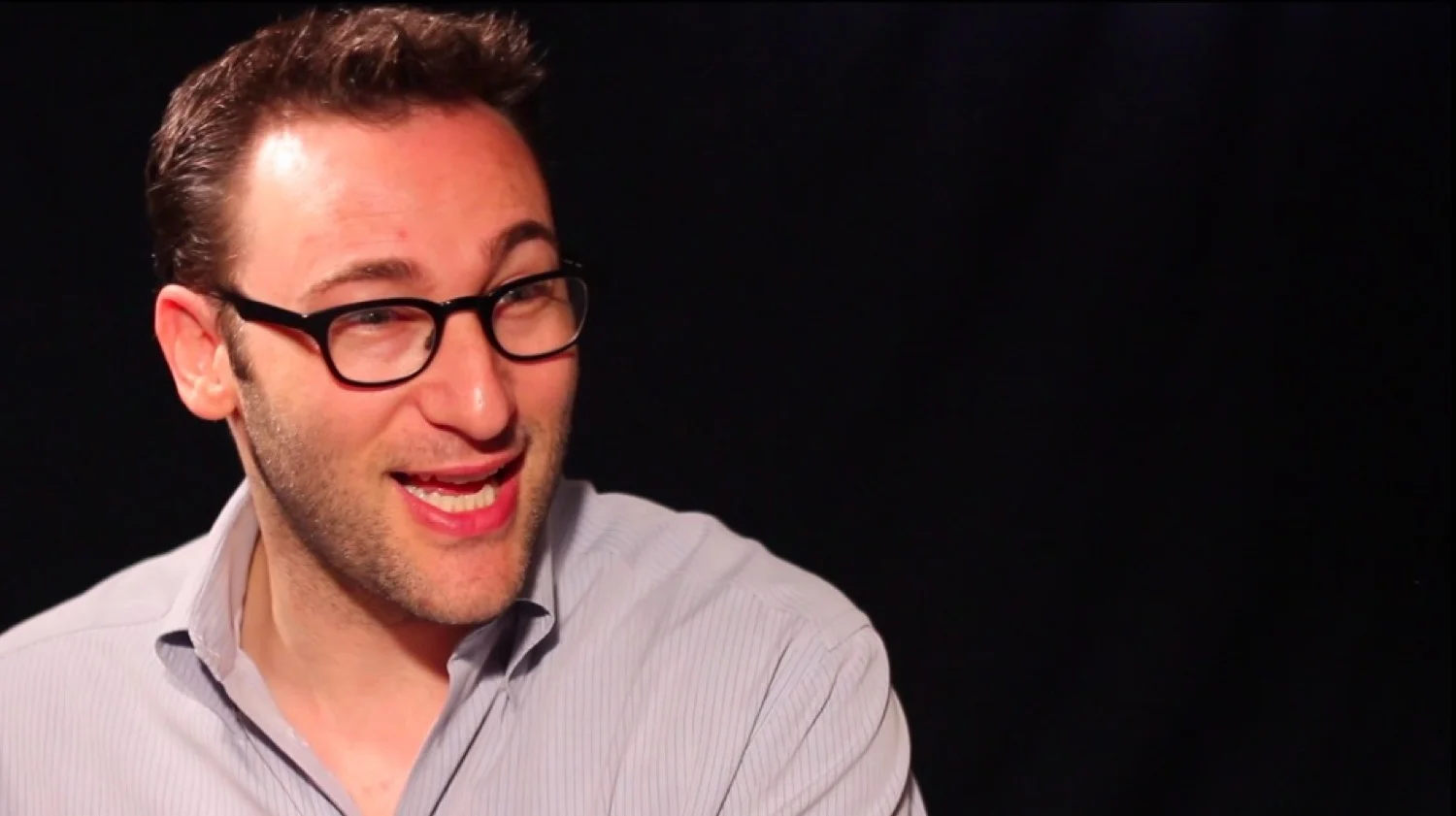
In Chapter 9 of 16 in his 2012 Capture Your Flag interview, author and public speaker Simon Sinek answers "What Does It Mean to Be a Leader in What You Do?"  Sinek notes being a leader means one thing and one thing only: you have followers.  He then shares how leaders create that following by articulating a vision, cause or purpose toward a future that does not yet exist.  He then puts this in perspective of his own leadership, helping his followers work toward waking up inspired to do what they love to do and achieve fulfillment by doing so.  Simon Sinek teaches leaders and organizations how to inspire people.  His goal is to "inspire people to do the things that inspire them" and help others find fulfillment in their work.  Sinek is the author of "Start With Why: How Great Leaders Inspire Everyone to Take Action".  He works regularly with the United States Military, United States Congress, and many organizations, agencies and entrepreneurs.  Sinek is an adjunct professor at Columbia University and an adjunct staff member at the think tank RAND Corporation.  Sinek earned a BA in Cultural Anthropology from Brandeis University.

Transcript

Erik Michielsen:  What does it mean to be a leader in what you do?

Simon Sinek:  To be a leader means one thing and one thing only. It means you have followers. That’s it. You know? It’s not about learning your style of leadership and how to adjust your style to fit the situation at hand, that’s management, right? Leaders only have one thing, they have followers.  A follower is somebody who raises their hand and volunteers to go where you’re going. They raise their hand and volunteer to go in the direction that you’re pointing. And so to lead others, means that you have a clear vision of a world that does not yet exist, a world that could exist, and by articulating that cause, that vision, that purpose, over and over and over again, it inspires people who believe what you believe, who want to see that world built, to join, to go with you, to figure out ways, you know? And so for me in my work, what leadership means, is articulating this world in which the vast majority of us wake up every single day, inspired to go to work, and come home every single day fulfilled by the work that we do. That doesn’t mean we have to like every day, you know, but we can love every day. You don’t like your children every day but you love your children every day, right? And so the more I talk about this world that does not yet exist, because right now the world we live in, the vast majority of people, 90%-plus don’t love what they do, they may like it but they don’t love it. When I talk about this world, it inspires others who believe what I believe and want to see this world built, join up and figure out in their own way how to advance that vision, so it becomes real. My role is to continue to pound the pavement and put that vision out there.


Simon Sinek on What Gets Easier and What Gets Harder

In Chapter 10 of 16 in his 2012 Capture Your Flag interview, author and public speaker Simon Sinek answers "What is Getting Easier and What is Getting Harder in Your Life?"  Simon notes it is getting easier to spot things he should avoid and then work around the obstacles while maintaining pursuit toward his end destination or goal.  As his life becomes more public, Sinek notes how it is harder to know who to trust and shares how he is working through this situation in his life.  Simon Sinek teaches leaders and organizations how to inspire people.  His goal is to "inspire people to do the things that inspire them" and help others find fulfillment in their work.  Sinek is the author of "Start With Why: How Great Leaders Inspire Everyone to Take Action".  He works regularly with the United States Military, United States Congress, and many organizations, agencies and entrepreneurs.  Sinek is an adjunct professor at Columbia University and an adjunct staff member at the think tank RAND Corporation.  Sinek earned a BA in Cultural Anthropology from Brandeis University.

Transcript

Erik Michielsen:  What is getting easier and what is getting harder in your life?

Simon Sinek:  It’s getting easier to spot things that I should avoid. So for example, let’s imagine that we’re standing in the corner of a large room, and I give you a simple instruction, I want you to walk in a straight line to the other corner. Off you go. And without telling you, I put a chair in front of you. Well, you just walk around the chair on your way to that destination, right? And even though you just disobeyed my order, which is to walk in a straight line to that side. The point is the destination was more important than the route you took, right? Now if we reset and I give you the same situation, again, where we start in the corner of the room, and I say to you, I want you to walk in a straight line anywhere, you know, somewhere in this room, and you’re gonna look at me you go, well, where do you want me to go? I’m like, I don’t know, you’re smart, pick a direction. And you’ll pick a direction, you’ll walk in straight line. And without telling you I put a quick chair in front of you, quickly put a chair in front of you, and you come to a grinding halt. And I—you’ll turn to me and say, well, how can I—now where do you want me to go? You blocked it. In other words, when you know the destination, it’s very easy to make adjustments, right? And when you don’t know the destination, every obstacle, even though it’s the same obstacle, brings you to a grinding halt, or forces you to just make sudden corrections which, again, there’s no sense of direction. And so the thing that I’ve gotten much better at, is because I have a clear set, a sense of where I’m going, is I find it much easier to go around obstacles as they appear. Where you know a few years ago, they would have stopped me in my tracks.

Erik Michielsen:  What’s getting harder?

Simon Sinek:  What’s getting harder is—and I think this is for everybody as we grow older, it’s knowing who to trust. You know, we meet lots of people, and especially if you have a little bit of success in the world, it’s hard to know who to trust. Because I’ve had instances where people called me their friend, treated me like their friend, you know, they called me on weekends to see how I was doing, you know, and then when it came close—when we, you know, decided to do some work together and we look at a contract, and I made some, you know, we made some comments on the terms that we didn’t like and they went: Clearly we can’t work together.  And I never heard from them again. I was like, wait, I thought you’re my friend. You know? So it makes you cynical unfortunately, a couple of bad experiences makes you a little cynical. The hard part is, you know, you wanna trust everybody, you know? And so it’s—I’m learning. I’m learning that. That, I haven’t figured that one out completely, but I’m learning.


Simon Sinek on How to Make Better Choices and Live More Fully

In Chapter 11 of 16 in his 2012 Capture Your Flag interview, author and public speaker Simon Sinek answers "How Are You Learning to Make Better Decisions?"  To Sinek, decision making comes down to using personalized filters that help him achieve outcomes in line with his purpose.  He shares an example from choosing classes in college and how the outcome - good class vs. bad class, engaged learning vs. boredom - helped him start to shape his approach.  Simon Sinek teaches leaders and organizations how to inspire people.  His goal is to "inspire people to do the things that inspire them" and help others find fulfillment in their work.  Sinek is the author of "Start With Why: How Great Leaders Inspire Everyone to Take Action".  He works regularly with the United States Military, United States Congress, and many organizations, agencies and entrepreneurs.  Sinek is an adjunct professor at Columbia University and an adjunct staff member at the think tank RAND Corporation.  Sinek earned a BA in Cultural Anthropology from Brandeis University.

Transcript

Erik Michielsen:  How are you learning to make better decisions?

Simon Sinek:  Decision-making is a process. The question is what filters are you using to make decisions? Are you making decisions based on the financial rewards? Are you making decisions based on how easy the work will be? I remember in college, they would give you this book where they –all the students would rate the classes and they would rate things like how easy the class was and how much they liked the professor. And, you know, the first year, I picked all my classes based on workload, and I picked everything a low workload, you know? And pretty bored, didn’t work very hard, which was fine, but nothing was dynamic, and nothing really excited me, and I, thank goodness, learned that. And so the second year, I picked all my classes by professor rating, regardless of the workload, so every class I had, I had these dynamic amazing incredible human beings passing on their knowledge and you were excited to work hard for them.

And so again, the question is what are the filters we’re using, and so if you’re only chasing the mighty dollar, then you’ll have jobs that’ll pay you a little more than the last but are you enjoying yourself? And I talked to a guy recently who was in a—he’s in bad shape like he really hates his life and he’s really depressed, and he doesn’t know what to do. And so we’re going through all his old jobs, you know, and I said, give me a job that you’ve loved, and he hadn’t, every single job he’s chosen out of college, he picked because of the money, and if something offered him more somewhere else, he took it. You know? Regardless. And the amazing thing is he plateaued because if you’re only chasing the result, if you’re only chasing the thing that makes it easy, right? Then eventually you will get bored, or they’ll get bored of you, right? And you plateau. In other words, chasing the almighty dollar, if that’s your only thing, it eventually flattens out, whereas if you’re chasing the thing that excites you, the human beings to be around, the work that excites you, the stuff that you know, you can get passionate about, the irony is, is you’ll actually make way, way more, right?

Because you’re excited and they appreciate your excitement and they reward your excitement, and you’re better at your work because you wanna work harder and all of that stuff. You don’t have the strain to work harder. So decision-making is simply a matter of filters. And so I’ve made decisions in my life that I would rather be happy than right, I’d rather do good than get rich. And so the decisions I make put me in positions where when I leave any engagement, when I leave any meeting, I feel that I’ve contributed, right? Rare are the times any more where you walk around going, just think of the money, just think of the money, think of the money, because it doesn’t feel nice. And the experience I have I don’t enjoy traveling to them and I don’t enjoy traveling home, where if I have an amazing experience, I’m looking forward to getting there and I’m excited when I leave. So it’s just decision—decision-making is just a matter of what filters you use, and if you’re good about keeping those filters up and clear then make your decision. I don’t judge anybody by how—if they choose to use different filters, these are just the filters I choose to live my life. Not right or wrong, just those are my decisions. That’s my filter.


Simon Sinek on Why Reciprocity Improves Mentor Mentee Relationships

In Chapter 12 of 16 in his 2012 Capture Your Flag interview, author and public speaker Simon Sinek answers "At This Moment in Your Life, Where Are You Seeking Advice and Coaching?"  Sinek notes how he is taking an approach to better balance mentor-mentee relationships in his life.  Specifically, he chooses to mentor someone only if it is a reciprocal relationship, i.e. the mentee also plays a mentor role and vice versa.  Simon Sinek teaches leaders and organizations how to inspire people.  His goal is to "inspire people to do the things that inspire them" and help others find fulfillment in their work.  Sinek is the author of "Start With Why: How Great Leaders Inspire Everyone to Take Action".  He works regularly with the United States Military, United States Congress, and many organizations, agencies and entrepreneurs.  Sinek is an adjunct professor at Columbia University and an adjunct staff member at the think tank RAND Corporation.  Sinek earned a BA in Cultural Anthropology from Brandeis University.

Transcript

Erik Michielsen:  At this moment in your life, where are you seeking advice and coaching?

Simon Sinek:  I have a few mentors, people who I love. And I have a very specific sort of definition of a mentor. So, I have a mentor, a remarkable human being, who’s been there for me, he’s been good to me. And look, he’s much older than me, he’s accomplished much more than me, he’s an amazing guy. And I said to him, I love that you’re my mentor. And he replied, and I love that you’re mine. And I realized that this whole mentor-mentee relationship is unbalanced. It creates this sort of strange power down like that I know everything and you are the mentee. And so my new standard is—occasionally, I’ll get a phone call from somebody that says, hey, Simon, will you be my mentor? And my answer is, only if you’ll be mine.

In other words, I will only be someone’s mentor if I want them to be mine. In other words, if there’s something about them that I want to learn, I wanna be around, I could learn, I could be around, you know? Then I will gladly share what I have as well. But I think mentor relationships aren’t mentor-mentee, they should be mentor-mentor. And one should only agree to be someone’s mentor if you want them to be your mentor too. And so the people I get advice from, I’m proud to say that I get to share with them also. And it’s a mutual relationship, of all the people that I would call my mentors, of all the people that I would say I learn a lot from, I know they would all say the same of me, and I’m proud of that.

Simon Sinek on How to Strengthen Your Creative Skills

In Chapter 13 of 16 in his 2012 Capture Your Flag interview, author and public speaker Simon Sinek answers "How is Your Creative Toolbox Changing?"  The more Sinek practices his creative skills, the stronger his toolbox gets.  He focuses on amplifying on his strengths and hiring out his weaknesses to both broaden and sharpen skills.  As a lover of creative people, Sinek looks to try new things such as modern dance choreography and painting to get perspective on creative process.  Simon Sinek teaches leaders and organizations how to inspire people.  His goal is to "inspire people to do the things that inspire them" and help others find fulfillment in their work.  Sinek is the author of "Start With Why: How Great Leaders Inspire Everyone to Take Action".  He works regularly with the United States Military, United States Congress, and many organizations, agencies and entrepreneurs.  Sinek is an adjunct professor at Columbia University and an adjunct staff member at the think tank RAND Corporation.  Sinek earned a BA in Cultural Anthropology from Brandeis University.

Transcript

Erik Michielsen:  How is your creative toolbox changing?

Simon Sinek:  I’m adding to it. Right? I mean, you know, I don’t think I’ve thrown anything away. I may use some things less than I used to. But the more I learn and the more I get to practice more importantly, the more tools I’m adding to that toolbox. What’s also great is some of the tools change size, in other words, there are some tools that I really like and I’m really good with, and so I use those tools because they’re very helpful to me, and there are other tools that I’ve learned that I’m really no good with and so they’re there if I need them, you know, I’ve never understood the idea of working on your weaknesses, you know, we’re always told in our performance reviews, here are your weaknesses and these are the things you need to work on to get to the next level, I’ve never understood that, the whole idea is to work in our strengths, amplify our strengths, and we, you know, hire our weaknesses or—this is the value of a team, right? What’s the point of having a team if you have to be—if you have to improve on your weaknesses?

The whole idea is we have you on our team because you’re really good at this. You know? And we found somebody else who’s really good at this, which you’re really bad at. You guys are a team. This is the value of a team. And so I think in our workplace, our companies do us a great disservice by telling us that we have to fix our weaknesses or improve upon our weaknesses to get to the next level, they should be encouraging us and giving the tool to amplify our strengths to get to the next level, that’s what they want us for, right? Otherwise, here are your strengths and here are your weaknesses, now you’re even. Wouldn’t you wanna be this? You need to be aware of your weaknesses but we need to amplify those strengths.

Erik Michielsen:  What are a couple of examples of like the creative tools that have brought that out?

Simon Sinek:  I’m a lover of creative people. And so any sort of expression of how you see the world in a—with different terminology is fascinating to me. And so even though I myself am a photographer so I have that visual aspect, I’m a huge fan of modern dance and spend a lot of time sort of with dancers and in the dance world and have, you know, tried my hand at choreography just to see, you know? I’m not good. But it—I like the idea of trying it, you know? And so for me it’s about perspective, which is when I—when you hang out with dancers and you sort of learn to dance a little bit or you learn to choreograph a little bit, or you learn to paint a little bit, you know? I’m not a painter but I painted a painting recently, you know? If you—it’s like chaos theory. Everything’s connected, right? It’s like we conveniently divide up our lives, like here’s my personal life, here’s my professional life, I’m—here’s my social life, I’m looking to find balance. It’s just you. And all the same things apply. And so if you’re good here, you can apply what you learn here to there. And so when you learn how things interconnect and people interconnect, and how human relationships work, and presence, I mean you wanna learn about presence? Take a dance class. You learn all about how to present yourself and be forwards. Take an acting class, learn how to, you know, present your speech. People say, Simon, how did you learn this? It’s like—I’m exposed to all of this. So the tools I’ve learned have just mainly been different perspectives on how other people use their creative talents to see the world in it. If I can get little pieces of those, they help me in many, many different ways.


Simon Sinek on How to Improve Strategic Thinking

In Chapter 14 of 16 in his 2012 Capture Your Flag interview, author and public speaker Simon Sinek answers "How Do You Make Strategic Thinking More Implementation Friendly?"  To Sinek it comes down to language and the importance of using words people understand.  When the language is simple, the directive becomes clear to everyone and can be more easily followed and implemented.  Simon Sinek teaches leaders and organizations how to inspire people.  His goal is to "inspire people to do the things that inspire them" and help others find fulfillment in their work.  Sinek is the author of "Start With Why: How Great Leaders Inspire Everyone to Take Action".  He works regularly with the United States Military, United States Congress, and many organizations, agencies and entrepreneurs.  Sinek is an adjunct professor at Columbia University and an adjunct staff member at the think tank RAND Corporation.  Sinek earned a BA in Cultural Anthropology from Brandeis University.

Transcript

Erik Michielsen:  How do you make strategic thinking more implementation friendly?

Simon Sinek:  Language.  Strategic thinking can be more implementation friendly when you use words that you understand. It’s amazing to me how often we read strategies that are incomprehensible. To be the pre-eminent supplier, you know, we’re gonna—I mean, what—I mean these are things that you can’t do. Based on what metric? We wanna be the best? That’s your strategy? Like that’s not a strategy. That’s nothing. We wanna be the—we wanna be ranked number one. What—revenues, profit, quality, customer satisfaction, loyalty, what? It’s complete nonsense, you know? And so the more specific a strategy can be, the clearer the language can be, the more implementable it can be.

I’m a great believer that if you speak like a scientist, only scientists will understand you, but if you speak like a truck driver, both truck drivers and scientists will understand you. And the amazing thing is if you actually speak like a scientist, even a lot of the scientists don’t understand you. The point is use very simple terminology that’s somebody who’s not in your industry who doesn’t know your business would understand what you’re trying to do. And if that’s the basis of the language that you choose to use that anyone can understand what you’re attempting to do and if you started someone tomorrow, they would be able to take the reins and go because it’s so crystal clear. That’s the standard that we need to use inside our own organizations. When the language is clear, when the language is specific, when the language is simple, it’s easy. It’s easy to implement. Right? Off the races you go, you know?


Simon Sinek on Learning New Ways to Use Your Passions

In Chapter 15 of 16 in his 2012 Capture Your Flag interview, author and public speaker Simon Sinek answers "How Are You Learning to Apply Your Passions in New Ways?"  Sinek first gets clear on what he wants to do - "inspire people to do the things that inspire them" - and then plays the game of finding new ways to do it.  From branching out skills into short-form and long-form writing to working in new industries such as military, politics and government, Sinek sees himself as a student of inspiration and leadership always looking to learn more and grow.  Simon Sinek teaches leaders and organizations how to inspire people.  Sinek is the author of "Start With Why: How Great Leaders Inspire Everyone to Take Action".  He works regularly with the United States Military, United States Congress, and many organizations, agencies and entrepreneurs.  Sinek is an adjunct professor at Columbia University and an adjunct staff member at the think tank RAND Corporation.  Sinek earned a BA in Cultural Anthropology from Brandeis University.

Transcript

Erik Michielsen:  How are you learning to apply your passions in new ways?

Simon Sinek:  The goal of life is to know why you do what you do, right? To wake up every single day with a clear sense of purpose or cause or belief. And the fun of life is just find all the different ways to do that, right? So like I said, I know why I get out of bed in the morning. It’s to inspire people to do what inspires them, right? If we can do that together, we can change the world. Then I imagine this world, I imagine a world in which the vast majority of people wake up every single day to inspire to go to work and come home every single day fulfilled by the work that they do. So to find new ways to do that is almost the game, you know, I can speak, I can write, I can teach, you know? I can write short form, I can long—I can write long form. It also makes me open to other people’s ideas. It makes me open to new industries. I never imagined I’d be working in even half the industries I’ve been exposed to. From government to politics to military, big business, you know, entrepreneurs and every industry you can imagine. And it’s always because it’s—I’m not saying, oh, I’m this kind of consultant, or I’m this kind of expert, I mean—anybody who calls themselves an expert, be very cautious, you know? Because if you think you’re an expert, it means you have—you don’t think you have anything else to learn, right? If anything, I’m a student of inspiration, I’m a student of leadership, I’m a student of these things. You know, I show up every day to want to learn more.


Simon Sinek on When Your Idea is Worth Turning Into a Book

In Chapter 16 of 16 in his 2012 Capture Your Flag interview, author and public speaker Simon Sinek answers "How Do You Take Collections of Ideas and Turn Them Into Books?"  Sinek focuses less on the collection of ideas and more on how to take an idea, attack a problem and do so by taking your readers on a journey.  Simon Sinek teaches leaders and organizations how to inspire people.  His goal is to "inspire people to do the things that inspire them" and help others find fulfillment in their work.  Sinek is the author of "Start With Why: How Great Leaders Inspire Everyone to Take Action".  He works regularly with the United States Military, United States Congress, and many organizations, agencies and entrepreneurs.  Sinek is an adjunct professor at Columbia University and an adjunct staff member at the think tank RAND Corporation.  Sinek earned a BA in Cultural Anthropology from Brandeis University.

Transcript

Erik Michielsen:  How do you take collections of ideas and turn them into books?

Simon Sinek:  Considering that most books are probably only have enough content in them to be sort of articles, you know, to take a collection of ideas and turn them into a book, you know, an idea to be a book has to be able to advance. In other words, it has to start somewhere and go somewhere. Right? And I think a lot of books that are written have an idea that’s—it may be a really good idea but the whole book is simply case studies that prove the same idea, over and over and over again, right? And a book like in a work of fiction is a story. It has a beginning, it has a middle, and it has an end. You know, there’s a sort of an Aristotelian story arc, you know, where there’s some sort of here’s the world there is something is introduced that makes everything go wrong, you know there’s some sort of resolution and then here’s the—here’s how it looks. There’s conflict, right? So I think a collection of ideas that belong in a book, it addresses a very real problem. Here’s the way the world is. There’s a serious problem with this. Here’s the introduction of something that can help us and here’s what we could do to advance that. And there’s an arc. There’s something that holds your interest throughout the whole thing as opposed to just pick a page, start anywhere, and it’s more of the same. You should feel like you’ve missed the beginning if you start in the middle, you know? So yeah, I mean, a collection of ideas, I wouldn’t call it a collection of ideas, I’d call it, you know, a journey. That—and it doesn’t even have to be a complete journey, it has to be a journey. It has to start somewhere, and it has to go somewhere, even if it’s not a final destination.


How to Be an Advocate for Your Local Community - Randall Metting

In Chapter 1 of 7 in his 2012 Capture Your Flag interview, brand marketer and on-air radio personality Randall Metting answers "How Has Being a Local Radio DJ in Austin, Texas Brought You Closer to the Austin Community?"  Metting shares how joining the Austin community as a radio DJ at KGSR has taught him new ways to advocate for the community across culture, entertainment, and charitable causes.  Randall Metting is an on-air radio personality at 93.3 KGSR Radio in Austin, Texas.  When not on the radio, Metting consults organizations on integrated marketing strategy and brand development.  He also writes the Austin community music and entertainment blog at www.randallmetting.com.  Metting earned a B.A. in Advertising from the University of Florida.

How to Make the Most of Living in Your City - Randall Metting

In Chapter 2 of 7 in his 2012 Capture Your Flag interview, brand marketer and on-air radio personality Randall Metting answers "How Do You Make the Most of Living in a City?"  Metting shared how he embraced living in Austin, Texas after relocating from St. Petersburg, Florida.  Learning about the arts and entertainment scene helps Metting identify charities and get involved supporting non-profits.  Ultimately this research shapes his approach to fully embrace his Austin city living experience.  Randall Metting is an on-air radio personality at 93.3 KGSR Radio in Austin, Texas.  When not on the radio, Metting consults organizations on integrated marketing strategy and brand development.  He also writes the Austin community music and entertainment blog at www.randallmetting.com.  Metting earned a B.A. in Advertising from the University of Florida.

How Your Social Experiences Can Boost Your Career - Randall Metting

In Chapter 3 of 7 in his 2012 Capture Your Flag interview, brand marketer and on-air radio personality Randall Metting answers "How Are Your Personal Experiences Shaping Your Professional Aspirations?"  Metting talks about how his social experiences - from watching live music to attending sporting events to volunteering at numerous Austin charities - are instructing him how to better bring people together in his life and career.  Randall Metting is an on-air radio personality at 93.3 KGSR Radio in Austin, Texas.  When not on the radio, Metting consults organizations on integrated marketing strategy and brand development.  He also writes the Austin community music and entertainment blog at www.randallmetting.com.  Metting earned a B.A. in Advertising from the University of Florida.

What Gets Easier and What Gets Harder - Randall Metting

In Chapter 4 of 7 in his 2012 Capture Your Flag interview, brand marketer and on-air radio personality Randall Metting answers "What is Getting Easier and What is Getting Harder in Your Life?"  Metting notes how after five years in Austin and putting himself out there in the community, it is getting much easier to network.  He is challenged with thinking about the next step in his career - from doing radio to serving charities to working in marketing, Randall looks to put his passion for work carving out a job that matches his interests.  Randall Metting is an on-air radio personality at 93.3 KGSR Radio in Austin, Texas.  When not on the radio, Metting consults organizations on integrated marketing strategy and brand development.  He also writes the Austin community music and entertainment blog at www.randallmetting.com.  Metting earned a B.A. in Advertising from the University of Florida.

How Your Family Can Help You at a Career Crossroads - Randall Metting

In Chapter 5 of 7 in his 2012 Capture Your Flag interview, brand marketer and on-air radio personality Randall Metting answers "Where Has Your Family Been Most Supportive in Your Career Development?"  Metting notes it has been especially supportive during a career crossroads.  Getting feedback when he questions pursuing a current role or choosing to leave a position to try something new has been invaluable in his career.  That family feedback has helped Metting find a place where he is doing his best and living fully.  Randall Metting is an on-air radio personality at 93.3 KGSR Radio in Austin, Texas.  When not on the radio, Metting consults organizations on integrated marketing strategy and brand development.  He also writes the Austin community music and entertainment blog at www.randallmetting.com.  Metting earned a B.A. in Advertising from the University of Florida.

How to Keep Your Career Fresh and Stabilize Your Life - Randall Metting

In Chapter 6 of 7 in his 2012 Capture Your Flag interview, brand marketer and on-air radio personality Randall Metting answers "How Do You Balance Experimentation and Commitment in the Projects You Pursue?"  Metting focuses experimentation on the creative work he has done in marketing, always thinking about what the next big idea will be to take the company to the next level.  Metting looks at commitment more from a personal perspective, especially with personal health and time with family.  Randall Metting is an on-air radio personality at 93.3 KGSR Radio in Austin, Texas.  When not on the radio, Metting consults organizations on integrated marketing strategy and brand development.  He also writes the Austin community music and entertainment blog at www.randallmetting.com.  Metting earned a B.A. in Advertising from the University of Florida.

How to Use Your Network to Help Others in Need - Randall Metting

In Chapter 7 of 7 in his 2012 Capture Your Flag interview, brand marketer and on-air radio personality Randall Metting answers "How Do You Value Your Business Network?"  Metting frames his network as a "spider web of life" and he finds himself very engaged in helping those in their network, whether they are moving to Austin, traveling to Austin, running a charity, navigating the ins and outs of running a business or building a career.  Randall Metting is an on-air radio personality at 93.3 KGSR Radio in Austin, Texas.  When not on the radio, Metting consults organizations on integrated marketing strategy and brand development.  He also writes the Austin community music and entertainment blog at www.randallmetting.com.  Metting earned a B.A. in Advertising from the University of Florida.

Why Aspire to Be a Good Person - Ross Floate

In Chapter 1 of 20 in his 2012 interview, branding and design strategist Ross Floate answers "To What Do You Aspire?"  Floate notes his aspiration is to "come out on the right side of the ledger" and be a good person.  He does not aspire to become wealthy and grow a large business. While those may come in time, Floate works instead on doing things in an honest, straightforward way to support others.  Ross Floate is a principal at Melbourne, Australia-based Floate Design Partners.  Experienced in branding, design and both online and offline publishing, Floate and his team provide marketing services to clients seeking to better communicate business and culture goals via image, messaging, and story. He is a graduate of RMIT University.

How to Find Your Best by Creating a Place Where You Thrive - Ross Floate

In Chapter 2 of 20 in his 2012 interview, branding and design strategist Ross Floate answers "When Are You at Your Best?"  Floate notes he reaches his best when he has the opportunity to do good work.  He notes this requires the right environment and learns over time what he needs to do to create and enter that environment.  Ross Floate is a principal at Melbourne, Australia-based Floate Design Partners.  Experienced in branding, design and both online and offline publishing, Floate and his team provide marketing services to clients seeking to better communicate business and culture goals via image, messaging, and story. He is a graduate of RMIT University.

How Being an Only Child Influences Personal Development - Ross Floate

In Chapter 3 of 20 in his 2012 interview, branding and design strategist Ross Floate answers "What Childhood Experiences Have Been Most Fundamental in Shaping Who You Are Today?"  Floate finds being an only child has made him a hard taskmaster to work with on projects.  He also shares his parents decision to start a successful manufacturing business and be self-employed and the influence it had on his own decisions.  Ross Floate is a principal at Melbourne, Australia-based Floate Design Partners.  Experienced in branding, design and both online and offline publishing, Floate and his team provide marketing services to clients seeking to better communicate business and culture goals via image, messaging, and story. He is a graduate of RMIT University.