

Idan Cohen on Managing International Project Teams

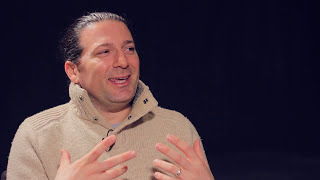
In Chapter 18 of 19 in his 2012 Capture Your Flag interview, Boxee co-founder and head of product Idan Cohen answers "What Have Been Your Greatest Challenges Managing International Project Teams?"  Cohen notes two perspectives.  The first is not being able to iterate quickly side by side.  The second he ties to consumer product development and the importance of having the entire team on board with the market, user and consumer. 

This is Idan Cohen's Year 1 Capture Your Flag interview.  Cohen is co-founder and head of product at Boxee Inc, an online video software company.  Previous to Boxee, Cohen held telecom software innovation and developer roles at Comverse.  He was a Captain in the Israeli Defense Force (IDF) and graduated from Tel Aviv University with a Bachelors of Science degree in Geophysics and Art.

Transcript: 

Erik Michielsen: What have been your greatest challenges in managing international project teams?

Idan Cohen: It’s about just not being able to sit in the same room, you know, just being able to iterate quickly with a few people sitting on a couch for a couple of hours, that’s very important. Doing it on the phone as much as we think, that, you know, with Skype and other tools, the world is flat, it just doesn’t work in a lot of cases.

And then probably the other really important thing is just when you’re creating consumer products, it’s so important for everyone to understand the market and the user and the consumer, and if you’re a small company, then you know it comes down to the last person, it’s the last developer or the officer manager, it doesn’t matter, or the HR woman, let’s say that does recruiting part-time for you, everyone needs to understand what you’re all working on in order to be able to really build the right product and that’s a huge challenge, when you’re working separately with teams in different places, it’s just not everyone seeing the same picture, that was a huge challenge for us.

Idan Cohen on Learning to Manage and Delegate Responsibility

In Chapter 19 of 19 in his 2012 Capture Your Flag interview, Boxee co-founder and head of product Idan Cohen answers "How Are You Learning to More Effectively Hand Off Responsibility?"  Cohen notes the challenges of handing off his product vision to others as well as not diving into details enough.  He believes a balance must be found between the two and this is the underlying challenge he faces. 

This is Idan Cohen's Year 1 Capture Your Flag interview.  Cohen is co-founder and head of product at Boxee Inc, an online video software company.  Previous to Boxee, Cohen held telecom software innovation and developer roles at Comverse.  He was a Captain in the Israeli Defense Force (IDF) and graduated from Tel Aviv University with a Bachelors of Science degree in Geophysics and Art.

Transcript: 

Erik Michielsen: How are you learning to more effectively hand off responsibility?

Idan Cohen: So I think that I have this problem where I’m just—some—on specific things I would go into the smaller details, smallest details. And it would be extremely hard for me to hand off responsibility because I have the image of—the exact image of what something should look like as the end product, and it’s extremely hard for me to accept a different direction or different angle on it. On the other hand, I definitely do not dive into details, small details enough sometimes, so at some point I will hand it off and will just let someone else take care of it.

And that’s exactly kind of right now it’s a little bit of like the wrong way to do it, because it needs to be somewhere in the middle, ‘cause you need to be able to trust the other person—that the other person can achieve your final vision, be able to visit him along the way and guide but not impose your opinion, or the way you see it, not just having him, you know, do the work, but actually letting him think his way through it. So I think it’s important to find that balance between those—trying to do that.


How to Turn a Cancer Tragedy into Something Good - Slava Rubin

In Chapter 1 of 13 in his 2012 Capture Your Flag interview, crowdfunding entrepreneur and IndieGoGo CEO Slava Rubin answers "What is Your Entrepreneur Story?"  Rubin recounts how after his father died of myeloma cancer, he tries to raise money to fight cancer.  The process proves painful and frustrating and, over time, Rubin meets what would be his two IndieGoGo co-founders, Danae Ringelmann and Eric Schell.   Slava Rubin returns to CYF for his Year 3 interview.  As CEO and Co-Founder, Rubin has helped transform cause and project fundraising by establishing his company IndieGoGo as a global leader in crowdfunding.  He is also active in philanthropy, starting the Music Against Myeloma annual charity event to fight cancer.  He graduated from the Wharton School of Business at the University of Pennsylvania.

Erik Michielsen: What’s your entrepreneur story?

Slava Rubin: Yeah, so when I was 15, my dad died of cancer and then for 10 years I really couldn’t deal with it and then as a New Year’s resolution I decided to finally do something about it and I started my own charity called Music Against Myeloma. This was in the middle of the last decade when the internet really sucked for raising money. So, I tried using Myspace. I remember Facebook was smaller than Myspace and Twitter was nascent, YouTube was not owned by Google and Obama wasn’t a word. So, it was pretty challenging to raise money using the internet.

I had this discussion with two other peers Eric Shell and Danae Ringelman and the three of us all shared our mutual frustration of hard it was to use the internet to raise money. So, in January 2008, we decided to launch a platform that would democratize fundraising called Indiegogo and, you know, we persevered through the market crash of 2008 and 2009 and beyond reason continued to work at Indiegogo and really the last couple of years have been consistent growth and we’re excited now to be funding millions of dollars globally every month. So, that’s how I got here which is turning cancer into something good.

How Family Relationships Change With Age - Slava Rubin

In Chapter 2 of 13 in his 2012 Capture Your Flag interview, crowdfunding entrepreneur and IndieGoGo CEO Slava Rubin answers "How Are Your Family Relationships Changing As You Get Older?"  Rubin shares how he, his mother and his brother recently took their first family trip in 14 years.  He shares the challenge of convincing his mom that leaving corporate America to start a company was a sound decision and how a funny Starbucks moment helped her better understand the business.  Slava Rubin returns to CYF for his Year 3 interview.  As CEO and Co-Founder, Rubin has helped transform cause and project fundraising by establishing his company IndieGoGo as a global leader in crowdfunding.  He is also active in philanthropy, starting the Music Against Myeloma annual charity event to fight cancer.  He graduated from the Wharton School of Business at the University of Pennsylvania. 

Transcript:

Erik Michielsen: How are your family relationships changing as you get older?

Slava Rubin: Well, I just had my first vacation with my mom and my brother together, the three of us in a long time. The last time we were together was I believe 14 years ago. My brother is older and he’s married with three kids. I have three nephews and, you know, sometimes we’re all hanging out with other people but we haven’t had a vacation just the three of us. So, it’s is a very timely question. I would say that the relationship is great. I love my family, I love my mom and it’s really a matter of – Probably the funniest thing is my mom when I first started Indiegogo thought that I was a nut job because I left a corporate job that was paying fairly well to not only not get paid but actually pay money to work since I invested into my own company, to Bootstrap it, and she had no idea what we were doing and then just recently, Howard Schultz from Starbucks was talking on CNN about this new program about how to donate $5 so that you can get a bracelet from Starbucks so they’ll give that money to jobs, to entrepreneurs so that they can have jobs or create businesses and my mom turned around and said, I think he’s stealing your idea. So, it’s great to have my mom on my side.

Erik Michielsen: That’s great. And how are you learning to better support your mom and your brother as you get older with an increasing amount of activity in your lives?

Slava Rubin: I mean, we’re just very family-oriented and it’s important to amongst all of the hustle and bustle to take some downtime and you know, we like to just cook together, which is our downtime. So, that’s fun.

How to Find Meaningful Work With a Global Impact - Slava Rubin

In Chapter 3 of 13 in his 2012 Capture Your Flag interview, crowdfunding entrepreneur and IndieGoGo CEO Slava Rubin answers "What Makes Your Work Meaningful?"  Rubin references how the crowdfunding projects his company has enabled give him meaning in their varied initiatives to solve problems and build solutions.  Slava Rubin returns to CYF for his Year 3 interview.  As CEO and Co-Founder, Rubin has helped transform cause and project fundraising by establishing his company IndieGoGo as a global leader in crowdfunding.  He is also active in philanthropy, starting the Music Against Myeloma annual charity event to fight cancer.  He graduated from the Wharton School of Business at the University of Pennsylvania. 

Transcript:

Erik Michielsen: What makes your work meaningful?

Slava Rubin: We could be focusing on strictly becoming a billion dollar company optimizing profits and along the way really upsetting customers and trying to take advantage of employees but for us it’s knowing that there’s an impact. Knowing that we’re doing good in the world and bringing good things to life. So, that’s what’s exciting for me.

It’s really about stories like a crowd funded baby that would have never existed unless Indiegogo was there. Knowing that there’s kids in third world countries who are reading because two incredible women on a campaign called Illuminate were able to create an inflatable solar light, knowing that some kids aren’t gonna be bullied because an amazing movie was created called The Bully Project and was funded on Indiegogo then picked up by the Weinstein Company for distribution, knowing that a church has new stained glass windows because their community came together to know that they want to improve the architecture there or just knowing that a liver transplant happened through for somebody in Congo because he was known as the Oskar Schindler of Congo but couldn’t afford a liver transplant so on CNN, people came together and funded his liver transplant.


Life Lessons From the Entrepreneur Experience - Slava Rubin

In Chapter 4 of 13 in his 2012 Capture Your Flag interview, crowdfunding entrepreneur and IndieGoGo CEO Slava Rubin answers "How Has Your Entrepreneurial Experience Helped You Grow as a Person?"  Rubin shares the transferability from work to personal life of handling challenging experiences.  He notes what he has learned about receiving feedback and improving his listening and communication skills.  Slava Rubin returns to CYF for his Year 3 interview.  As CEO and Co-Founder, Rubin has helped transform cause and project fundraising by establishing his company IndieGoGo as a global leader in crowdfunding.  He is also active in philanthropy, starting the Music Against Myeloma annual charity event to fight cancer.  He graduated from the Wharton School of Business at the University of Pennsylvania. 

Transcript:

Erik Michielsen: How has your entrepreneurial experience helped you grow as a person?

Slava Rubin: I think that I’ve definitely learned a lot of the ups and downs in entrepreneurial life and that’s really helped in my day to day life. I think it’s also helped in terms of managing challenges -- challenging experiences and there’s no question the challenge and the experience of helping to lead a team, hiring people and helping to try to create a culture is really important as I walk through my day to day experience.

Erik Michielsen: And what’s a good example?

Slava Rubin: A good example is sometimes I would think that my way of speaking is always the right way and I would just talk to somebody on the subway or talk to somebody, have some dinner conversation the way I think is right and before you knew it they thought, you know, maybe negative of me. When I heard two weeks later that they thought, wow, he wasn’t really a good listener or a good communicator and I think I'm learning a lot of that through working with my teammates.

How Startup Raises First Venture Capital Round - Slava Rubin

In Chapter 5 of 13 in his 2012 Capture Your Flag interview, crowdfunding entrepreneur and IndieGoGo CEO Slava Rubin answers "How Did Your Team Go About Raising Venture Capital?"  Rubin notes the importance of mission alignment and how this plays into goals, milestones, and responsibilities.  He details the transition from being a bootstrap financed startup to taking on convertible debt to deciding on venture financing to build out the team and user experience. 

Slava Rubin returns to CYF for his Year 3 interview.  As CEO and Co-Founder, Rubin has helped transform cause and project fundraising by establishing his company IndieGoGo as a global leader in crowdfunding.  He is also active in philanthropy, starting the Music Against Myeloma annual charity event to fight cancer.  He graduated from the Wharton School of Business at the University of Pennsylvania. 

Transcript:

Erik Michielsen: How does your team go about raising venture capital?

Slava Rubin: I think it’s really important that the core team be aligned on knowing what we’re trying to accomplish. What size of a company are we looking to build? How many employees do we wanna have? What kind of revenue are we looking to accomplish? Where do we wanna sit in the competitive landscape and what are we trying to accomplish as a vision? All those things need to be agreed to. Where you’re singing the same song and after that it’s making sure that you know who’s playing what role. You typically don’t wanna have too many people in the process of actually try to raise the money because that can be confusing in terms of coordination and managing the process. So, with us specifically I'm leading up the fundraising process with significant help from the core team.

Erik Michielsen: Was this your first time raising venture capital?

Slava Rubin: Yes. So, we launched in January 2008 and the three founders Eric Shell, Danae Ringelman and myself we boot strapped through 2008. We planned on raising money in the fall of 2008 but then the crash of 2008-2009 happened, which really slowed things down for us. We then raised a small convertible note and followed that with a venture capital round of 1.5 million in March of 2011.

Erik Michielsen: And you used that to build out the team and now are looking at next steps to scale further?

Slava Rubin: Exactly. So, we went from a team of 5 to now a team of 19 and we’re continuing to grow and always looking on how to improve the customer experience.


What It Means to Be a Leader at a Fast Growing Startup - Slava Rubin

In Chapter 6 of 13 in his 2012 Capture Your Flag interview, crowdfunding entrepreneur and IndieGoGo CEO Slava Rubin answers "What Does It Mean to Be a Leader in What You Do?"  Rubin notes leadership is about taking action that otherwise might not happen.  He notes it is less about being more aggressive than others and more about doing things others do not see that need to be done.  Rubin references his venture capital fundraising efforts while trusting his team to manage operations and grow the company.  Slava Rubin returns to CYF for his Year 3 interview.  As CEO and Co-Founder, Rubin has helped transform cause and project fundraising by establishing his company IndieGoGo as a global leader in crowdfunding.  He is also active in philanthropy, starting the Music Against Myeloma annual charity event to fight cancer.  He graduated from the Wharton School of Business at the University of Pennsylvania. 

Transcript: 

Erik Michielsen: What does it mean to be a leader in what you do?

Slava Rubin: To me leader is really about taking action where otherwise it would not happen. So, just being to be aggressive and doing something where 10 other people were about to do it maybe is not always a leader but seeing what others do not see or more importantly doing what others do not see needs to be done is really about leadership.

So, we have 19 people on our team now and I would say at different moments each one steps up as being a leader and an example for me might be that a while back we weren’t sure if we were able to raise money and, you know, we were having debates about whether or not we should be even focused on raising money because maybe what we need to do is just work on our own team and get to profitability and at some point, you know, I just said, you know, I’ll go make it happen and you guys need to help support me to run the company and we just worked together to raise the money we needed a year ago when I saw you at South-By 2011.
The fun thing is since then we’ve had some serious growth, which is, you know, I guess I have to come here every year to make sure that growth keeps happening.

Erik Michielsen: How did you use your venture capital round to finance your growth?

Slava Rubin: Yeah, so I mean from a company-building perspective we really are focused on improving the product making sure that we’re reaching out to the customers correctly and making sure that the customer experience is as good as possible. So, very specifically we went from a five-person team to a 19 person team, really made significant improvements on the actual product, the website, the customer happiness experience and just keep on looking for people to help them with making good things happen.

How to Refine Your Company Vision - Slava Rubin

In Chapter 7 of 13 in his 2012 Capture Your Flag interview, crowdfunding entrepreneur and IndieGoGo CEO Slava Rubin answers "How Are You Becoming Better at Articulating Your Vision?"  Rubin shares how gathering and using data, examples, and feedback have helped him refine his company's vision.  Slava Rubin returns to CYF for his Year 3 interview.  As CEO and Co-Founder, Rubin has helped transform cause and project fundraising by establishing his company IndieGoGo as a global leader in crowdfunding.  He is also active in philanthropy, starting the Music Against Myeloma annual charity event to fight cancer.  He graduated from the Wharton School of Business at the University of Pennsylvania. 

Transcript:

Erik Michielsen: How are you becoming better at articulating your vision?

Slava Rubin: A while back, I would say two years ago, we would try to know what our vision is but we didn’t have enough examples and enough data to prove out exactly what we’re thinking. I mean, now we’re able to more strongly use the data and the case studies to express our visions. So, we’re really looking to democratize fundraising. Indiegogo has the most diverse set of campaigns of any platform in the world. It’s really interesting since launching in January 2008, we now have over 300 competitors.

We’re very excited to know that this is such an exciting space and lots of others are following but for us it’s really about democratizing fundraising and ensuring that anybody has an equal opportunity at raising the capital they need. We provide them the tools to optimize the experience and the exposure to get more stranger-dollars than they ever could. So, it’s really about more examples and more feedback to refine your vision.

How to Manage and Motivate Teams at an Internet Startup - Slava Rubin

In Chapter 8 of 13 in his 2012 Capture Your Flag interview, crowdfunding entrepreneur and IndieGoGo CEO Slava Rubin answers "How Are You Learning to Better Manage and Motivate Teams?"  Rubin shares the new challenge of managing large teams.  He finds listening and action to be the two elements that help him be the best manager possible.  He discusses what he does to facilitate effective communication and alignment to vision.  Slava Rubin returns to CYF for his Year 3 interview.  As CEO and Co-Founder, Rubin has helped transform cause and project fundraising by establishing his company IndieGoGo as a global leader in crowdfunding.  He is also active in philanthropy, starting the Music Against Myeloma annual charity event to fight cancer.  He graduated from the Wharton School of Business at the University of Pennsylvania. 

Transcript: 

Erik Michielsen: How are you learning to better manage and motivate teams?

Slava Rubin: I think that managing a team is something new since I haven’t managed large teams before but it’s definitely about listening and action. So, I would say that it’s very easy to get caught up in doing too many things and I'm learning along with my team on maintaining focus. Also, it’s very easy to just get caught up in e-mail and back and forth and not really have a quick discussion to make a decision. So, I think the decision making process and ensuring that everybody understands it is very important. Also, it’s important to have people aligned with the vision. It’s so easy in a dynamic company like Indiegogo where we’re hiring new people every month or sometimes there is a new decisions made on priorities for people to either make poor assumptions or actually not hear how we’re making shifts, so it’s really important to over communicate.

How Startup CEO Faces Company Building Challenges - Slava Rubin

In Chapter 9 of 13 in his 2012 Capture Your Flag interview, crowdfunding entrepreneur and IndieGoGo CEO Slava Rubin answers "What New Challenges Are You Facing as Your Company Grows?"  He details the importance of selective recruiting in the hiring process and maintaining focus as new opportunities emerge that may not align with the vision.  He details how the company has learned to differentiate as over 300 competitors have entered the market.  Slava Rubin returns to CYF for his Year 3 interview.  As CEO and Co-Founder, Rubin has helped transform cause and project fundraising by establishing his company IndieGoGo as a global leader in crowdfunding.  He is also active in philanthropy, starting the Music Against Myeloma annual charity event to fight cancer.  He graduated from the Wharton School of Business at the University of Pennsylvania. 

Transcript: 

Erik Michielsen: What new challenges are you facing as your company grows?

Slava Rubin: Company building is the number one challenge, which all about hiring the right people. It’s not okay to look and say ‘we’ll take anybody, we just need bodies’. See, that’s the beginning of the end for a great company especially one that’s our size. See, we can’t afford having just extra weight filling the spot. Everybody is a leader and everybody has to step up for different spots. So, number one is company building, number two is maintaining focus around the vision. At Indiegogo the challenge right now is not about what is the opportunity, I would say there are many opportunities to be had, the challenge is rather, what do we say no to and make sure that they we’re focusing as a team on the right things.

Erik Michielsen: You mentioned that over 300 companies have moved in to this crowd funding space, so how do you look at that as a competitive set versus look inside and just focus on your core and building that out?

Slava Rubin: Yeah, I mean, since we launched in January 2008, we now have over 300 competitors. Some competitors like to differentiate by country, so only in Australia or only in Germany or only in the US. Some like to differentiate by vertical, so only health campaigns or only cause or only theater. Some like to differentiate by business models, so free crowd funding, advertising based crowd funding or otherwise and for us the real win for the customer both the campaign owner and the funder is to create one platform where you can cross all these different verticals and have as open of a platform as possible. See, funders don’t think in vertical and they definitely don’t think in business model. They think in disposable income and they think about, ‘oh, I want to share my money or give or buy or contribute to this specific thing’ and when they see this campaign, it’s very easy to share another campaign with them and for us it’s really about having democratizing fundraising as our goal, creating a platform, which is open to anybody in the world to raise money for anything and in the process creating the best funder experience possible.


How Algorithms Increase Website Effectiveness - Slava Rubin

In Chapter 10 of 13 in his 2012 Capture Your Flag interview, crowdfunding entrepreneur and IndieGoGo CEO Slava Rubin answers "As You Are Experiencing So Much Content Growth on Your Website, How are You Using Data and Algorithms to Manage It?"  Rubin shares the story behind his company aim to democratize fundraising and how they have implemented a Google Page Rank like algorithm to create a fair and balanced experience across all submitted campaign content.  Slava Rubin returns to CYF for his Year 3 interview.  As CEO and Co-Founder, Rubin has helped transform cause and project fundraising by establishing his company IndieGoGo as a global leader in crowdfunding.  He is also active in philanthropy, starting the Music Against Myeloma annual charity event to fight cancer.  He graduated from the Wharton School of Business at the University of Pennsylvania. 

Transcript: 

Erik Michielsen: As you’re experiencing so much content growth on your website, how are you using data and algorithms to manage it?

Slava Rubin: Yeah, for us algorithms and making sure that we have a fair opportunity for anybody to get exposure on our site is absolutely key. Many other sites will use words like query and sometimes you have to have the right person to find yourself on the homepage. To us, the reason we’ve created Indiegogo is to democratize fundraising. See, the old days you went to a bank or even today and somebody sat in office and decided that you do not deserve that bank loan according to their risk model, and maybe that person had a bad day in the morning and maybe they just weren’t gonna approve anything that day, which isn’t really fair for you.

So, for us we believe in really the Google approach, which is allow everybody an opportunity and then create algorithms on how you determine where you get exposed. For us, that’s called the go-go factor and we’ve optimized that over the last two years, where it’s a very Google page rank like algorithm to determine how to promote your campaign across all of our different channels. So, if you wanna be on the homepage or in the press, in newsletters, in the popular section or in the blog you don’t have to write to us and say, I know the CEO, it actually wouldn’t even help. All you need to do is on meritocracy have your campaign get a high go-go factor. These include things like updates and funding velocity and different comments. So, anything where there’s activity around your campaign will help you get to a better go-go factor and get more exposure. Philosophically it’s like America, equal opportunity for all, not equal results guaranteed.

Erik Michielsen: What have you done about bringing on new people on the team to build that infrastructure in the company?

Slava Rubin: Enabling a scalable algorithmic approach to how you share campaigns is definitely something you have to think about from the beginning. So, the way we architected the site from a database perspective as well as how it displays things, right away we were thinking about what data we would be able to analyze and filter. We also have great talent on the team right away from the original founders straight through our new analysts that are physics and math double majors where we’re actually trying to ensure that the algorithms that we’re creating are not silly or easy to be gamed. As we get thousands of active campaigns every month, everybody wants to make sure that their campaign is being treated correctly, so we’re constantly updating, revising our algorithms to ensure that everybody is happy.

How Perks Incentives Improve Crowdfunding Success - Slava Rubin

In Chapter 11 of 13 in his 2012 Capture Your Flag interview, crowdfunding entrepreneur and IndieGoGo CEO Slava Rubin answers "How Have Perks Incentives Been Game Changing for Fundriaising Campaigns?" Rubin notes how crowdfunding is not new, sharing how Joseph Pulitzer raised community donations to fund the Statue of Liberty project.  Rubin notes several reasons why individuals give money to finance projects or campaigns.  He notes how perks incentives entice people by giving they something in return for their contribution.  Slava Rubin returns to CYF for his Year 3 interview.  As CEO and Co-Founder, Rubin has helped transform cause and project fundraising by establishing his company IndieGoGo as a global leader in crowdfunding.  He is also active in philanthropy, starting the Music Against Myeloma annual charity event to fight cancer.  He graduated from the Wharton School of Business at the University of Pennsylvania. 

Transcript: 

Erik Michielsen: How have perks incentives been game changing for fundraising campaigns?

Slava Rubin: Crowdfunding is not new, so if you go back to the late 1800’s the Statue of Liberty was actually crowd funded. Back then, Joseph Pulitzer was able to use the New World -- the precedent to the New York Times to be able to raise, I believe nearly $120,000 on average contribution of 83 cents. At that time they didn’t use any perks. So, you didn’t get your name on the base of the Statue of Liberty. You didn’t get a tax deduction. It wasn’t a 501C3 and you definitely didn’t get any profit meaning you didn’t get $5 back for your $1 contribution.

There’s really four reasons why anybody funds anything in life. Number one is because you care about the person, the cause or the campaign. Number two, is you want the perks like you’re bringing up. Number three is you wanted to be part of the community, your personal ego and number four is for profit. So, on Indiegogo and really any platform in America, it’s illegal to do number four through public solicitation. So, the first three are what’s really important. The perk concept, very similar to the PBS or NPR sponsorship model is key because people get something in return. People like something exclusive, special, limited edition or discount. So, it’s amazing to know that in funding somebody’s campaign or vision or idea you get something tangible, virtual or very unique experience in return.

Why Legalize Startup Crowdfunding For-Profit Investing - Slava Rubin

In Chapter 12 of 13 in his 2012 Capture Your Flag interview, crowdfunding entrepreneur and IndieGoGo CEO Slava Rubin answers "What Role Does Government Relations Play in What You Do?"  Rubin notes how the entrepreneurial campaign element of his crowdfunding company IndieGoGo has allowed him to collaborate with President Obama's Startup America Initiative and help startup business initiatives receive financing.  He notes the potential in for-profit investing using crowdfunding.  Slava Rubin returns to CYF for his Year 3 interview.  As CEO and Co-Founder, Rubin has helped transform cause and project fundraising by establishing his company IndieGoGo as a global leader in crowdfunding.  He is also active in philanthropy, starting the Music Against Myeloma annual charity event to fight cancer.  He graduated from the Wharton School of Business at the University of Pennsylvania. 

Transcript:

Erik Michielsen: What role does government-relations play in what you do?

Slava Rubin: Well, we’re actually really excited that we’re partner with President Obama’s Startup America to help stimulate entrepreneurship in America. So, there’s three major groups of funding categories on Indiegogo. Number one is creative, number two is cause and number three is entrepreneurial. So, within entrepreneurial it’s really important to figure out how we can work together. I mean, there’s great case studies of entrepreneurial campaigns for example Walk In Love, which went from a single designer who was selling t-shirts in a kiosk was able to fund his campaign on Indiegogo and now has 15 employees in a Lancaster, Pennsylvania Mall or two engineers in California that were turned down by 43 VCs were able to fund their electronics product on Indiegogo and then got a $650,000 investor or a gluten-free bread company that was able to start from her own kitchen and now be named by CNBC as one of the Top 15 Start-ups in America. These are all examples of how people can use Indiegogo today. In the future, there’s the potential for the government shifting the law around funding online and being able to allow for-profit investments, which would be very interesting.

Erik Michielsen: And where does it stand today and, you know, what are the hopes for tomorrow?

Slava Rubin: So, this is very timely question actually just this week there was a new crowd funding law that just passed the House of Representatives. So, that’s actually two bills that have passed in the house to allow crowd funding to become legal, specifically what that would mean is that you don’t have to be accredited investor, which means you don’t have to have over a million dollars of net worth and the actual entity raising the money would not have to register with the SEC, which can be a very cost prohibitive process. The White House is very much behind this proposal, which they’ve already said but the Senate has not weighed in yet. So, really it’s a matter of seeing what the Senate will see and if any of the financial institutions that are lobbying against this will slow this down really allowing crowd funding to become a for-profit opportunity will really bring in significant more liquidity into the funding of entrepreneurial businesses and allow for many more jobs to be created.

How High Schools Can Teach Entrepreneurship - Slava Rubin

In Chapter 13 of 13 in his 2012 Capture Your Flag interview, crowdfunding entrepreneur and IndieGoGo CEO Slava Rubin answers "How Can the Education System Better Prepare Entrepreneurs?"  Rubin details how middle and high schools should promote entrepreneurship curriculum that focuses on practice in addition to theory.  He compares entrepreneur skill development to that of a basketball player, highlighting LeBron James as an example of how practice shapes skills and how schools might use this concept in their curriculum planning.  Slava Rubin returns to CYF for his Year 3 interview.  As CEO and Co-Founder, Rubin has helped transform cause and project fundraising by establishing his company IndieGoGo as a global leader in crowdfunding.  He is also active in philanthropy, starting the Music Against Myeloma annual charity event to fight cancer.  He graduated from the Wharton School of Business at the University of Pennsylvania. 

Transcript:

Erik Michielsen: How can the education system better prepare entrepreneurs?

Slava Rubin: Yeah, to me entrepreneurial thinking is just as important as teaching Math or Mandarin or Spanish or even coding. I think it’s a new language that kids should be learning. I think that an innovative idea is we should actually create a entrepreneurial class and add it to the curriculum where starting in 7th grade until you graduate high school or college every student had to run a business a year. See to me, when Lebron James was learning to play basketball, he didn’t just watch Michael Jordan on TV. He actually played every day with a basketball and we ask our students and our young people to be entrepreneurial with their thinking but we ask them to do with theory, which means without a basketball.

So, I would think that the best way to bring entrepreneurial thinking to our students, have them become innovative, have them – have the opportunity to go to the workplace or start something new very quickly and without as much fear and risk is give them the opportunity starting in 7th grade to be able to be entrepreneurs. This really goes back to kindergarten when your teacher taught you about what you aspire to be, she probably used words like lawyer and doctor and fireman and the word entrepreneur was never used and I think that needs to change.

Courtney Spence on How Giving TED Talk Improves Public Speaking

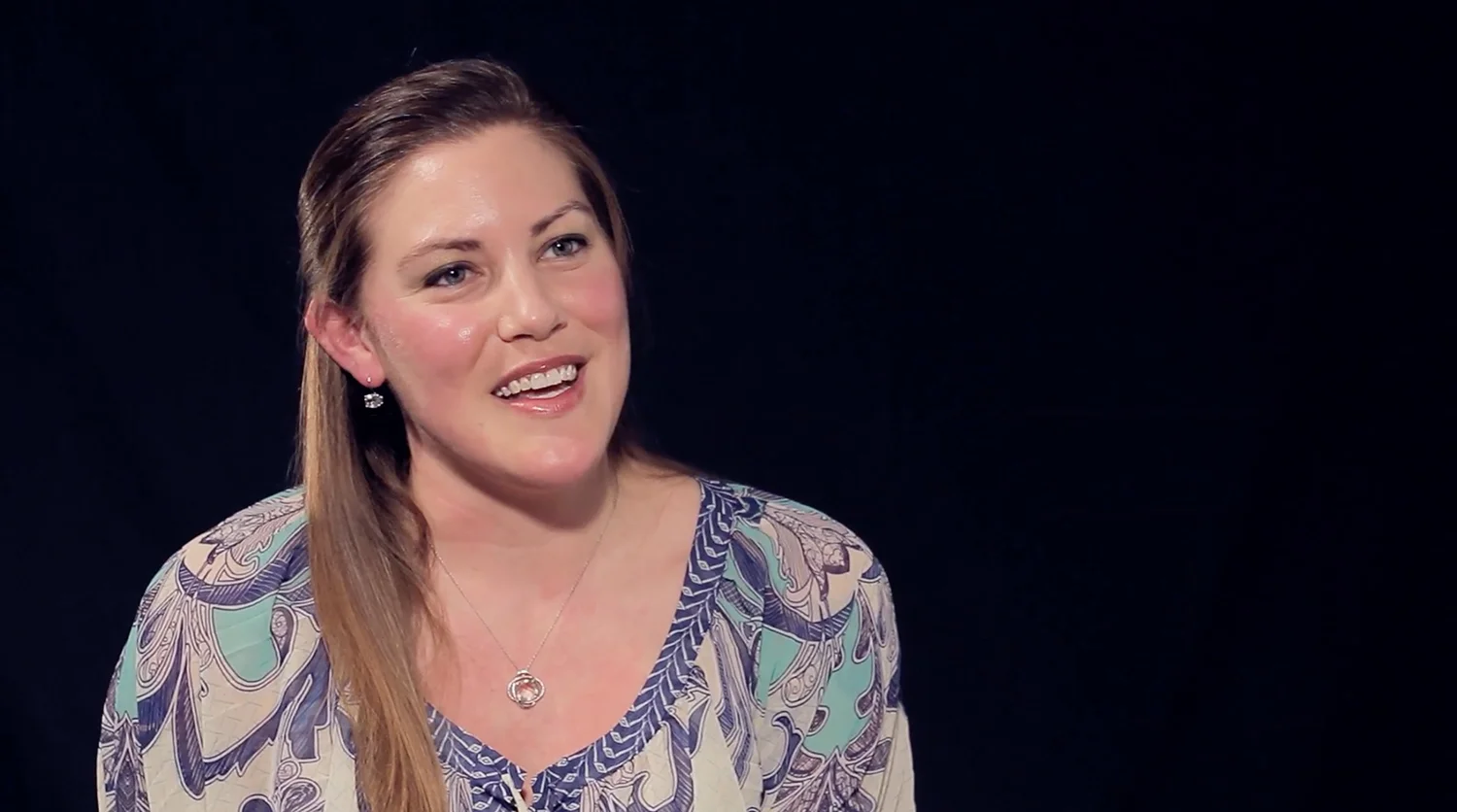
In Chapter 1 of 19 in her 2012 Capture Your Flag interview, non-profit executive Courtney Spence answers "What Did Giving a TED Talk Teach You About More Effectively Telling Your Story?"  The preparation process for her TEDxPeachtree talk in Atlanta teaches Spence to separate her story from her organization and focus on identifying core values and believes.  Spence discusses how she then was able to create a narrative arc to more effectively tell her story in the TED Talk time constraints.  Courtney Spence returns to Capture Your Flag for her Year 3 interview.  As Founder and Executive Director, Spence leads non-profit Students of the World to empower college students to use film, photography, and journalism to tell stories of global issues and the organizations working to address them.  Spence graduated with a BA in History from Duke University.

Transcript:

Erik Michielsen: What did giving a TED talk teach you about more effectively telling your story?

Courtney Spence: I was honored to give a TED talk in Atlanta in November. And I had a few months to prepare for it. I think the great challenge was for me not using notes. As a public speaker, I tend to always speak with notes of some capacity, whether it’s the actual speech written out or just some sort of bullet points. So it really challenged me to come up with a very effective narrative arc that would make sense for me as I was actually giving the speech. So it wasn’t that I had notes to refer to but the story really kind of followed into a path that would make it easy for me to deliver it and easy for me to communicate it. I also had a very strict limit of time and wanted to really incorporate media elements as a part of my speech and so it was also challenging because the kind of, the number one rule was that you couldn’t talk about what you did. Like you couldn’t talk about your organization for more than just setting up what it was that you were going to be speaking about.

So, you know, I was talking about the transformative power of storytelling in areas that are going through recovery from massive situations whether it’s Haiti or New Orleans. These are experiences that I’ve had through my organization but haven’t – but wasn’t able to talk about Students of the World. So it was really – it was a really wonderful challenge because I recognized that when I often speak, I often speak about Students of the World, so this was really more about what do I believe in? What has Students of the World taught me? What do I think is a really important message that needs to be conveyed? And for me that I feel so passionate about places like New Orleans and Northern Uganda and Haiti, and the need for the continuous storytelling to come from these areas that have gone through earth-shattering, literally earth-shattering disasters, either man-made or environmentally made. So it was really – it was a nice opportunity to force me to really dig deep and figure out what I believe and how to communicate that effectively. And it was wonderful.

Courtney Spence on How to Use Story to Articulate Your Company Vision

In Chapter 2 of 19 in her 2012 Capture Your Flag interview, non-profit executive Courtney Spence answers "How Are You Becoming Better At Articulating Your Vision?"  Spence uses story to explain her purpose.  She realizes her organization was spending too much time telling partner stories and needed to focus internally and tell its own story.  Courtney Spence returns to CYF for her Year 3 interview.  As Founder and Executive Director, Spence leads non-profit Students of the World to empower college students to use film, photography, and journalism to tell stories of global issues and the organizations working to address them.  Spence graduated with a BA in History from Duke University.

Transcript:

Erik Michielsen: How are you becoming better at articulating your vision?

Courtney Spence: Well, I guess the last 6 months of 2011 were very internal months for us. What we recognized was we really had to work on our own story. We have been so busy telling the stories of others that we haven’t told our own. And when you have to tell your own story, you really have to dig deep, and what is your purpose?  And what is your mission? And what is your vision? What are you here really to do? What’s your big hairy audacious goal? You know, what can you be better at than anybody in the world? And what is your economic engine?

I mean it’s all the great lessons of Jim Collins, but what has been really nice is I’ve had a really great solid team to really sit down with over the course of the last few months and really figure out what is our vision? What is our mission? What is our purpose? And lots of debates over words and verbs and nouns and concepts, and it’s been a really intense process in some ways, especially for me because this is like my child, so I’d like to think we’re on our way to middle school so it’s the 12th year of Students of the World, so I’m very protective of it, but I’ve also recognized that I’ve been so entrenched in it that I have definitely needed other people to help me figure out what is it that we’re gonna really go do? What is our vision?

So for me, again, there’s been this change of similar to the TED talk experience of how do I talk about Students of the World, not in what we do but in what we believe? And there is so much more power and so much more opportunity to engage people when you talk about what you believe and what you stand for, as opposed to we do this really cool program, you should consider participating. And that switch has been a difficult one for me but super empowering and super encouraging, so.

Courtney Spence on How Reflection Informs Personal Growth

In Chapter 3 of 19 in her 2012 Capture Your Flag interview, non-profit executive Courtney Spence answers "What Role Does Reflection Play in Your Personal Growth?"  Spence notes how life lessons do not happen in the moment and, instead, how they happen when you take time to reflect on that moment.  She details how she revisits her childhood journaling experiences and brings that back to present to be more conscious of having a reflective process in her life.  Courtney Spence returns to Capture Your Flag for her Year 3 interview.  As Founder and Executive Director, Spence leads non-profit Students of the World to empower college students to use film, photography, and journalism to tell stories of global issues and the organizations working to address them.  Spence graduated with a BA in History from Duke University.

Transcript:

Erik Michielsen: What role does reflection play in your personal growth?

Courtney Spence: So I heard this line a few months ago. I’ve used it in a couple of speeches, but, you know, they say that life lessons don’t happen in the moment, they happen when you take the time to reflect on that moment. So you can go through trials and tribulations, and celebrations and successes, but if you don’t actually stop to reflect on what happened, and why it happened, and who made it happen, and what did you learn from that. You really won’t take those lessons with you through the rest of your life. Or you won’t – you might take them with you for a year but not for 40.

So reflection for me is super important and it always has been, I mean I think back to the ways I got through my awkward years in middle school and high school, and the angst and the worry, I mean I go back to my house and –  my parent’s house, and I just have stacks and stacks of journals, and I recognize that for me in my teens and my early 20’s, when I was really searching for a path, journaling and reflection were a big part of that. Now granted sometimes it was about boys, a lot of the time it was about boys but that was a lot of what – you know? As a teenager, you’re struggling with, right? And it’s really something that I lost there for a while, as I was just going, going, going, I wasn’t reflecting, and I think that I found myself in situations where I couldn’t believe I was in that situation again, whether it was professionally or personally, and I’ve recognized that I need to go back to my roots, which is journaling and reflecting, and really writing it out. I mean I can think through things, but if I don’t have a pen and a paper to share it with or a friend to share it with, I really don’t process things as effectively as I want to. So reflection is key. Key.