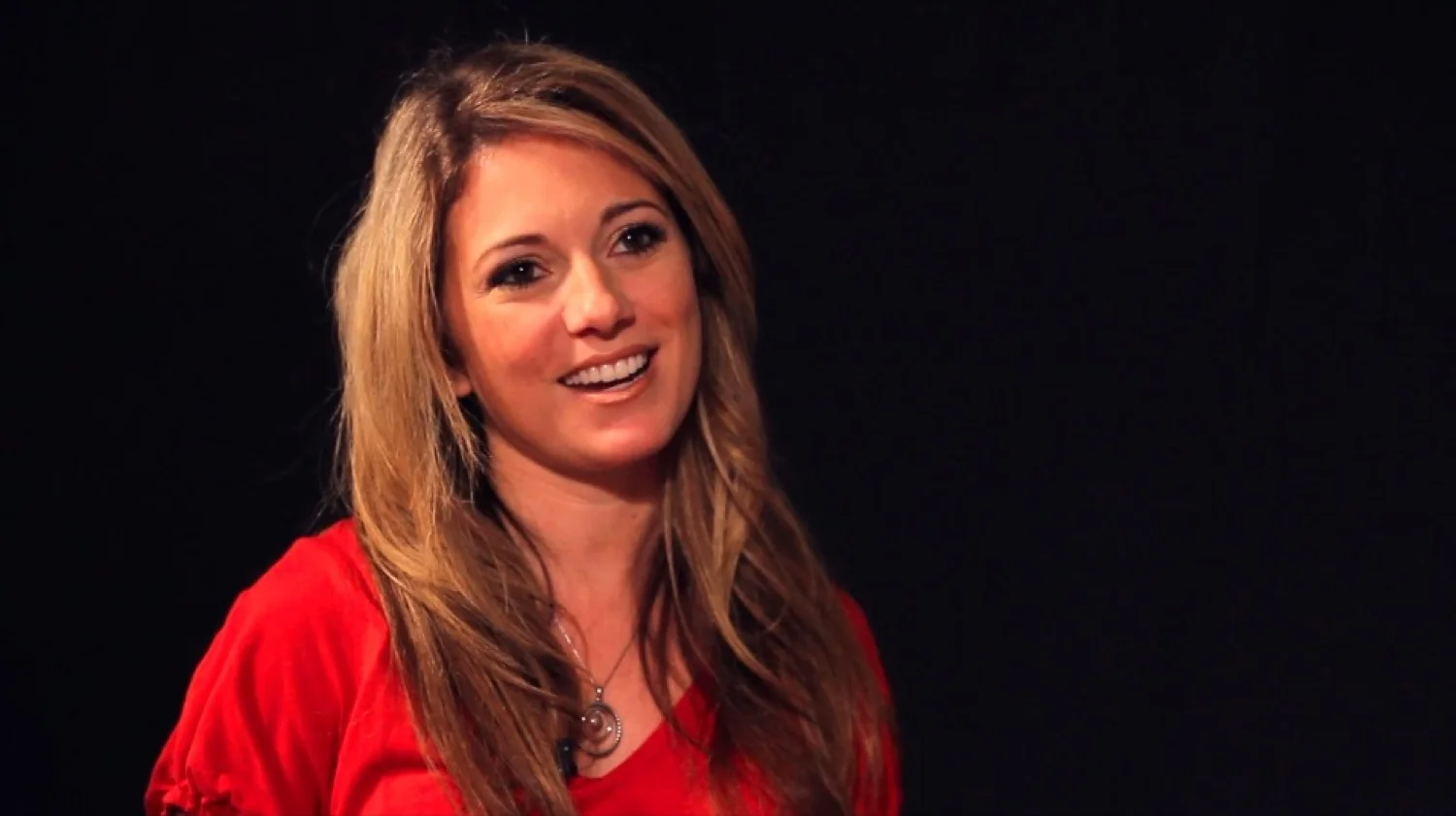
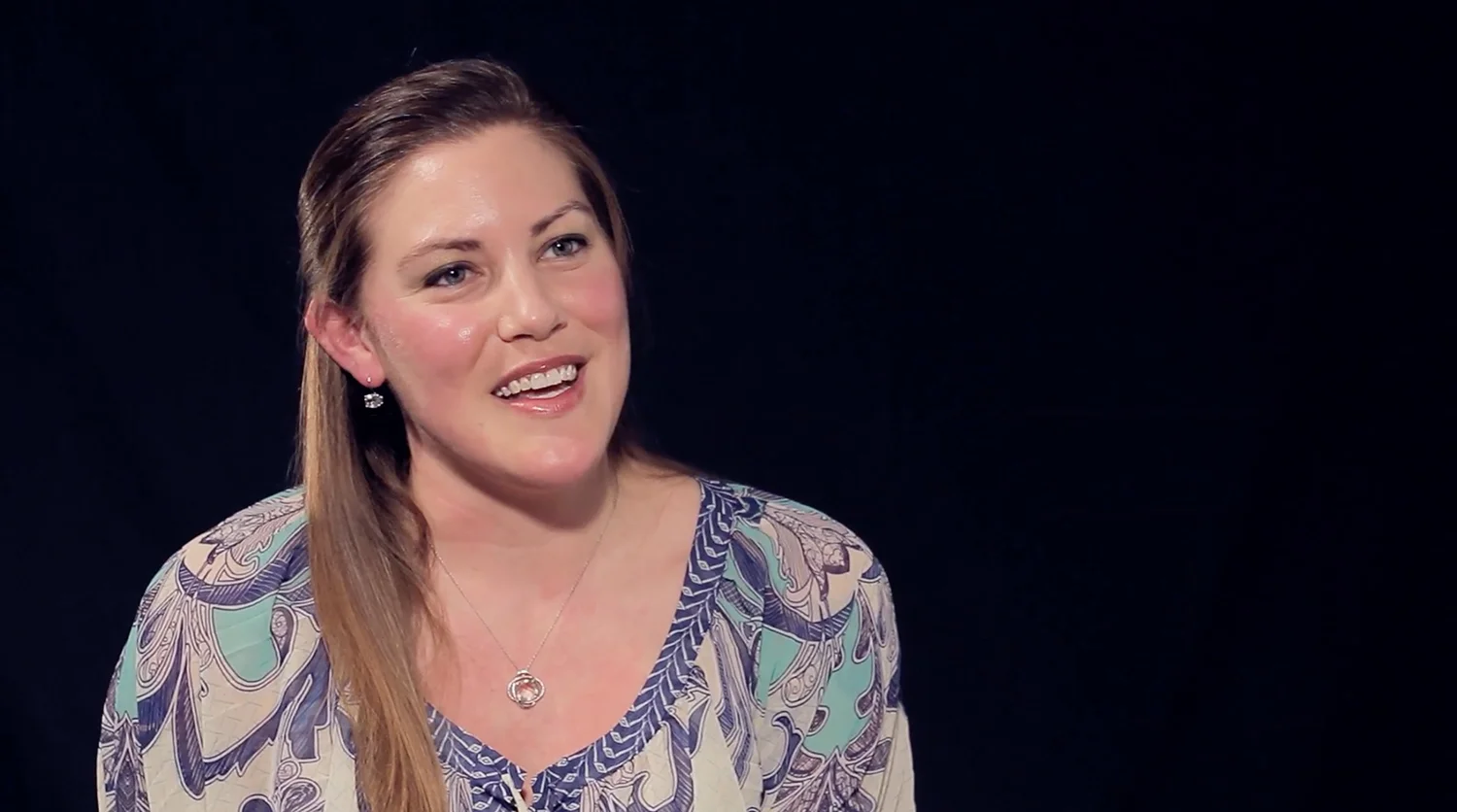
Courtney Spence on How Aspirations Change As Career Matures

In Chapter 4 of 19 in her 2012 Capture Your Flag interview, non-profit executive Courtney Spence answers "How Are Your Aspirations Change As Your Experience Grows?"  After 12 years building a program, she finds an urgency to do more to tell the stories of progress that will educate students, life non-profits, and transform communities in need.  Through the process, she builds confidence, reaffirms her conviction to her cause, and gathers experiences and skills to elevate organizational aims further.  Courtney Spence returns to Capture Your Flag for her Year 3 interview.  As Founder and Executive Director, Spence leads non-profit Students of the World to empower college students to use film, photography, and journalism to tell stories of global issues and the organizations working to address them.  Spence graduated with a BA in History from Duke University.

Transcript:

Erik Michielsen: How are your aspirations changing as your experience grows?

Courtney Spence: My aspirations are changing drastically. And I think what has happened for me is the blinders were lifted a bit and I recognized that when – as we start to really cultivate, you know, our vision and what we believe in and as I was alluding to earlier like being able to articulate not what we do but what we believe in made me realize that we could be doing so much more. And when we really believe that we wanna change the dialogue from problems to progress, when we really believe that the greatest contribution that the millennial generation can give right now is through media and communications and we believe and know that there are non-profits and causes who desperately need their stories told, and we live in a society that needs to hear those stories, then all of a sudden, we realized we got a big job to go do.

I love the program that we have run to date, but, man, we gotta do more. And there is an urgency to that drive, and there’s this real knowledge that we have something to give the world that the world needs. And there’s no ego in that, it’s just we have a concept and we’ve been in this space and we’ve done a lot of the hard work and really kept our head down when we did that work, and all of a sudden, it’s like I looked up and I was like, but, you know, there are so many more stories that need to be told, there are so many more students that wanna get involved in this kind of work, there are so many 20-something and 30-something individuals that wanna give their time and their talents, and they just don’t necessarily have that outlet or know how, so as I am maturing as an individual, I think I’m also gaining more confidence in the kind of work that I can go do.

Quite honestly, when I was given an opportunity to give a TED talk, I was pretty shocked, I was like, wow, I mean, do I – what am I gonna talk about? And not to say that I’m an expert by any means, but I’ve started to recognize that I’m not 22 any longer, I’m 32, I’ve been doing this Students of the World gig for 12 years, that’s a long time. I don’t think that I really understood how long of a time that was, you know, I think in a lot of ways, I had been thinking as if I was a 23, 24-year-old that was just starting out in this endeavor but I’m not. And our organization is not, and our organization has matured. And we now stand on a foundation of a dozen years of really hard work and there is knowledge and there is understanding and there is compassion that comes from that. And so we’re gonna use that and go do something even bigger than I had dreamed we could ever do. So, it’s changing.

Courtney Spence on How Travel Creates Cathartic Moments

In Chapter 5 of 19 in her 2012 Capture Your Flag interview, non-profit executive Courtney Spence answers "What Have You Found Most Rewarding About Traveling to New Places?"  Spence notes how the art and journey of traveling has helped her find breakthrough moments in her life.  She notes the trips need not be exotic; rather, it is about the experiences that make a trip and resulting positive and inspirational impact they have in her life.  Courtney Spence returns to CYF for her Year 3 interview.  As Founder and Executive Director, Spence leads non-profit Students of the World to empower college students to use film, photography, and journalism to tell stories of global issues and the organizations working to address them.  Spence graduated with a BA in History from Duke University.

Transcript:

Erik Michielsen: What have you found most rewarding about traveling to new places?

Courtney Spence: I think new places prompts new ideas. Big landscapes prompt big ideas. I think there is so much to the art and the journey of traveling. Even if it’s being in an airport or flying in an airplane or being in a train or driving a car, I think that it’s not about the destination, as much as it is about the actual journey itself. And I’ve realized that I’m fortunate that I’ve always loved the journey. I actually love flying. I, you know, couldn’t help that I’m really short and so the little spaces I can fit into easily, but I really do enjoy that process of meeting new people and seeing things I hadn’t seen before and really have, particularly in the last 6 months, recognized the need – when you’re trying to think of new things, or you’re trying to go through a breakthrough or you’re up against a wall and you just – you’re in a rut or you need something big to shift, you’ve gotta move yourself out of the location that you’ve been in and the locations quite frankly that you’re familiar with to really breakthrough effectively. At least that’s what I need.

So, I’ve seen it happen and I’ve been able to sort of reflect on the moments where we have gone through breakthroughs with Students of the World, which are also breakthroughs for me personally. They’ve really come from going to new places. And, you know, places like Chesapeake Bay or Norfolk, Virginia, I mean they’re very – it doesn’t have to be exotic necessarily, it just has to be new. So I’ve learned a lot about that, and particularly recently, so.

Courtney Spence on How Personal Priorities Change With Age

In Chapter 6 of 19 in her 2012 Capture Your Flag interview, non-profit executive Courtney Spence answers "How Are Your Personal Priorities Changing As You Get Older?"  Spence shares her challenge with cultivating a meaningful life outside work.  She details how in the months before the interview, she has learned the personal and professional benefits of making her personal life a priority.  Courtney Spence returns to Capture Your Flag for her Year 3 interview.  As Founder and Executive Director, Spence leads non-profit Students of the World to empower college students to use film, photography, and journalism to tell stories of global issues and the organizations working to address them.  Spence graduated with a BA in History from Duke University.

Transcript:

Erik Michielsen: How are your personal priorities changing as you get older?

Courtney Spence: I just realized, literally in the last 2 weeks, I never really prioritized having a life outside of Students of the World. And if I started to have one, I felt guilty about it. And I didn’t realize this. I’ve always been someone that works hard and I’m fortunate that I get to work hard on something that I believe in and something that I helped to create or I created, and it’s something that I love to do, so it doesn’t feel like work, it doesn’t feel like a job. But I didn’t – I didn’t really allow for myself to truly cultivate a life outside of that. I think that there are times I thought I did but in reality I think my mind and my heart was always focused on Students of the World.

So part of the last – the evolution of these last 6 months as well as Students of the World is growing and I think I’m growing as a person too and recognizing that having a life – a meaningful life outside of Students of the World actually makes me more effective at what I do for Students of the World, and it makes me a more effective leader. It makes me more efficient in the way that I work. It’s a motivator to do really great work and do it well, and do it in maybe a little bit less time because I gotta do some other things outside of it.

So my priorities are definitely shifting and it’s still in line with wanting to move the ball forward with Students of the World and what we’re trying to do and really change the narrative, nationally, internationally, from problems to progress, I mean we – it’s all in line with that big goal that I have but it’s also motivated by the understanding that I need to have that as a priority as well in terms of my personal life and my relationships, and to take care of myself perhaps better than I have before, so I can take care of the people I love, and an organization that I love as well.

Courtney Spence on How Family Relationships Change With Age

In Chapter 7 of 19 in her 2012 Capture Your Flag interview, non-profit executive Courtney Spence answers "How Are Your Family Relationships Changing as You Get Older?"  Spence shares how the relationships are strengthening and why she is learning new ways to appreciate her family as she moves into her 30s.  Courtney Spence returns to Capture Your Flag for her Year 3 interview.  As Founder and Executive Director, Spence leads non-profit Students of the World to empower college students to use film, photography, and journalism to tell stories of global issues and the organizations working to address them.  Spence graduated with a BA in History from Duke University.

Transcript:

Erik Michielsen: How are your family relationships changing as you get older?

Courtney Spence:  They’re strengthening, you know, I am blessed to have been raised by 2 wonderful parents and a wonderful brother and a wonderful sister. I mean my immediate family and then my extended family have been a big part of shaping who I am for the good, for the absolute good. I mean, I wake up every day thankful for the family that I have and I’ve always been close with them but as I get older my ability to appreciate them grows. And even though I don’t think it can – I can appreciate them any more than I can today, I know I will tomorrow, I think especially as you start to accelerate into your 30’s, I feel like I am – I think I’m learning more than I ever have before.

I feel like I’m in a place personally where I am motivated again by cultivating my personal life and really thinking about where do I wanna be in 10 years, in 20 years. And as I think about those things, really for the first time ever, I mean I’ve never been someone that really plans my life out or is like I wanna go be that in 30 years.

And I’m starting to think in those ways, and not that I want to mark things by money or that house or that car, it’s more of the kind of life I wanna lead, and who do I wanna be as I get older. And as I’m thinking through these things, I’m looking to my parents predominantly and seeing where they are and learning from them and seeing them go through, you know, great times and difficult times, as they are, you know, at their age now. And I think because I have that appreciation that’s growing for them, my relationships with them are strengthening as well.

Courtney Spence on Comparing Non-Profit Leadership and Management

In Chapter 8 of 19 in her 2012 Capture Your Flag interview, non-profit executive Courtney Spence answers "How Do Leadership and Management Differ in What You Do?"  Spence shares how both leadership and management play into her Executive Director work in the midst of her organizational growth phase.  She details the vision casting elements of leadership and the one-on-one nature of management in describing the differences.  Courtney Spence returns to CYF for her Year 3 interview.  As Founder and Executive Director, Spence leads non-profit Students of the World to empower college students to use film, photography, and journalism to tell stories of global issues and the organizations working to address them.  Spence graduated with a BA in History from Duke University.

Transcript:

Erik Michielsen: How do leadership and management differ in what you do?

Courtney Spence: Leadership is about setting the big goals and having the vision and having the guts to go after it, and having the ability to be confident even in the times when you’re not wholly confident, and I’m not saying it’s an act, I think there is an essential quality of a leader to be honest in the moment and as, you know, we’re going through a time of scale and growth, it is scary, it is exciting but it’s also scary, and I think being able to acknowledge that fully to the people that you’re working with and that work for you, is really important, but it’s also really important to stay really strong emotionally and stay really strong in your convictions. And kind of set that tone as you head upward or westward or wherever that looks like.

Management to me is about – is much more a one-on-one relationship and helping people continue to stay on that path with the organization, and with the leadership that’s been provided, and really making sure that everybody has a say in that and is a part of that, and feels engaged in the big vision, and engaged in how we’re gonna get there. And that they are encouraged when they need to be, but also that, you know, if certain people are starting to fall off, or this isn’t the right journey for them, being able to see that as it cultivates and really anticipate that before it becomes an issue. And I think that management to me is a much more personal one-on-one relationship and leadership is much more of here we are, big family, and we’re headed west, and this is what we’re gonna go do. So they’re very different but they’re very – they’re equally important and equally challenging too.

Courtney Spence on How Recruiting Priorities Change as Non-Profit Grows

In Chapter 9 of 19 in her 2012 Capture Your Flag interview, non-profit executive Courtney Spence answers "How Are Your Recruiting Priorities Changing As Your Organization Grows?"  Referencing Jim Collins, author of "Built to Last", Spence notes how it is about getting the right people on the bus and in the right seats.  She shares how growth requires more specialization in job description and greater demand for positive minded team members who critique constructively.  As Founder and Executive Director, Spence leads non-profit Students of the World to empower college students to use film, photography, and journalism to tell stories of global issues and the organizations working to address them.  Spence graduated with a BA in History from Duke University.

Transcript:

Erik Michielsen:  How are your recruiting priorities changing as your organization grows?

Courtney Spence: So – I know I talk about Jim Collins a lot but he always talks about the importance of getting the right people on the bus. And, you know, the right people in the right seats on the bus is really, really important and I think that the growth that we have gone through this last half year went from a core staff of 3 that did all things all the time always, all 3 of us, to a staff including volunteers of 12 to 15 where everybody has a defined role and responsibility. Now, granted there’s a lot of fluidity to that definition, we’re still a scrappy, boot-strapping type organization but I’ve recognized the importance of not just getting the right people on but the right people in the right seats.

And the importance of getting people who are really motivated by the vision that you have, and they might differ on how we get to that vision and you want them to challenge you on decisions you make, and you want them to be part of shaping the how we get there, but you cannot, absolutely cannot especially in times of growth and scale, have people on board that are naysayers for the sake of saying nay. You know, you can’t have people that are gonna be challenging and critical because that might be his or her nature, you can’t have people that are challenging and critical because they are scared about the direction you’re going in.

You really need to find people that are gonna be challenging and critical for the ultimate purpose of getting to that vision more effectively and more quickly and more meaningfully than you might know, if that make sense, so I think the – my recruiting and my understanding of who are the people that we wanna add onto our family has really, really matured in the last 6 to 9 months significantly.

Courtney Spence on How to Increase Alumni Community Engagement

In Chapter 10 of 19 in her 2012 Capture Your Flag interview, non-profit executive Courtney Spence answers "What Steps Are You Taking to Create a More Engaged Alumni Community?"  Spence details how her organization is creating in-person programs to bring her alumni together and strengthen the kinship and bonds across graduating years.  Courtney Spence returns to CYF for her Year 3 interview.  As Founder and Executive Director, Spence leads non-profit Students of the World to empower college students to use film, photography, and journalism to tell stories of global issues and the organizations working to address them.  Spence graduated with a BA in History from Duke University.

Transcript:

Erik Michielsen: What steps are you taking to create a more engaged alumni community?

Courtney Spence: So we’ve had about 300 alumni go through the program to date. And this last August we held our first Students of the World summit and we called it “re-engaged for good”. And it was really targeted at our alumni, we invited past partners and speakers, and thought leaders in the realm of, you know, film and communications and development. But we really focused on bringing together our core alumni. And it was the first time that we’d ever physically brought together our community into a space. And in a day and age where you have, you know, the ability to do Brady Bunch video, you know, calls through Skype or Google, you have all of these ways to connect with people virtually, I think what I realized in August was you can never – we will never be able to replace what happens when you bring people together in person. And there is such a need for that. And it’s – it needs to be done well and for the right purpose.

So when we brought our alumni together, whether it was listening to great speakers or having margaritas, I just got to see our alumni interact in ways that they had never have been able to interact before and the hugs and the tears and the enthusiasm that came out of that weekend was – It blew me away. And I recognize that, you know, whether or not they participated in Students of the World 12 years ago and went to Russia or they were in Tanzania last year, there’s a common experience that has been had and there’s a common thread for a majority of our alumni that make me realize that they need to know each other. They need that encouragement of that community. And we are the only ones that can provide that.

So we’ve really focused on building out an alumni board. We had a founding year of an alumni board that we selected and then this last year we actually accepted applications and we have a really great kind of diverse group of individuals that are committed to really bringing our alumni community together. And, you know, these are people that are wonderful, wonderful individuals that if I have to go war, I wanna go to war with them. And it’s really up to us to bring them together. So it’s been a big focus for us and one that I’m really excited to see grow over the next couple of years.

Courtney Spence on How to Effectively Delegate Responsibliity

In Chapter 11 of 19 in her 2012 Capture Your Flag interview, non-profit executive Courtney Spence answers "How Are You Learning to More Effectively Hand Off Responsibility?"  As an organization founder, after years feeling she knew best, Spence learns to trust her team with roles and tasks she previously held.  She realizes she is not the best person for many roles and turns her attention toward supporting those that best perform in those roles.  Courtney Spence returns to CYF for her Year 3 interview.  As Founder and Executive Director, Spence leads non-profit Students of the World to empower college students to use film, photography, and journalism to tell stories of global issues and the organizations working to address them.  Spence graduated with a BA in History from Duke University.

Transcript:

Erik Michielsen: How are you learning to more effectively hand off responsibility?

Courtney Spence: I’m learning a lot about handing off responsibility. I think that as a founder, you know, there’s founder syndrome, and there’s tons of articles and books written about it, but I do think that for many years it was – I felt that I always knew what was best from a big level to a very micro, small level. And what has been so powerful for me to see in the last few months is getting the right people on the right seat and the right place. They will make decisions and they will come up with ideas and solutions faster, better, smarter, more creatively than you ever could.

Now, they’re not gonna go necessarily run the organization now, I mean I’m still leading it and providing the leadership and the vision and, you know, the blood, sweat and tears of it. But I recognize that at some point that role will not be the role that I’m most effective at for the organization, just as I am now not the most effective person to do recruiting for our students necessarily, I’m not the most effective person in coming up with the curriculum and the programming for our students as they participate, we have people in our organization who are way smarter about that stuff than I ever would be. And it’s really exciting when you start to see as you hand off responsibility to others, see things happen in a way that you never dreamed it could. And I think that’s a very encouraging thing.

I needed to see that before I could really let go. At the same time, you also have to recognize that mistakes will happen and some things will slip through cracks but – I make mistakes all the time and things slip through the cracks for me all the time, and it’s not a matter of well, if I’d only been a part of that, this wouldn’t have happened. Those situations do arise but I think in general, when you have the team in place that you trust, handing over responsibility is absolutely essential, and you have to do it joyfully, willing-fully, and with great purpose. And that’s what we’re trying to do.

Courtney Spence on Why Non-Profit Invests Big in Social Media Marketing

In Chapter 12 of 19 in her 2012 Capture Your Flag interview, non-profit executive Courtney Spence answers "How is Your Non-Profit Learning to More Effectively Use Social Media?"  Spence details how her organization's social media marketing strategy has shifted drastically over the past few years.  She notes how traditionally non-profits are encouraged to invest most funds in programming and how that is finding more balance with marketing and communications initiatives involving social media.  Courtney Spence returns to CYF for her Year 3 interview.  As Founder and Executive Director, Spence leads non-profit Students of the World to empower college students to use film, photography, and journalism to tell stories of global issues and the organizations working to address them.  Spence graduated with a BA in History from Duke University.

Transcript:

Erik Michielsen: How is your non-profit learning to more effectively use social media?

Courtney Spence: So we realize, we tell stories of others, we don’t tell our own. We realize, oh, we’re on Facebook and Twitter and we had a website, but there was not real purpose or thought or monetary investment behind those efforts. I think that we’re seeing this transition from particularly in the non-profit world, you know, it’s you do your programming and your fundraising and your management, your administration, your marketing and communication, and, you know, you wanna put all or your money into programming, and that’s – the IRS encourages that, everybody wants to see that, but the truth is, that, you know, marketing and communications are no longer just something that you do on the side, they’re really essential to programming and I think that – I mean, this is what we believe at Students of the World that, you know, storytelling and video and photography and animation are all essential parts to fulfilling a mission because we – ‘cause non-profits truly causes are about movements, and movements take people and if people don’t know that you exist, how are they gonna you’re your movement?

So we – I think you’re starting to see a shift and I think we’re just at the very, very tip of it, very beginning, but you’re seeing a shift from some non-profits and causes that understand the real need to invest in social media and that it’s not something we do on the side and it’s not something we should be ashamed about doing or that we should downplay, it’s something that should be integral to our programming because that will make us more effective fundraisers, it’ll make us more effective as an organization, it’ll help us create a movement, and that is what is so exciting about social media and the possibilities but I think that’s also the great challenge is how do we – when budgets have to be slashed, when organizations can’t spend as much time, media marketing is like one of the first things to go and I think that’s a big mistake and that’s quite frankly a mistake that we made at Students of the World.

And it was only in the last, again, 6 months where it was like we can no longer afford to just sort of – pardon me, but kind of half ass that. We have to really invest in that, because that’s what we do, but that’s also how we’re gonna go build our movement and do what we do much better and bigger than we ever dreamed. So our whole approach to social media has drastically shifted.

Courtney Spence on How Fundraising Strategy Shifts as Non-Profit Grows

In Chapter 13 of 19 in her 2012 Capture Your Flag interview, non-profit executive Courtney Spence answers "How Has Organizational Growth Changed How Your Non-Profit Raises Money?"  Spence notes her progressive focus on infrastructure investment from philanthropic donors.  As her vision is progressively enabled by a supportive team and project experience, Spence shifts focus into larger fundraising and alternative revenue sourcing.  Courtney Spence returns to CYF for her Year 3 interview.  As Founder and Executive Director, Spence leads non-profit Students of the World to empower college students to use film, photography, and journalism to tell stories of global issues and the organizations working to address them.  Spence graduated with a BA in History from Duke University.

Transcript:

Erik Michielsen: How has organizational growth changed how your non-profit raises money?

Courtney Spence: So we’re just starting to really run with raising money and investment and it’s still philanthropic dollars but I’m now trying to raise investor dollars, I’m trying to raise money from people that wanna help me invest to my infrastructures so I can scale and I can go do the really big dream that we have. I’m not asking people to fund an organization as its existed for the last 5 years, I’m asking people to invest in where we are now so that we can grow and I think that – that is a very – a much more exciting place to come from when you’re trying to raise money, I think it’s really important to – and I didn’t really ever quite realize this to have that big vision, and have that right team in place, and have that right year one, year three, year five, even though that might change because you know it will, but having those big, you know, year markers and that big vision is really important to raising money, and I think that we are truly moving as an organization from that kind of survival mode to thrive, right, and we’re still very much trying to survive, but what I’m realizing is that as we pushed the ball forward with Students of the World the last few years, it was really still on this track.

And we’re now kind of veering off into something much bigger and greater, and as we do that, our organization grows, and as we do that we need to raise more money, and as we do that, we need to also find alternative sources of revenue, and recognize what do we have to offer this world that is of monetary value, and we believe we have quite a bit. And that’s a shift in thinking for me as well. So I am focusing on fundraising in a way that I have never before – scary.

But I’m also coming from a place of absolute confidence in where we’re going and who we’re going with and what we wanna go do, and that’s something I’ve never had before either, so I think it’s important to – you can’t force an organization to grow, it has to grow with the right time. And as much as I tried to make things happen, 5 years ago, 3 years ago, last year, the timing wasn’t right. And for some reason, the timing was right starting at about September of last year and here we are today, so.

How Entrepreneur Courtney Spence Seeks Advice and Mentors

In Chapter 14 of 19 in her 2012 Capture Your Flag interview, non-profit executive Courtney Spence answers "At This Moment in Your Life, Where Are You Seeking Advice and Coaching?"  Spence notes how she is seeking advice and coaching in new ways, including her board of directors.  After Spence finds herself lonely and isolated as an entrepreneur, she places a higher priority on building peer entrepreneur and female mentor relationships.  Courtney Spence returns to Capture Your Flag for her Year 3 interview.  As Founder and Executive Director, Spence leads non-profit Students of the World to empower college students to use film, photography, and journalism to tell stories of global issues and the organizations working to address them.  Spence graduated with a BA in History from Duke University.

Transcript:

Erik Michielsen: At this moment in your life, where are you seeking advice and coaching?

Courtney Spence:  I am seeking advice and coaching in ways that I haven’t before, for sure. I think if you’re gonna go do something big, or grow, or scale, you have to have mentors and people that can advise you. I, of course, have my parents. I have the members of our board of directors which are – we purposely have kept our board really small and they are people that I ultimately trust, and are guiding me just as much as they’re guiding the organization. I recognize that as we grow, that board of directors will need to grow and change as well, but right now it’s a really solid core group of individuals that can advise me from very different perspectives.

I would also say though that I think I am in a position where I would like to have a couple of more mentors in place, particularly female mentors, I think that I’ve never actively sought out mentorship before, and I have recognized that I desperately need that, especially from a female perspective. I think that just as I’m recognizing the need to surround myself with other entrepreneurs, I think there is a real need for – Well, let me just say this, I didn’t realize how lonely I was until about a few months ago, when I started to spend more time with other entrepreneurs through not any sort of purpose or it just – it just sort of happened. And when I was able to talk to people that had been through similar situations that I was going through and then understood that, you know, the need to be certain in times of uncertainty like that, you know, all of these things that I had been struggling with, I recognized, “Wow, I’ve been trying to do this all by myself”. And with not necessarily the adequate support.

And again, if wanna go run the most effective, wonderful organization movement that I can, I’ve gotta be supporting myself in some ways, so I am realizing that there is great value and need in having advice and mentorship.

Courtney Spence on How Support Networks Help Women Professionals

In Chapter 15 of 19 in her 2012 Capture Your Flag interview, non-profit executive Courtney Spence answers "What Makes a Women's Professional Network Valuable?"  Spence notes the majority of her organization is female.  She notes the career and parenting balancing challenges being a woman presents and the importance of both giving support to and receiving support from other women while finding that balance over time.   Courtney Spence returns to Capture Your Flag for her Year 3 interview.  As Founder and Executive Director, Spence leads non-profit Students of the World to empower college students to use film, photography, and journalism to tell stories of global issues and the organizations working to address them.  Spence graduated with a BA in History from Duke University.

Transcript:

Erik Michielsen: What makes a women’s professional network valuable?

Courtney Spence: Interestingly enough, our staff is 98% female. We work – it’s all women and it’s not purposeful it’s just how its happened. It’s been wonderful and I think what I’ve realized is I think women – everybody has their challenges and this is not a woe is us, but women do have a lot more to balance, in a sense of, you know, this – the urge and desires to have a family and the urge and desires to have a career, and just by default that women have to carry the babies for 9 months and deal with that repercussion, there’s a lot more to I think that struggle of I want – if I wanna be a mother, I wanna be a great mother. If I’m wanna be a professional, I’ll be a great professional, and I wanna do both. How in the hell am I gonna do both?

I think that, you know, I look at my mother and she was – she’s, I’m convinced, the best mother in the world. And I wanna be just like her if I choose that path to have children but how am I gonna do that and do Students of the World which is a child, and it’s my child that I have had for 12 years. So how do I do that? How do I struggle with the emotions that come with that? I think there’s, again, as you get into your 30’s, you start to really – you have to start making decisions that will affect the rest of your life. You have to start living more consciously than you did in your 20’s, or at least I have, because you do recognize that, you know, life doesn’t go on forever and that there are certain phases to life and you have to prepare yourself for those because you don’t wanna wake up one day and be like, how did I – I never made a choice, and this is where I am. I wanna be a lot more an active participant in my life personally.

And so as I’m struggling through what does that mean and what does that look like, finding other women to be supportive and give advice and go through those trenches with me and me to do that with others is really important because I think there’s not just the need to be mentored and supported but as women, we feel the need to support and mentor others in general, and there is great satisfaction that comes from that.

And I think that for me, the women – the women’s movement – and, you know, this started, you know, when I wrote a, you know, high school paper on the importance of first ladies, and I remember I sent a copy to then first lady Hillary Clinton. And I realized that Hillary has been such a really, really incredible role model for me, you know, that I, you know particularly since 2008, have recognized the need to really bring women together and that the importance of a woman’s network and how difficult that is because, you know, unlike other groups or cohorts, women are so diverse, you know, in physical locations, in socio-economic situations, but we all have the commonality of being female, of being a woman, and how do we bring that group together more effectively is a great challenge of our time I think.

Courtney Spence on Learning to See Networking as a Positive Pursuit

In Chapter 16 of 19 in her 2012 Capture Your Flag interview, non-profit executive Courtney Spence answers "How Are You Learning to Make Your Professional Network More Useful?"  Spence shares her personal and professional transition from being internal focused to being more receptive of external pursuits, in particular networking.  Over time she starts to push away from seeing networking in a negative connotation toward something positive.  Courtney Spence returns to CYF for her Year 3 interview.  As Founder and Executive Director, Spence leads non-profit Students of the World to empower college students to use film, photography, and journalism to tell stories of global issues and the organizations working to address them.  Spence graduated with a BA in History from Duke University.

Transcript:

Erik Michielsen: How are you learning to make your professional network more useful?

Courtney Spence: The last 2 months have been very external for me. So we were internal, figuring out our vision, what we’re gonna go do? How are we gonna go do it? Who’s gonna do it with us? And really, you know, the end of 2011 was very internally focused. I didn’t travel as much. I didn’t take meetings. We did retreats and we, you know, we just built our team. And the whole concept was we would build our team so that come January 1, 2012, Spence would get out on the road and start to – not just raise money, but raise partnerships, like as we scale and grow, we want to do it with others. I mean there is such power in collaboration – what we do by nature is collaborative and we’re not gonna go do the big things without really great partners and purpose. So I’m not just out trying to raise donor dollars, I’m really trying to raise partners and bring more people onto our side and our team, and what’s been really exciting about being in that very external phase is that I have started to really expand our network and also started to see ways in which people connect.

I think one of the things I would love to do in the next couple of months is actually visually represent who is the Students of the World community and network, because dots are starting to connect in places I never would have dreamed. And I think there’s something about that kind of synchronicity that’s very encouraging and exciting, but you have to be in the right place and with the right frame of mind to see those connections and appreciate them. I think network prior to this phase that I’m in, network and networking had a very negative connotation for me. I think I really thought of it as a wheeling and dealing and – for some reason, it just didn’t – it didn’t sit right with me.

But I’ve realized it’s about we have something that we think is really important and we wanna go do. And we have to do it with other people, you don’t achieve success alone. And the only way we’re gonna bring the right people on is by being out there and being -- and networking, and by really figuring out who are the people that believe in this and want to be part of it. It’s a very positive thing, it’s not a negative thing, it’s very positive. So that’s been a pretty big transformation for me.

Courtney Spence on How to Define Social Entrepreneurship

In Chapter 17 of 19 in her 2012 Capture Your Flag interview, non-profit executive Courtney Spence answers "How Do You Define Social Entrepreneurship?"  Spence learns from her father, who learned from his mother, it is about leaving the world a better place than he or she found it.  She believes it has little to do with legal structure - for-profit or not-for-profit - and more to do with cause, intention, and purpose to affect change.  Courtney Spence returns to CYF for her Year 3 interview.  As Founder and Executive Director, Spence leads non-profit Students of the World to empower college students to use film, photography, and journalism to tell stories of global issues and the organizations working to address them.  Spence graduated with a BA in History from Duke University.

Transcript:

Erik Michielsen: How do you define social entrepreneurship?

Courtney Spence: So a social entrepreneur wants to leave a place better than he or she found it. That is a lesson that my father taught me, that was taught to him by his mother. But if I think if you distill it down, what is a social entrepreneur, it is someone that cares about the world or their community or their family or an individual and wants to help make that situation better through his or her actions and leadership and idea. And, you know, that can be for profit, it can be non-profit, I quite frankly wish that we could stop using those words to describe what it is that we do, because quite frankly they’re legal structures, you can have non-profits that are terrible and that hurt the world and you can have for profits that are great and help the world. But what, you know, the best are the ones that do well and do good, and that are social enterprises and that are cause driven, that are socially driven and I think the world could use more of them.

Courtney Spence on Why to Teach Entrepreneurial Spirit in Schools

In Chapter 18 of 19 in her 2012 Capture Your Flag interview, non-profit executive Courtney Spence answers "How Can the Education System Better Prepare Social Entrepreneurs?"  Spence differentiates between entrepreneurs who have started organizations from those with entrepreneurial spirit who want to create something new.  She shares how the education system - middle school, high school, and college included - should turn focus to teaching the entrepreneurial spirit and how to help students thrive in uncertain times.  Courtney Spence returns to CYF for her Year 3 interview.  As Founder and Executive Director, Spence leads non-profit Students of the World to empower college students to use film, photography, and journalism to tell stories of global issues and the organizations working to address them.  Spence graduated with a BA in History from Duke University.

Transcript:

Erik Michielsen: How can the education system better prepare social entrepreneurs?

Courtney Spence: Well, first of all, I think it’s really important to recognize the difference between someone who is an entrepreneur and someone who has the entrepreneurial spirit. So what I’m noticing with the team that we’re putting together with Students of the World, everybody is motivated by an entrepreneurial spirit. Everybody is excited by the big challenge and even the uncertainty and really is finding, you know, excitement and drive and motivation, not through what are they getting paid or where is their name gonna go on the collateral or on the website, it’s really through this idea of we’re creating something that wasn’t there before. Does that mean that everybody that’s a part of our organization is an entrepreneur? Not necessarily.

I think that an entrepreneur is someone that in that capacity can help set leadership and vision but the – everybody on our team has the entrepreneurial spirit. So I think there is an importance that is lacking in educational system, and this is middle school, high school, and college quite frankly, that helps to encourage that entrepreneurial spirit and that idea of thriving in uncertain times, I mean that’s I think the world is trended that way and I think we all recognize over the course of the last decade that uncertainty is the only certain thing we have, and the really successful individuals and organizations are gonna be ones that can thrive through in uncertainty and uncertain times, externally and internally.

And I think that our education system could do more to support whether it’s teenagers going through those uncertain years or whether it’s college students preparing them for when they leave college, those – there are some massive uncertain years that happen right after college and most people that I talk to say, “Well, no one told me that this was gonna happen.” So I think that really preparing individuals to find internally the strength and the courage to get him or her through those tough times, those uncertain times, will help to foster entrepreneurship in general.

Advice from Courtney Spence on Starting Career in Social Entrepreneurship

In Chapter 19 of 19 in her 2012 Capture Your Flag interview, non-profit executive Courtney Spence answers "What is Your Advice to Aspiring Social Entrepreneurs on How to Start a Career?"  Spence details the importance of curiosity and cultivating it through research and conversations.  After gaining enough inputs Spence notes how aspiring social entrepreneurs will be better prepared to take action on the knowledge gained.  Courtney Spence returns to CYF for her Year 3 interview.  As Founder and Executive Director, Spence leads non-profit Students of the World to empower college students to use film, photography, and journalism to tell stories of global issues and the organizations working to address them.  Spence graduated with a BA in History from Duke University.

Transcript:

Erik Michielsen: What is your advice to aspiring social entrepreneurs and how to start a career?

Courtney Spence: One of the essential qualities of really great entrepreneurs and social entrepreneurs – the essential characteristic is that of curiosity. I think that we are all curious human beings but I think entrepreneurs, in general, are -- tend to be more curious than others, and so really understanding how to cultivate that curiosity and how to encourage that curiosity, and I think the ways to do that are by reading, and by meeting with new people, and going to new places, and really – as you’re trying to incubate your idea, really seeking out advice from as many people as you can, from as many diverse fields as you can.

I mean if you’re gonna go create a non-profit, don’t just go talk to people that run non-profits, you know? That’s why I think, you know, South by Southwest is such a great conference and a time to be in Austin irregardless of whether or not you’re in tech or communications or music or film, I think that you come here and you’re emotionally and intellectually stimulated in so many different ways and if you are an entrepreneur, and you’re coming up with an idea or a plan to change the world, you need to be stimulated in a lot of different ways, and in ways that you’re not anticipating right now. Because if you only cultivate that one aspect of what you’re trying to do, you put blinders on and you limit not only what you could really go out and do but how effective you can be in your mission and what you’re trying to achieve.

So really cultivating that curiosity and really soaking up as much information and knowledge and reading and conversations, and then knowing when to stop. Because at some point you will find that everybody has an opinion and everybody is giving you advice and some people say go right and some people say go left, and some will say go up, and then others will say go down. You will always get conflicting advice, and at some point you have to know, okay, I’ve taken in a lot, I need to retreat and really reflect on the advice I’ve been given, on the articles that I’ve read, on the books I’ve been reading, and figure out where is the right direction for me to go with this idea, this organization or for myself.

Making a Mindset Shift to Be More Open to Marriage

In Chapter 1 of 15 in her 2012 Capture Your Flag interview, entrepreneur Audrey Parker French answers "How Has Taking Time Away From Work Given You a Fresh Perspective on Life?"  During her time off from work, she reconnects with family and meets her husband.  The time off work allows her to shift from capturing her flag in career to capturing her flag in life and personal relationships. 

Audrey Parker French returns to CYF for her Year 3 interview after a one-year sabbatical from work and getting married.  She co-founded CLEAResult, an energy management consulting firm.  In 2010, CLEAResult ranked #144 in the Inc. 500 list of fastest-growing private companies.  In late 2010, CLEAResult was sold to General Catalyst Partners.  She graduated from Wake Forest University. 

Transcript: 

Erik Michielsen: How has taking time away from work given you a fresh perspective on life?

Audrey Parker French: Well, in several ways. First of all, it gave me time to reconnect with family and to meet my husband. About a year ago actually, very similar time to this interview last year, I had just met the man who just 2 months ago became my husband. And I – over the last 5 to 6, 7 years, the intensity of my work and my career had made it such that I was putting so much energy into those things because that really was my passion. That was the flag that I was capturing at that point in time. I really didn’t have time for the relationship, a really strong meaningful relationship.

And so – and I also didn’t have as much time to connect with friends and family, and over this last year, the energy that I didn’t even realize that I had been putting into my career all of a sudden became really available to me to reconnect with old friends, to develop my bonds with my family further that I really hadn’t even realized that it would be more surface level, shorter conversations with them when I was working really, really hard constantly.

And all of a sudden, I could have deeper more meaningful conversations more often and the combination of those things just making space for new people, my husband, his family, the new people that have come into my life. It’s been a really incredible year to have all that space and that energy freed up.


Why to Travel to Foreign Places

In Chapter 2 of 15 in her 2012 Capture Your Flag interview, entrepreneur Audrey Parker French answers "What Have You Found Most Rewarding About Traveling to New Places?" French not only learns to be more open to new experiences while traveling abroad but also to embrace home more fully after getting a new sense of appreciation for Austin, Texas. 

Audrey Parker French returns to CYF for her Year 3 interview after a one-year sabbatical from work and getting married.  She co-founded CLEAResult, an energy management consulting firm.  In 2010, CLEAResult ranked #144 in the Inc. 500 list of fastest-growing private companies.  In late 2010, CLEAResult was sold to General Catalyst Partners.  She graduated from Wake Forest University. 

Transcript: 

Erik Michielsen: What have you found most rewarding about traveling to new places?

Audrey Parker French: I find that traveling to new places and experiencing new things just reminds us all that we can have new eyes when we look at things, a new perspective. And for the 6 weeks abroad that my husband and I enjoyed last fall, just really having the freshness of perspective to see that people’s lives are lived in all different ways, in all different languages, in all different cultures, and it helps free up any of the, you know, everyone does it this way, I have to do it this way kind of things that just run in the background of our minds that we don’t necessarily pay attention to.

It’s just like, well, this is how everybody does it, and when I – when we got the opportunity to travel and look around and see not everybody does this like this, not everybody eats like this or goes to work with the same attitude or for the same purposes or lives the same lifestyle, there’s just – there are so many new things to see and travelling is just an opportunity to have perspective on our own lives and learn anything and everything that we didn’t even know is out there to learn.

You can go to a new place and before you know it, you’re learning things about that place that make it special and unique, and it has you realize the special and unique things where you live, where – it was amazing just to come home. We started seeing our home – our hometown, Austin, Texas with new eyes. And really comparing it to other cities and countries and just saying, “We really have a new appreciation for where we live.” Seeing the quirks and the culture and the flavor and the things that for us are like home for us, and yet they are very different to other cultures. Other people of other places would come here and point out all sorts of things that they thought were different or interesting and to us it’s life -- it feels home, so it brought an expanded perspective to us of how other people live and a new appreciation for how we live here and just the fact that we love where we live and we love the culture and the people, and it really could be – all those things could be very, very different.