Using Entrepreneur Experience in Business Strategy Research - Ben Hallen


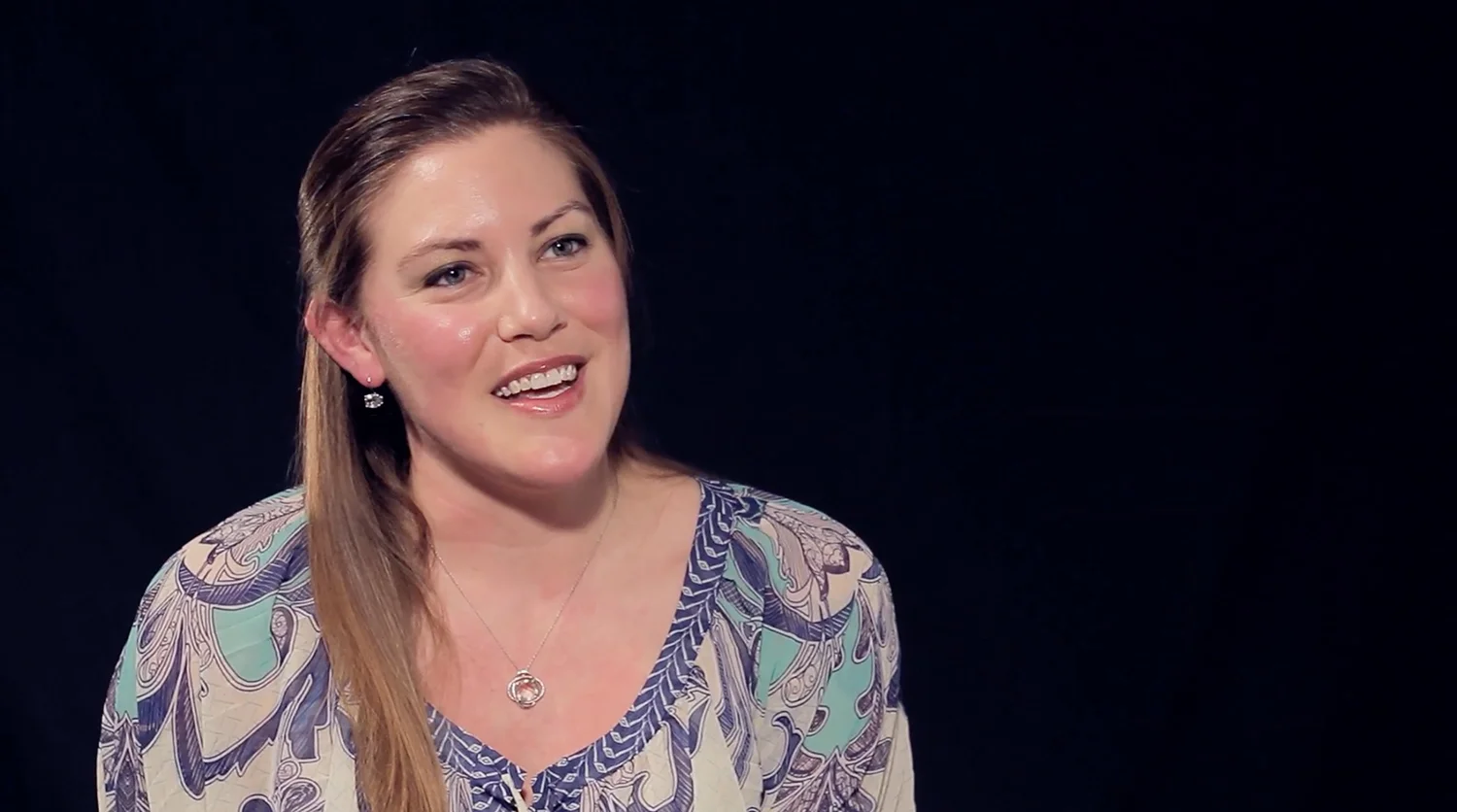
In Chapter 1 of 19 in her 2011 Capture Your Flag interview with host Erik Michielsen, Stacie Grossman Bloom answers "When Did You First Become Interested in Science?" She shares how it began as a child, from capturing fireflies to choosing Trivia Pursuit green (or science) questions to naturally being inquisitive to reading an Encyclopedia Britannica set end to end.
Stacie Grossman Bloom is now the Executive Director at the NYU Neuroscience Institute at NYU Langone Medical Center. Previously, she was VP and Scientific Director at the New York Academy of Sciences (NYAS). She earned her PhD in Neurobiology and Cell Biology at Georgetown University and did a post-doctoral fellowship at Rockefeller University in New York City. She earned her BA in Chemistry and Psychology from the University of Delaware.
Transcript:
Erik Michielsen: When did you first become interested in science?
Stacie Grossman Bloom: So, I became interested in science as a little kid, I think. I was always sort of running around the yard and capturing fireflies and looking at insects and playing with things, playing trivial pursuit -- I always wanted to land on the green, I was always I think naturally inquisitive and always really interested in science. I can’t remember really a time that I wasn’t questioning things, my surroundings, myself, religion. And I just really can’t remember a time where that wasn’t something interesting to me.
Erik Michielsen: What about this encyclopedia set that you picked up when you were 6 or 7 years old?
Stacie Grossman Bloom: So, when I was a kid there was a traveling encyclopedia salesman who came through my town and my father bought, at our front door, bought a set of encyclopedia Britannica’s -- those really big leather bound expensive sets of books. And, either he bought it separately or it came with like a children’s encyclopedia set. And, I remember literally reading the entire encyclopedia set. Starting with A and going all the way to the end and it was all illustrated, it was perfect for kids. Literally read the whole encyclopedia.
In Chapter 2 of 19 in her 2011 Capture Your Flag interview with host Erik Michielsen, Stacie Grossman Bloom answers "How Did One College Class Unexpectedly Springboard Your Science Career?" While studying psychology at the University of Delaware, she takes a graduate level course in a neuropsychology. She finds the small class forum and the neuroscience study of the brain align her studies to her interests. Grossman Bloom then thrives in the classroom, earning As and continuing to Georgetown for a PhD.
Stacie Grossman Bloom is the Executive Director at the NYU Neuroscience Institute at NYU Langone Medical Center. Previously, she was VP and Scientific Director at the New York Academy of Sciences (NYAS). She earned her PhD in Neurobiology and Cell Biology at Georgetown University and did a post-doctoral fellowship at Rockefeller University in New York City. She earned her BA in Chemistry and Psychology from the University of Delaware.
Transcript:
Erik Michielsen: How did one college class unexpectedly springboard your science career?
Stacie Grossman Bloom: So, I went to college at University of Delaware. I was an okay student. It was nothing great. I was taking a lot of chemistry and psychology and I was in these giant, giant lecture halls with hundreds of other people. And, decided one day when I was looking through the course book for what to sign up for there was this really interesting looking class in Neuropsychology and I thought I’ll sign up for it. And when I went to the class it turned out to be a graduate level class and it was totally different from what I was used to. It was just in a small classroom. There were maybe twelve or fifteen students, and a professor. And I had never been in an environment like that before, that was so interactive. And it changed my life to be in a small class like that. I did amazingly well. I got A’s from then on. I started taking more of those graduate level classes, not because the content was so much more challenging but simply because the forum was a better fit for me. And, really helped foster my education. It was also that I had discovered at that time that neuroscience was what I was really interested in. So I think it was those two factors combined -- the forum and the content.
Erik Michielsen: What did you find most appealing about neuroscience?
Stacie Grossman Bloom: I was always just really interested in the brain and how the brain works and how your thoughts are controlled and why you need sleep and how you get addicted to drugs and why the brain fails. It was just a natural fit, I think, for my inquisitiveness. And, at the time neuroscience was really becoming a blossoming field. At the time that I was applying to graduate school most schools didn’t even have a neuroscience yet. Which now it’s 2011 that’s impossible to fathom. When I was going to Georgetown I ended up getting into the cell biology department because that was the closest thing they had to neuroscience. Now of course they have a full neuroscience program.
In Chapter 3 of 19 in her 2011 Capture Your Flag interview with host Erik Michielsen, Stacie Grossman Bloom answers "In What Ways Has Your Family Cultivated and Supported Your Passion for Science?" She notes how her grandparents were Holocaust survivors who came to Brooklyn and made education a top family priority. Stacie's parents pass on these values in their own parenting, doing what it takes to support their children's education.
Stacie Grossman Bloom is the Executive Director at the NYU Neuroscience Institute at NYU Langone Medical Center. Previously, she was VP and Scientific Director at the New York Academy of Sciences (NYAS). She earned her PhD in Neurobiology and Cell Biology at Georgetown University and did a post-doctoral fellowship at Rockefeller University in New York City. She earned her BA in Chemistry and Psychology from the University of Delaware.
Transcript:
Erik Michielsen: In what ways has your family cultivated and supported your passion for science?
Stacie Grossman Bloom: In my family, education was always really important. My father’s parents were holocaust survivors who lost everything and started their lives basically from the ground up. Came to America, came through Ellis Island, settled in Brooklyn. My father met my mother and they believed firmly that education was the key to success.
And, I have one brother and growing up that was the one thing that was always so important that we do really well in school and that they provide us with whatever we would need to do really well in school. And, we did. We did really well at school, they did a good job.
You know, I went to college; I was the first person in my family to go to graduate school -- that was a really big deal. And, I remember finding out that I had been accepted and calling my parents and I was very excited and I was going to Georgetown and it was so unbelievably expensive and my father said that no matter what he had to do, I was going to go and he would even take a second job. And it was like such an amazing thing. Fortunately, I ended up getting a fellowship and full ride and stipends and nobody had to get any second jobs. But, I would say that I was always really supported and given the resources that I needed to do well in school.
In Chapter 4 of 19 in her 2011 Capture Your Flag interview with host Erik Michielsen, Stacie Grossman Bloom answers "What Variables Did You Consider When Deciding Between Graduate School and Medical School?" She notes how we are conditioned to be a lawyer, doctor, engineer, etc. and not a molecular neurobiologist. As she started to apply to medical school, she become more exposed to what it meant to get a PhD. She finds the personalized study and sense of discovery more compelling than studying a standardized set of material.
Stacie Grossman Bloom is the Executive Director at the NYU Neuroscience Institute at NYU Langone Medical Center. Previously, she was VP and Scientific Director at the New York Academy of Sciences (NYAS). She earned her PhD in Neurobiology and Cell Biology at Georgetown University and did a post-doctoral fellowship at Rockefeller University in New York City. She earned her BA in Chemistry and Psychology from the University of Delaware.
Transcript:
Erik Michielsen: What variables did you consider when deciding between grad school and medical school?
Stacie Grossman Bloom: I thought I wanted to go to medical school because I think it’s a very typical career path that you think about. From the time you are a little kid, are you going to be a lawyer, are you going to be a doctor, are you going to be a fireman, are you going to be this that. Nobody ever really sits down as a little kid and says, am I going to be a molecular neurobiologist.
I would say as I got closer and closer and closer to actually going into the medical school track, my eyes were opened up to what other possibilities were out there.
When I was applying to graduate schools and medical schools and I still wasn’t exactly sure what I wanted to do and as I spoke to more and more people who had PhDs. I didn’t know anybody with a PhD when I was a kid. There is nobody in my family with a PhD. My friends, and their parents. I just didn’t have anybody in my circle.
But as I was starting to apply to medical school, Georgetown had a big PhD research arm and I started having conversations with people there and learning more about it. And as I was exposed more and more to it, I was more and more attracted to it.
And when I learned what it meant to get a PhD and what it entailed, that was something that I was more interested in. I thought, rather than sit in a room and learn everything that everybody else is learning, I’d rather be off in a lab discovering something that nobody else knows yet.

In Chapter 5 of 19 in her 2011 Capture Your Flag interview with host Erik Michielsen, Stacie Grossman Bloom answers "What Did Your Georgetown Admissions Experience Teach You About the Importance of Interviewing for Potential?" She notes the importance of interviewing skills, specifically the interpersonal, non-tangible element and its ability to give you an edge. Interviewing for a Georgetown PhD program, she learns how few spots exist and how competitive the selection process can be. The experience teachers her to believe in herself and be confident when faced with challenges.
Stacie Grossman Bloom is the Executive Director at the NYU Neuroscience Institute at NYU Langone Medical Center. Previously, she was VP and Scientific Director at the New York Academy of Sciences (NYAS). She earned her PhD in Neurobiology and Cell Biology at Georgetown University and did a post-doctoral fellowship at Rockefeller University in New York City. She earned her BA in Chemistry and Psychology from the University of Delaware.
Transcript:
Erik Michielsen: What did your Georgetown admissions experience teach you about the importance of interviewing for potential?
Stacie Grossman Bloom: Interview skills are so super important and it’s always that interpersonal non-tangible element that gives you an edge I think over the competition. When I finally decided to go to graduate school and was interviewing for graduate school, I was not a qualified applicant. A lot of the people who I was competing against had pretty extensive laboratory experience, and the number of spots in the programs are very small. It’s not like a medical school class with two hundred people or a law school class with five hundred people. When you are going to a graduate school department there is usually five spots or eight slots or two spots. So the competition is pretty fierce. And, I really sold myself, I mean I went on my interview and I did everything short of begging to try to prove that I would succeed in school there. And after I was accepted, one of the women who was on the admissions team told me, “you know, you weren’t the most qualified applicant but we just knew you could do it.”
Erik Michielsen: How did that make you feel?
Stacie Grossman Bloom: You know, it made me realize that I should have the confidence to speak up for what I believe I can do and not to be embarrassed of it and not to step down from it.
Since 2009, Capture Your Flag has interviewed a cohort of rising leaders who share lessons from their journeys to help others plan, pursue and achieve life and career aspirations. The resulting 3000+ Near Peer Video Library can be licensed for commercial use.