
Stacie Bloom on The Long Term Value of a PhD Investment

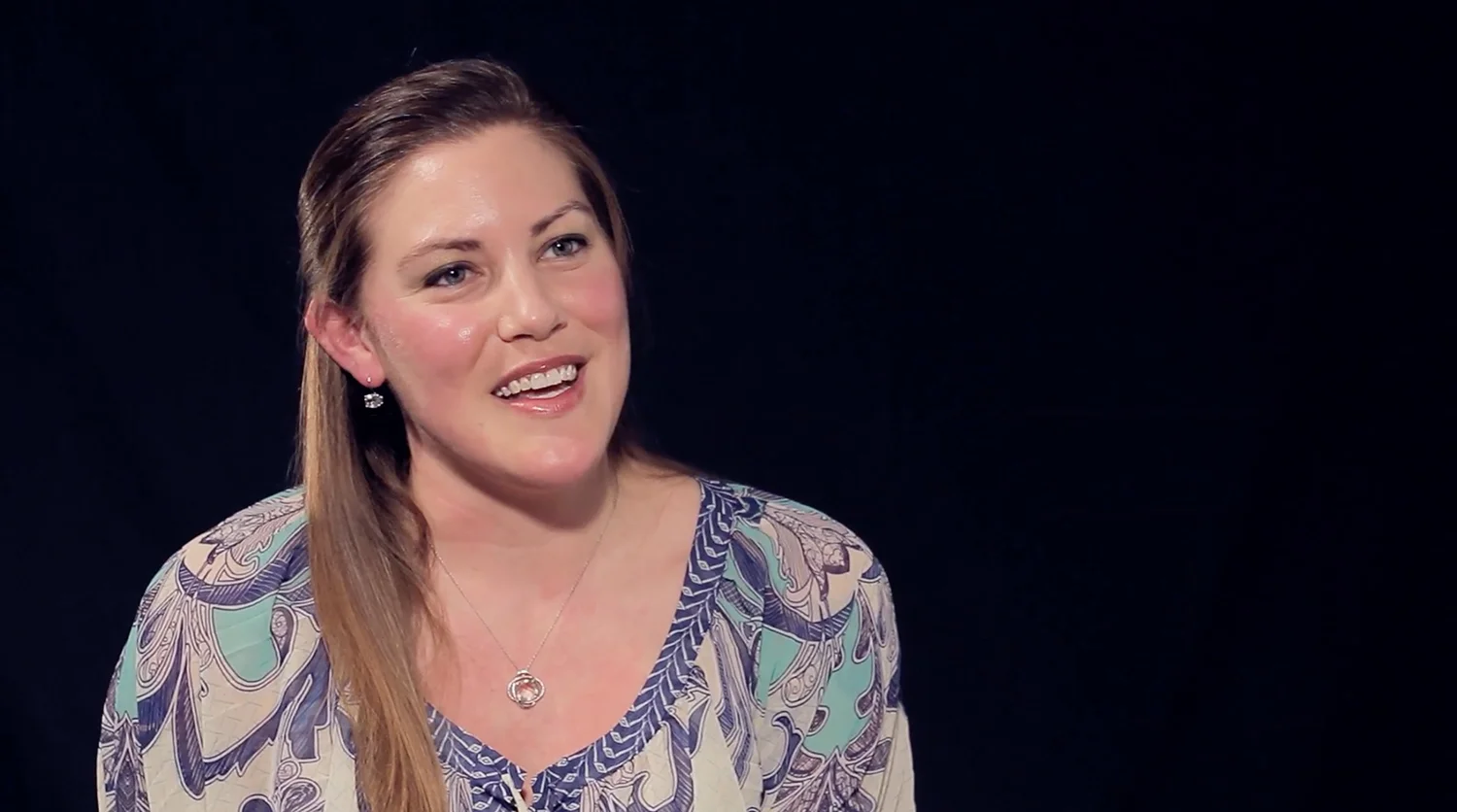
In Chapter 6 of 19 in her 2011 Capture Your Flag interview with host Erik Michielsen, Stacie Grossman Bloom answers "What Do You Believe is the Greatest Long Term Value of a PhD Investment?" She notes that the training required to get a PhD creates a transferable skill set that allows one to solve problems in creative independent ways. She shares how her PhD in cell biology and post doc in molecular neurobiology proved extremely transferable in her career. Specifically, she used the core skills learned during her PhD to become an editor at Nature Medicine and also applies the skills in her role at the New York Academy of Sciences (NYAS), which she held at the time of this interview.

Stacie Grossman Bloom is the Executive Director at the NYU Neuroscience Institute at NYU Langone Medical Center. Previously, she was VP and Scientific Director at the New York Academy of Sciences (NYAS). She earned her PhD in Neurobiology and Cell Biology at Georgetown University and did a post-doctoral fellowship at Rockefeller University in New York City. She earned her BA in Chemistry and Psychology from the University of Delaware.

Transcript: 

Erik Michielsen: What do you believe is the greatest long-term value of a PhD investment?

Stacie Grossman Bloom: I think the greatest long-term value of a PhD investment is that the training required to get a PhD, what it really, I think teaches you more than a specific niche that you are working on research-wise is it teaches you how to solve programs in creative ways, independently. I think it’s a very transferable skill.

I mean my PhD is in cell biology. I did a post doc in molecular neurobiology. That’s what my PhD is in and that’s what I was trained in. That doesn’t mean that I couldn’t become an editor at Nature Medicine and understand a much broader range of scientific topics. I would say now, even in my current job, I oversee not only life sciences and biomedicine but also now physical sciences and engineering, which was like a foreign language to me, but I think when you have a PhD you acquire skills that allow you to help figure out other areas. 

Stacie Bloom on Using Trial Jobs to Explore Science Career Options

In Chapter 7 of 19 in her 2011 Capture Your Flag interview with host Erik Michielsen, Stacie Grossman Bloom answers "What Did You Find Most Challenging About Teaching College Biology at Bard College?" Teaching biology at Bard College while doing her post doc work at Rockefeller University, she finds it easy to connect with college students. She uses the opportunity to explore career options and find out if teaching is a good fit. Teaching one college class helps Grossman Bloom rule out that as a career option and she continues using the exploration and trial approach in other pursuits, including a role at Nature Medicine. Grossman Bloom is the Executive Director at the NYU Neuroscience Institute at NYU Langone Medical Center. Previously, she was VP and Scientific Director at the New York Academy of Sciences (NYAS). She earned her PhD in Neurobiology and Cell Biology at Georgetown University and did a post-doctoral fellowship at Rockefeller University in New York City. She earned her BA in Chemistry and Psychology from the University of Delaware.

Transcript: 

Erik Michielsen: What did you find most challenging about teaching a biology class at Bard College?

Stacie Grossman Bloom: College students.

Erik Michielsen: How did you connect with them?

Stacie: As a post doc it wasn’t that hard to connect with a college student. I still felt like that was kinda my life. I was making no money. I was in jeans and sneakers all the time. I felt like a kid still and I felt like a student still. I think they probably looked at me very differently.

At the time I was trying to explore career options for myself. I thought, “maybe I’d like to be a college professor.” And that was a way for me to rule it out.

But it was a great opportunity to see if that was a good fit for me.

Erik Michielsen: What did you learn about yourself through the experience?

Stacie Grossman Bloom: I learned that for me, it was important for me to do trial runs of things before I went full-fledged into them. When I started at Nature and left the lab, I was doing it just two days a week as an intern. That’s what really was a good way for me to see, to test the waters. And, same thing with teaching. So, take on one class at a college, try it out, see if I like it. I didn’t like it, so I didn’t do it.

Stacie Bloom on Getting a Post Doc Lab Job Working for a Nobel Laureate Scientist

In Chapter 8 of 19 in her 2011 Capture Your Flag interview with host Erik Michielsen, Stacie Grossman Bloom answers "How Did Working for a Nobel Laureate at the Rockefeller University Shape Your Science Career?" After earning her PhD, she looks to return to New York City for her post doc. She applies to Rockefeller University and gets an opportunity to work for Paul Greengard, who goes on to win the Nobel Prize in Physiology or Medicine five months later. The Rockefeller lab experience shows her the best of science and what is like to be in a world renown successful laboratory where funding is not an issue. Ultimately, she finds the lab environment was not for her and decides to choose something different.

Stacie Grossman Bloom is the Executive Director at the NYU Neuroscience Institute at NYU Langone Medical Center. Previously, she was VP and Scientific Director at the New York Academy of Sciences (NYAS). She earned her PhD in Neurobiology and Cell Biology at Georgetown University and did a post-doctoral fellowship at Rockefeller University in New York City. She earned her BA in Chemistry and Psychology from the University of Delaware.

Transcript: 

Erik Michielsen: How did working for a Nobel laureate at The Rockefeller University shape your science career?

Stacie Grossman Bloom: So, that was a pretty serendipitous event in my life. I knew I wanted to come back to New York City and I was applying to post doctoral positions in New York City and a friend of mine at the time who was in New York City said to me, “if you are going to go and do your post doc there, you should go to the best possible place you can go and that’s The Rockefeller University.” And, for people who are not familiar with it, The Rockefeller University is one of the most unique universities you will ever come across. It doesn’t have an undergraduate program; it has a graduate program and an MD-PhD program. It’s small, it has no departments, it has no silos, it’s unbelievably well funded, it’s an amazing intellectual place.

And I applied and got an interview in this guy, Paul Greengard’s, lab. I was interested in the stuff that he was doing. I went on my interview and gave my presentation, went out to dinner with him and got the offer, and five months later he won the Nobel Prize in physiology or medicine. And, I never could’ve known that that was going to happen when I accepted my position in the lab. And I always joked with him that it’s good that I got in before he won the Nobel Prize because after he got it, the applications to the lab were skyrocketing and I always thought I would never get in and he always said, “yes, you would still get in, you would still get in.” But that experience showed me the best of science - what’s it like to be in one of the most world-renowned successful laboratories,  what’s it like to be a scientist in a lab where funding isn’t the biggest issue, like it is in most labs.

And for me, even in that environment, I knew I didn’t want to stay in the lab. The fact that I chose a different path, even though I was in this amazing environment was really emblematic of the fact that that environment wasn’t for me and I needed to get out of there and choose something different.

Stacie Bloom on Leaving Academia for a Science Industry Job

In Chapter 9 of 19 in her 2011 Capture Your Flag interview with host Erik Michielsen, Stacie Grossman Bloom answers "What Did You Find Most Challenging Transitioning Out of Science Bench Research Into the Field?" Working in a protective university science environment as a post doc, Grossman Bloom finds the greatest challenge leaving the security of the academic culture for outside work. By building a strong working relationship with her boss, Nobel Laureate Paul Greengard, she is able to test an outside opportunity by interning twice a week at Nature Medicine.

Stacie Grossman Bloom is the Executive Director at the NYU Neuroscience Institute at NYU Langone Medical Center. Previously, she was VP and Scientific Director at the New York Academy of Sciences (NYAS). She earned her PhD in Neurobiology and Cell Biology at Georgetown University and did a post-doctoral fellowship at Rockefeller University in New York City. She earned her BA in Chemistry and Psychology from the University of Delaware.

Transcription: 

Erik Michielsen: What did you find most challenging transitioning out of science bench research into the field?

Stacie Grossman Bloom: I think the most challenging thing was getting my mind readjusted to the fact that I was leaving that track. You know, that’s the only track I really knew and then I was entering into sort of uncharted territory. I think also the university is a very protective environment. Nobody is--It’s not like at a law firm where you have x number of years to make partner, and if you don’t make partner, you sort of have a tough decision to make. You can waiver around in a university lab as a post doc for infinity and nobody is ever going to kick you out. So, making the decision to leave a track and leave the security of the university atmosphere, I think was the most challenging.

Erik Michielsen: How did you get over it?

Stacie Grossman Bloom: I just did it; it was like ripping off a band-aid. I did it more slowly than others. I was really fortunate, I was in a laboratory, as a post doc, of a Nobel laureate who was very flexible in what he allowed me to do and let me leave the lab part-time to pursue an internship at Nature Publishing Group. Nature is a great scientific journal and it’s based in New York City. And he let me sort of dip my toe in the water and feel it out. And, I got the internship at Nature and then when it came an offer for a full-time position, it was a little bit easier than pulling off a band-aid.

Stacie Bloom: A Day in the Life of a Bench Research Scientist

In Chapter 10 of 19 in her 2011 Capture Your Flag interview with host Erik Michielsen, Stacie Grossman Bloom answers "What Do You Respect Most About People Doing Bench or Laboratory Science Research?" She believes the people who are working as the bench scientists are the people who are solving the problems of the world. She shares the challenge life scientists encounter in their work and the persistence and commitment required to succeed in the job.

Stacie Grossman Bloom is the Executive Director at the NYU Neuroscience Institute at NYU Langone Medical Center. Previously, she was VP and Scientific Director at the New York Academy of Sciences (NYAS). She earned her PhD in Neurobiology and Cell Biology at Georgetown University and did a post-doctoral fellowship at Rockefeller University in New York City. She earned her BA in Chemistry and Psychology from the University of Delaware.

Transcript: 

Erik Michielsen: What do you respect most about people doing bench or laboratory science research?

Stacie Grossman Bloom: The people who are working as the bench scientists are the people who are solving the problems of the world. I think every physician who is treating patients in the clinic should have to have a glimpse into the day of a bench scientist, on a day that the experiment isn’t working well.

Erik Michielsen: What does it look like?

Stacie: It’s really frustrating and it’s really hard and usually you are surrounded -- if you are a life scientist -- you are usually surrounded by a million little, tiny, labeled tubes, and pipette tips, and radiation shields, and freezers, and maybe mice, and you’re probably there at two o’clock in the morning, 3 o’clock in the morning because everything is always timed. I appreciate their commitment to that job. That job does not pay well. It’s really hard. And for every experiment that results in a high-quality scientific publication, there are probably a hundred that failed.

Stacie Bloom on Reasons to Work in Science Writing and Publishing

In Chapter 11 of 19 in her 2011 Capture Your Flag interview with host Erik Michielsen, Stacie Grossman Bloom answers "What Have You Enjoyed Most About Science Writing and Publishing?" She enjoys being an effective communicator of science in a realistic way. From a publishing perspective, she finds value seeing research results and unpublished data before others see it.

Stacie Grossman Bloom is the Executive Director at the NYU Neuroscience Institute at NYU Langone Medical Center. Previously, she was VP and Scientific Director at the New York Academy of Sciences (NYAS). She earned her PhD in Neurobiology and Cell Biology at Georgetown University and did a post-doctoral fellowship at Rockefeller University in New York City. She earned her BA in Chemistry and Psychology from the University of Delaware.

Transcript: 

Erik Michielsen: What have you enjoyed most about science writing and publishing?

Stacie Grossman Bloom: Being able to take a very jargon-y, niche-y, scientific finding and translate it into a way that the mass of people can understand without overselling it, I think is a really important skill. I would say that’s the thing that I’ve enjoyed the most: being able to be an effective communicator of science in a realistic way. In terms of publishing science, that’s such an easy answer for me. The thing that I’ve enjoyed the most is having the privilege of seeing these research results before anybody else sees them. As an editor at a high-level scientific journal you’re really in a great position because you really have this amazing privilege of seeing unpublished data. In the scientific world unpublished data is -- you never get access to unpublished data. Everybody is scared that you are gonna steal it, you’re gonna use the findings and publish it first. So, being in that position where you are the first person to see the unpublished data and then determining whether that data is of high enough quality and importance to be published in the highest tier of scientific journals.

Stacie Bloom on Building a Professional Network in a Science Career

In Chapter 12 of 19 in her 2011 Capture Your Flag interview with host Erik Michielsen, Stacie Grossman Bloom answers "How Did You Turn Extensive Travel as a Science Editor into Building a Better Network?" Regular travel to conferences and labs provides her a platform to meet new scientists, authors, and reviewers and build relationships over time. Peer professional relationships help Grossman Bloom use publishing contacts - first Nature Medicine and then Journal of Clinical Investigation -to build her network.

Stacie Grossman Bloom is the Executive Director at the NYU Neuroscience Institute at NYU Langone Medical Center. Previously, she was VP and Scientific Director at the New York Academy of Sciences (NYAS). She earned her PhD in Neurobiology and Cell Biology at Georgetown University and did a post-doctoral fellowship at Rockefeller University in New York City. She earned her BA in Chemistry and Psychology from the University of Delaware.

Transcript: 

Erik Michielsen: How did you turn extensive travel as a science editor into an opportunity to build a better network?

Stacie Grossman Bloom: You know, one of the things that was great about working at Nature Medicine was getting to go to all of the scientific conferences and all of the lab visits all over the world. Those are great opportunities for networking. One skill that I think is important to have as a scientist is the ability to interact socially with other people. And so, being at a conference in a far away place is a great opportunity to have a drink with someone, have dinner with someone, talk to someone, become friendly with someone, and then stay in touch afterwards.

Erik Michielsen: As someone that has changed job functions a couple of different times, how did you keep that networking relevant in what you do?

Stacie Grossman Bloom: The best network I built up was really when I was at Nature Medicine. Just the pool of authors and reviewers and scientists who I worked with there, that became a really important resource for me. So when I left Nature Medicine I went to another journal called The Journal of Clinical Investigation, the reason I went to The Journal of Clinical Investigation was because my former colleague from Nature Medicine hired me to work there, so that was a key factor. But, even at the New York Academy of Sciences I was able to bring that whole network with me. There are still a lot of scientists that I work really closely with who I met way back when, I was just starting out, when I had just left the lab. I would say now through my work with the academy, that network grows and grows and grows.

Stacie Bloom on Science Career Options for PhD Scientists

In Chapter 13 of 19 in her 2011 Capture Your Flag interview with host Erik Michielsen, Stacie Grossman Bloom answers "What Have Your Experiences Taught You About the Range of Options Available in a Science Career?" She finds her experiences allow her to use her science skills in very interesting ways. Many scientists find themselves narrowly focused on a linear academic career - PhD, post doc, research lab, professorship - however Bloom learns there are many possibilities as long as you are willing to think creatively about what you can do.

Stacie Grossman Bloom is the Executive Director at the NYU Neuroscience Institute at NYU Langone Medical Center. Previously, she was VP and Scientific Director at the New York Academy of Sciences (NYAS). She earned her PhD in Neurobiology and Cell Biology at Georgetown University and did a post-doctoral fellowship at Rockefeller University in New York City. She earned her BA in Chemistry and Psychology from the University of Delaware.

Transcript: 

Erik Michielsen: What have your experiences taught you about the range of options available in the science career?

Stacie Grossman Bloom: My experiences have taught me that you can use your science background in very creative ways and create a career for yourself that may be a little unorthodox or doesn’t follow a typical career path but can still be really fulfilling, interesting and important. A lot of scientists are not trained in entrepreneurship or -- you know, scientists are very smart but not everyone knows how to think outside the box. So, unless you are on this very linear tenure track position, it’s a little bit hard to figure out what else you can do. So, you’re a graduate student, you do a post doc, you get a professorship in some lab, you get tenure, you stay in that lab, you make a career for yourself at that university. It’s sort of being trapped in the ivory tower. You know, one thing that leaving that has shown me is that there is a place for PhD scientist in almost every sector, if you can think creatively about what you can do.

Stacie Bloom on How to Write a More Effective Grant Proposal

In Chapter 14 of 19 in her 2011 Capture Your Flag interview with host Erik Michielsen, Stacie Grossman Bloom answers "Through Your Experience, What Lessons Have You Learned About Writing More Effective Grant Proposals?" She finds the best grant proposals are the ones that tell the best stories. She notes grant writing is a skill that can be learned. Bloom notes the importance of using both resource centers as well as doing outreach to the grant organizations to assess fit in advance of writing the proposal. Grossman Bloom is the Executive Director at the NYU Neuroscience Institute at NYU Langone Medical Center. Previously, she was VP and Scientific Director at the New York Academy of Sciences (NYAS). She earned her PhD in Neurobiology and Cell Biology at Georgetown University and did a post-doctoral fellowship at Rockefeller University in New York City. She earned her BA in Chemistry and Psychology from the University of Delaware.

Transcript:

Erik Michielsen: Through your experience, what lessons have you learned about writing more effective grant proposals?

Stacie Grossman Bloom: I would say that the best grant proposals are the ones that tell the best stories. And grant writing is a really important skill. You know, some people have it and some people don’t and if you don’t have it, you can absolutely learn it, but you should go out and learn it. You know, we have in New York City, and a lot of cities have a foundation center. We have one on lower Fifth Avenue. They’re amazing, they have free workshops that talk about how to write grants and there are a lot of good resources out there. Another thing that I’ve learned that is important about grant writing is not to be afraid to pick up the phone. So, often, you know, you’re submitting a grant, you are submitting it to someone somewhere, don’t be scared to call that person and say, “hey, look, I’m scoping this out, do you think this is a good fit for you?” Don’t waste your time writing a grant when someone is just going to say no. And, nine times out of ten the person on the other end of the phone is going to be really happy to talk to you, even if that person is at the National Science Foundation.

Stacie Bloom on Balancing Career and Family Raising Three Children

In Chapter 15 of 19 in her 2011 Capture Your Flag interview with host Erik Michielsen, Stacie Grossman Bloom answers "What Advice do You Have for Working Parents to Better Balance Career and Family?" As a working mother, she acknowledges the challenge balancing work and family. She makes it a point to set realistic expectations for what you may reasonably accomplish and to do what makes you happy.

Stacie Grossman Bloom is the Executive Director at the NYU Neuroscience Institute at NYU Langone Medical Center. Previously, she was VP and Scientific Director at the New York Academy of Sciences (NYAS). She earned her PhD in Neurobiology and Cell Biology at Georgetown University and did a post-doctoral fellowship at Rockefeller University in New York City. She earned her BA in Chemistry and Psychology from the University of Delaware.

Transcript: 

Erik Michielsen: What advice do you have for working parents to better balance career and family?

Stacie Grossman Bloom: It’s hard to balance work and family, and as a working mother there is a lot of pressure on you. I would say you have to have realistic expectations of yourself, what you can reasonably accomplish. Don’t beat yourself up because you can’t be at home every single minute of every single day with your kids. But, mostly to do what makes you happy and if your job makes you happy, then do your job. I think there are a lot of studies that have shown that, you know, there is no difference in happiness between kids whose moms stay at home with them and kids whose moms work, that the most important factor is that the mother is happy. So, I think take care of yourself and then take care of your family.

Stacie Bloom on Teaching Business Skills to Young Scientists

In Chapter 16 of 19 in her 2011 Capture Your Flag interview with host Erik Michielsen, Stacie Grossman Bloom answers "How Has Your Scientific Training Informed Your Development as a Manager?" She notes how management skills challenge scientists given they are not formally trained. Bloom highlights how organizations such as the New York Academy of Sciences (NYAS) provide scientists management training via programs such as the Science Alliance.

Stacie Grossman Bloom is the Executive Director at the NYU Neuroscience Institute at NYU Langone Medical Center. Previously, she was VP and Scientific Director at the New York Academy of Sciences (NYAS). She earned her PhD in Neurobiology and Cell Biology at Georgetown University and did a post-doctoral fellowship at Rockefeller University in New York City. She earned her BA in Chemistry and Psychology from the University of Delaware.

Transcript: 

Erik Michielsen: How has your scientific training informed your development as a manager?

Stacie Grossman Bloom: Developing managerial skills, as a scientist, is not so easy. It’s not one of the skills that you learn in the lab. You can be naturally inclined to be a good manager, but I would say throughout graduate school and postdoctoral training, management is not the skills that you get. One of the things that we do at the New York Academy of Sciences is a science alliance program that provides career mentoring and skill development outside of the university. So, it’s a place where currently about 10,000 young scientists come to learn those kinds of skills. One of those is how to manage your lab, or how to navigate the visa process, or how to find a career outside of academia, how to be an entrepreneur, how to take your idea to an IPO. Those are the kinds of things that we are trying to teach young scientists at the Academy.

Stacie Bloom on How to Foster Innovation in Global Nutrition Science

In Chapter 17 of 19 in her 2011 Capture Your Flag interview with host Erik Michielsen, Stacie Grossman Bloom answers "What Has Led You to Create a Global Program on Nutrition Science?" Grossman Bloom, who at the time of this interview was at the New York Academy of Science (NYAS), shares how the organization designed a unique initiative to have global impact. The organization applies its 200 years of experience of scientific community led problem solving to the challenges of malnutrition and nutrition science.

Stacie Grossman Bloom is the Executive Director at the NYU Neuroscience Institute at NYU Langone Medical Center. Previously, she was VP and Scientific Director at the New York Academy of Sciences (NYAS). She earned her PhD in Neurobiology and Cell Biology at Georgetown University and did a post-doctoral fellowship at Rockefeller University in New York City. She earned her BA in Chemistry and Psychology from the University of Delaware.

Transcript: 

Erik Michielsen: What has led you to create a global program on nutrition science?

Stacie Grossman Bloom: I am currently the vice president and scientific director at the New York Academy of Sciences. This is an organization that’s been around for almost 200 years in the United States. And for those 200 years, what it has really excelled in, is building communities of scientists in discreet areas and then driving those communities towards innovation. One area that was becoming increasingly important to address, but which we weren’t really doing, was nutrition science. So, we set out about 18 months ago to scope out a project in nutrition science. That scoping project led us to interview 48 stakeholders around the world to really design an initiative that would be unique, that wouldn’t duplicate existing efforts, that would align with them, and that would have global impact.

Stacie Bloom on Solving Problems With Public Private Partnerships

In Chapter 18 of 19 in her 2011 Capture Your Flag interview with host Erik Michielsen, Stacie Grossman Bloom answers "What are Public Private Partnerships and Why are They Important to What You Do?" She notes these public private partnerships are alliances that bring together academic and industry groups to collaborate and drive fields forward. In her experience at the Sackler Institute, Grossman Bloom notes how public private partnerships also enable traditional competing firms such as Coke and Pepsi to come together, share information, and work with universities to solve global problems.

Stacie Grossman Bloom is the Executive Director at the NYU Neuroscience Institute at NYU Langone Medical Center. Previously, she was VP and Scientific Director at the New York Academy of Sciences (NYAS). She earned her PhD in Neurobiology and Cell Biology at Georgetown University and did a post-doctoral fellowship at Rockefeller University in New York City. She earned her BA in Chemistry and Psychology from the University of Delaware.

Transcript: 

Erik Michielsen: What are public private partnerships and why are they important in what you do?

Stacie Grossman Bloom: So public private partnerships are alliances that bring together industry people with academic people, typically, and why they are important is because very often and historically those two sectors have been siloed. A lot of people believe that by forcing conversations between those two sectors and increasing collaborations and cross-fertilizations of ideas, that you can drive fields forward.

Erik Michielsen: So, why are they important to the nutrition science program that you’ve just launched?

Stacie Grossman Bloom: A public private partnership is a really important element of the Sackler Institute because it brings often-competing groups of people to the table and forces them to talk in a more collaborative way, to hopefully drive progress in the field. In our public private partnership we currently have a number of leaders who have come on board. This includes Pepsi, Coke, Pfizer, Abbott, Johnson & Johnson, DSM, Nestle. I think it’s pretty clear what the impact is of bringing these mega companies together at one table. But then when you are also introducing the academic partners, Cornell, Columbia, Tufts, Hopkins, Wageningen University, universities from all over the world. You are starting with such a powerful group of people and sharing information that may not normally be exchanged.

Stacie Bloom: How Interdisciplinary Collaboration Benefits Science

In Chapter 19 of 19 in her 2011 Capture Your Flag interview with host Erik Michielsen, Stacie Grossman Bloom answers "Why is Interdisciplinary Collaboration So Important to Creating the Global Nutrition Program?" Grossman Bloom notes the overlapping issues, for example malnutrition and infectious disease. By inserting interdisciplinarity into the conversation, scientists can have more informed conversations using the most cutting edge laboratory research data and techniques.

Stacie Grossman Bloom is the Executive Director at the NYU Neuroscience Institute at NYU Langone Medical Center. Previously, she was VP and Scientific Director at the New York Academy of Sciences (NYAS). She earned her PhD in Neurobiology and Cell Biology at Georgetown University and did a post-doctoral fellowship at Rockefeller University in New York City. She earned her BA in Chemistry and Psychology from the University of Delaware.

Transcript: 

Erik Michielsen: Why is interdisciplinary collaboration so important in creating the global nutrition program?

Stacie Grossman Bloom: I think inserting interdisciplinarity into the conversation of global nutrition is really key. There is a lot of overlap in nutrition issues and, for example, infectious disease. Not only scientifically is there a lot of underlying commonality, but in the field when you are talking about a community that’s suffering from great malnutrition, they are also often suffering from infectious disease. So inserting interdisciplinarity into the conversation allows those two groups of scientists to have, you know, a conversation that also probably doesn’t normally happen. A lot of what we were told from stakeholders when we were planning the institute is that there isn’t a lot of interdisciplinarity in the conversations of nutrition science. And, that by introducing that, you are also bringing nutrition scientists up to date with the most cutting edge research that is going on in the lab, not just the data, but the techniques.

How Entrepreneurial Spirit Brings Out Best Performance - Slava Rubin

In Chapter 1 of 12 in his 2011 Capture Your Flag interview with host Erik Michielsen, IndieGoGo co-founder and entrepreneur Slava Rubin answers "When are You at Your Best?" Beyond surrounding himself with great people and getting sleep, Rubin makes it a point to set priorities and make lists. As an entrepreneur, he finds value in his conviction that anything can get done. This helps him bring out his best in what he does. Rubin is co-founder and CEO of IndieGoGo.com, a crowdfunding startup whose platform helps individuals and groups finance their passions. Before IndieGoGo, Rubin worked in management consulting for Diamond Consulting, now a PWC company. Rubin founded and manages non-profit Music Against Myeloma to raise funds and awareness to fight cancer. He earned a BBA from the Wharton School at the University of Pennsylvania.

Transcript: 

Erik Michielsen:  When are you at your best?

Slava Rubin:  When I’m surrounded by good people and I get enough sleep.

Erik Michielsen:  How do you manage that?

Slava Rubin:  Well, it’s tricky because, you know, when you’re an entrepreneur, there is never something that you shouldn’t be doing.  There is always more work to be done.  But it’s just about prioritizing, you know, putting everything in a list and then execute them.

Erik Michielsen:  How has being an entrepreneur brought out your best?

Slava Rubin:  I mean I would say just the whole risk/reward part of it and really trying to understand that the people that can stop you, hopefully, are just yourselves, right?  So if you have the entrepreneur spirit, you think anything can be done, and, really, that can be applied really well towards anything in life.

Scaling Crowdfunding Startup IndieGoGo Globally - Slava Rubin

In Chapter 2 of 12 in his 2011 Capture Your Flag interview with host Erik Michielsen, IndieGoGo co-founder and entrepreneur Slava Rubin answers "Since We Last Spoke a Year Ago, What Has Been the Most Exciting Thing to Happen in Your Life?" Rubin points to the growth of his company, IndieGoGo, and is now used in over 158 countries by 22,000 users. He notes how four films featured at South By Southwest 2011 were crowd financed on IndieGoGo and how media exposure, including Good Morning America, continues to spread the company's project crowdfunding message. Rubin is co-founder and CEO of IndieGoGo.com, a crowdfunding startup whose platform helps individuals and groups finance their passions. Before IndieGoGo, Rubin worked in management consulting for Diamond Consulting, now a PWC company. Rubin founded and manages non-profit Music Against Myeloma to raise funds and awareness to fight cancer. He earned a BBA from the Wharton School at the University of Pennsylvania.

Transcript: 

Erik:  Since we last spoke a year ago, what’s been the most exciting thing that happened in your life?

Slava Rubin:  Well, I mean IndieGoGo is doing well.  It’s really about scaling the business and growing. I mean, now IndieGoGo has over 22,000 campaigns in 159 countries.  There is millions of dollars that are being distributed, millions of page views every month.  Since we last talked, we’ve been – you know, even in the last few weeks, we’ve been on Good Morning, America, or the New York Times, or Channel 7 News in New York. And we opened up where really anybody can create a campaign to absolutely anything, and just the excitement of the team as we’re hiring folks, and everybody being so excited to be a part of IndieGoGo, and making people’s dreams of raising money possible.

Erik Michielsen:  What feeling do you get when you think about, you know, what type of projects are being built, and what effect it’s having on communities, on people’s lives?

Slava Rubin:  I mean it’s amazing.  We’re here at South-by, right?  And there’s only a certain number of South-by movies that get in and there’s only a certain of South-by music that gets in.  At IndieGoGo, we’ve had four films that got in, got funded through IndieGoGo, and musicians that got funded through IndieGoGo.  We have people road-tripping to South-by, by funding they get through IndieGoGo.  So just to know that there are all these tens of thousands of people here at South-by and a number of them all facilitated their dreams to get here through IndieGoGo, it’s just really quite incredible.  And you were at the IndieGoGo party, and that was – that was fun too.

Entrepreneur Life Myths and Realities - Slava Rubin

In Chapter 3 of 12 in his 2011 Capture Your Flag interview with host Erik Michielsen, IndieGoGo co-founder and entrepreneur Slava Rubin answers "How is Life as an Entrepreneur Different Than You Imagined It Would Be?" Going in, Rubin expects it to be similar to what he saw on "The Big Idea" with Donny Deutsche. He notes, in reality, being an entrepreneur is more work, more exciting, and more rewarding than he ever imagined. Rubin is co-founder and CEO of IndieGoGo.com, a crowdfunding startup whose platform helps individuals and groups finance their passions. Before IndieGoGo, Rubin worked in management consulting for Diamond Consulting, now a PWC company. Rubin founded and manages non-profit Music Against Myeloma to raise funds and awareness to fight cancer. He earned a BBA from the Wharton School at the University of Pennsylvania.

Transcript: 

Erik Michielsen:  How is life as an entrepreneur different than you imagined it would be?

Slava Rubin:  I mean I always thought it was interesting when I like saw other entrepreneurs, especially when I’m like watching CNBC, and I’m just hearing people’s stories, or Donnie Deutsch who had this – "The Big Idea", and like the really regular entrepreneurs who told about their dreams.  I would just say that it’s more work than I even thought, it’s more exciting than I even thought, and it’s genuinely more rewarding to be part of it than I even thought.  I’ve always been a person that likes the concept of there used to be thin air, and then based on your actions, something happened, and you created something.  And I always thought that was important, but being a part of it really from the entrepreneur perspective is even more amazing.

How to Find Teaching Moments in Success and Failure - Slava Rubin

In Chapter 4 of 12 in his 2011 Capture Your Flag interview with host Erik Michielsen, IndieGoGo co-founder and entrepreneur Slava Rubin answers "What Makes Failures More Meaningful Learning Experiences Than Successes?" Rubin notes both failures and successes are learning experiences. He makes a point to celebrate, share, and understand successes with the team when they occur. He uses failures to help navigate the team toward successes, citing a Michael Jordan story as a way to put the entrepreneurial journey in context. Rubin is co-founder and CEO of IndieGoGo.com, a crowdfunding startup whose platform helps individuals and groups finance their passions. Before IndieGoGo, Rubin worked in management consulting for Diamond Consulting, now a PWC company. Rubin founded and manages non-profit Music Against Myeloma to raise funds and awareness to fight cancer. He earned a BBA from the Wharton School at the University of Pennsylvania.

Transcript: 

Erik:  Why are failures more meaningful learning experiences than successes?

Slava Rubin:  Well, I think both are important.  You really have to understand when you do something well and when there is a success and make sure to share it with everybody on the team and really understand how we got here and enjoy it.  

I think the failures just help us learn how to navigate towards the success.  There is a classic Michael Jordan commercial where it’s like black and white and he’s walking out of a tunnel and he says ‘I have shot – I have missed, you know, 97,000 free throws, I have missed 100,000 shots, and for all these misses, you know, that is why I have won six championships.’  It’s because he’s been out there and put it out on the line.  Like any entrepreneur, you know, with great risk it can come reward, and with risk comes some failures.

Erik Michielsen:  Is there one specific failure that you can point to in your development that’s really helped you get to where you are now?

Slava Rubin:  I would say that there have been some painful times whether it be like when my dad died of cancer when I was fifteen or even with IndieGoGo, you know, the market crashed in 2008, and it was pretty bleak times with my two co-founders, and I – and it was just about really focusing on what’s important in either one of those situations, and looking forward, and just taking one step at a time, and executing, and here we are.