
Why Defer Grad School to Work Abroad for a Year - Gabrielle Lamourelle


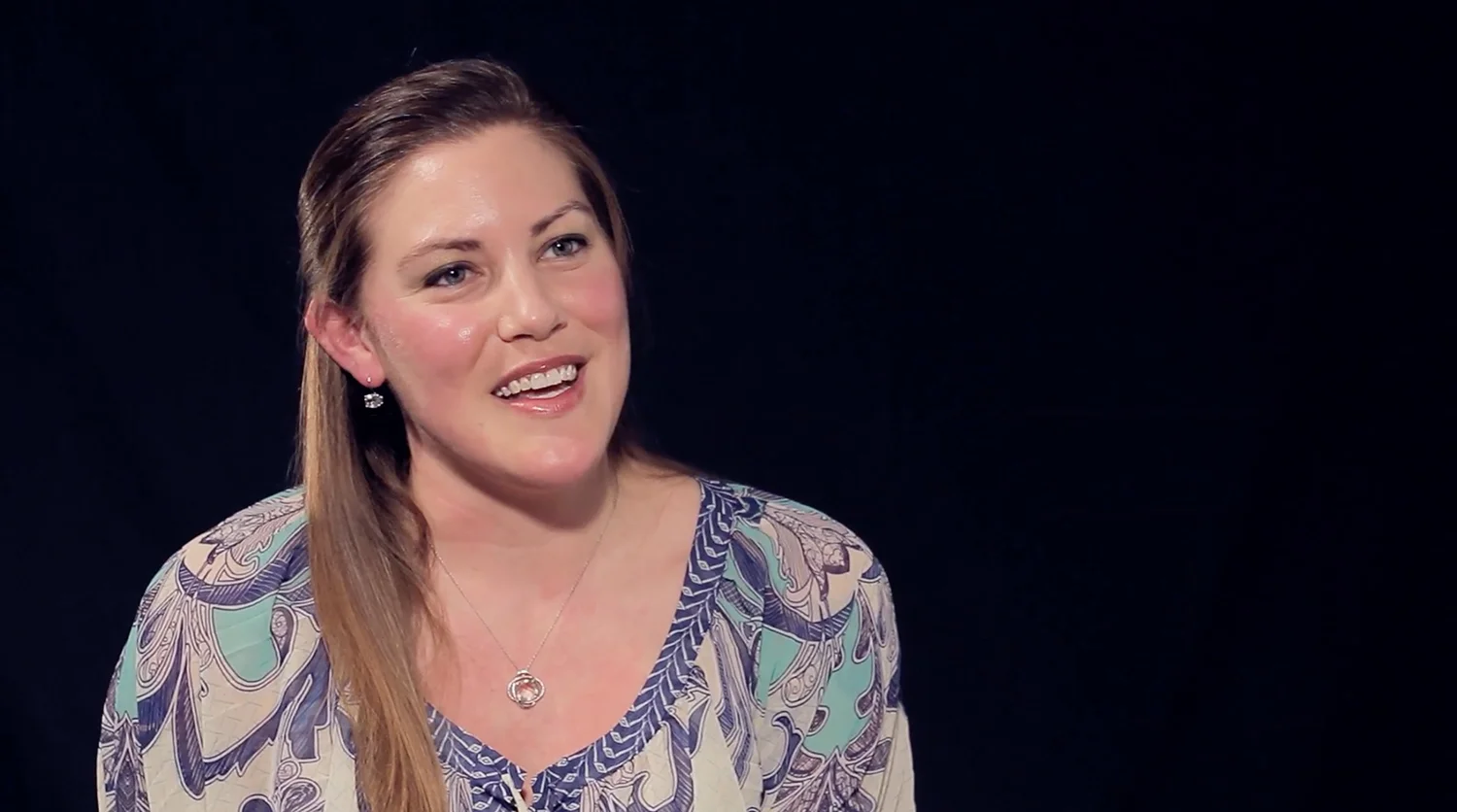
In Chapter 10 of 21 in her 2010 Capture Your Flag interview with host Erik Michielsen, global health consultant Gabrielle Lamourelle shares the inputs involved in making a decision to return to graduate school and study for a Masters in Public Health or MPH degree. Additionally, she elaborates on key factors behind her decision to attend a full-time program instead of a part-time one. Lamourelle graduated with a BS in Sociology from University of California at Berkeley and a Masters in Public Health (MPH) in Sociomedical Sciences from the Mailman School of Public Health at Columbia University.
Transcription:
Erik Michielsen: When you were looking at calculating the the investment and associated return on investment you would receive with a masters of health degree, what did you consider?
Gabrielle Lamourelle: I considered the economic cost up front and balancing that against what I could hope to earn in future jobs if I have that MPH degree. I also thought about the difference going back to school full-time and going to school part-time and continuing to work.
Erik Michielsen: What made you decide to go back full-time versus part time?
Gabrielle Lamourelle: One of the major issues in deciding to go back full-time was whether I could really focus my attention on my education. And I wanted to really get the most out of the time and the money I was putting into pursuing a masters of public health. I knew that I needed to go full-time to not split my attention and be torn between work and school. I could have continued working at my former job um but because I was very invested in the work that I do there, it would be nearly possible for me to feasibly scale back my work to really do - commit to twenty hours and only work twenty hours. And that I would end up sacrificing some of the focus on my education if I did go to school part-time and while I worked full-time or vice-versa. So I decided to go back to school full-time.







In Chapter 10 of 10 in her 2010 interview with Capture Your Flag host Erik Michielsen, health economist and comparative effectiveness researcher Clara Soh Williams details why rock climbing appeals to analytical thinkers, including scientists and engineers. With rock climbing, the rock is constant and climbers apply changes. It is an application of the scientific method that allows for incremental advancement and measurable progress. Soh holds an MPA in Public Health Finance from New York University and a BS in Molecular Biophysics and Biochemistry from Yale University.
In Chapter 9 of 10 in her 2010 interview with Capture Your Flag host Erik Michielsen, health economist and comparative effectiveness researcher Clara Soh Williams shares how information and knowledge sharing enables collaboration and innovation. Soh brings together multiple states' Medicaid groups to address public health policy making challenges. While Medicaid programs differ state by state, Soh finds the knowledge sharing benefits participating groups in ways not previously considered. Soh holds an MPA in Public Health Finance from New York University and a BS in Molecular Biophysics and Biochemistry from Yale University.
In Chapter 8 of 10 in her 2010 interview with Capture Your Flag host Erik Michielsen, health economist Clara Soh Williams shares how she deals with being unpopular as a comparative effectiveness researcher. Soh, who majored in molecular biophysics and biochemistry at Yale, follows her passion to research drug effectiveness compared to alternative drugs. Based on research into Vioxx and health implications, she believes she saves lives by providing patients and providers tools to make correct decisions when choosing medication. Additionally, Soh applies her passion for science and research to educate a vulnerable, marginalized population who could use the information. Soh holds an MPA in Public Health Finance from New York University and a BS in Molecular Biophysics and Biochemistry from Yale University.
In Chapter 7 of 10 in her 2010 interview with Capture Your Flag host Erik Michielsen, health economist and comparative effectiveness researcher Clara Soh Williams shares how she is helping non-profit Kilifi Kids roll out mobile health - mhealth - services in Kenya. Soh highlights the importance of providing information, data, and decision-making tools to local populations to provision health services. Soh holds an MPA in Public Health Finance from New York University and a BS in Molecular Biophysics and Biochemistry from Yale University.
In Chapter 6 of 10 in her 2010 interview with Capture Your Flag host Erik Michielsen, health economist and comparative effectiveness researcher Clara Soh Williams details how field work and lab - or bench - research offer complementary experiences in building a science career. Soh shares the practical and variable challenges from field research across projects doing hurricane disaster relief and West Africa public health restructuring. These experience teaches Soh to develop more practical implementations and interventions. More scientific bench research provides Williams an idea of what is realistic project expectations and timelines. Soh holds an MPA in Public Health Finance from New York University and a BS in Molecular Biophysics and Biochemistry from Yale University.
Since 2009, Capture Your Flag has interviewed a cohort of rising leaders who share lessons from their journeys to help others plan, pursue and achieve life and career aspirations. The resulting 3000+ Near Peer Video Library can be licensed for commercial use.