
How to Add Creative and Social Change Elements into Lifestyle - Steph Redlener

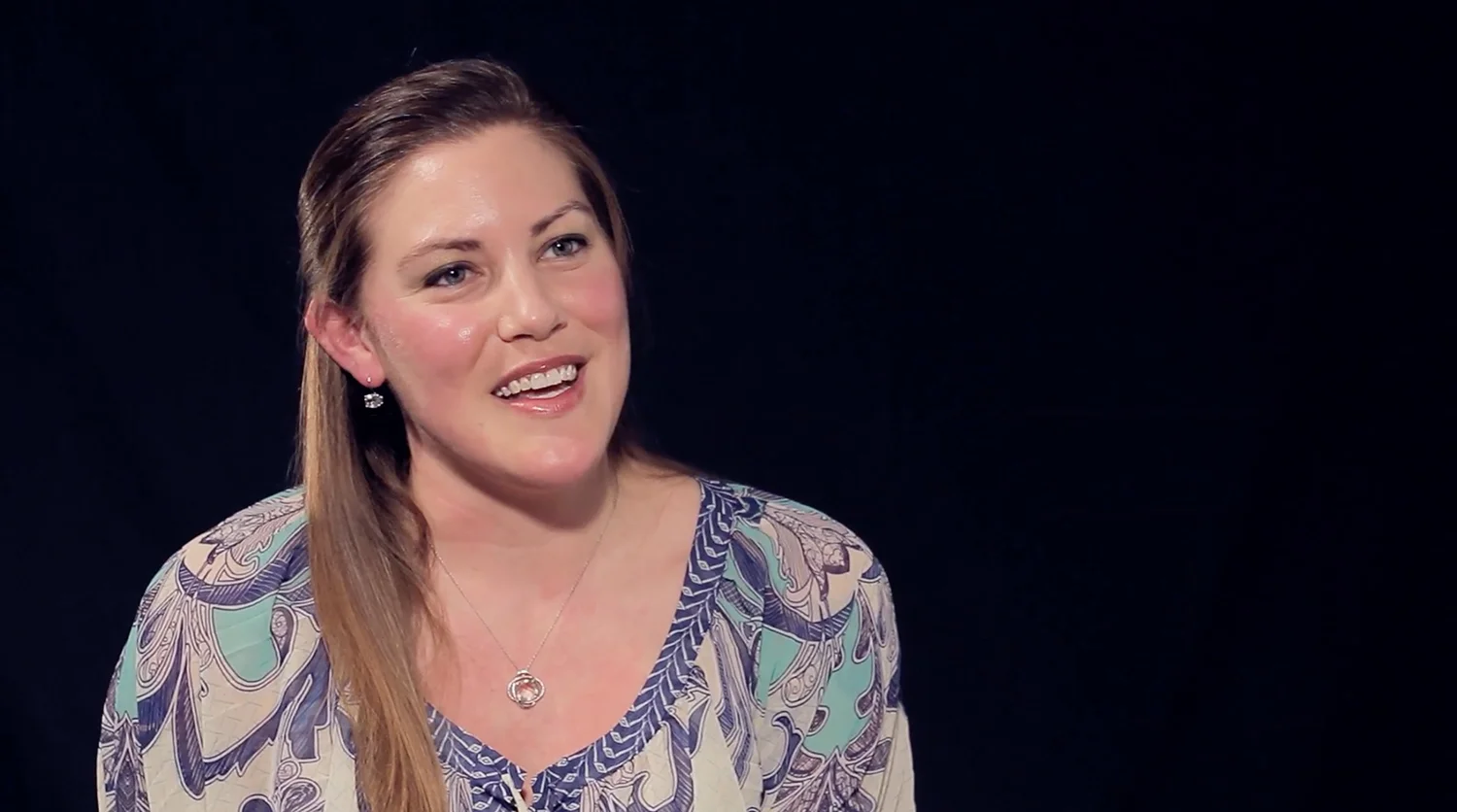
In Chapter 6 of 10, creative talent agent Stephanie Redlener shares how surrounding herself with inspiring social change and creative minded peers help her better identify and embrace her own social entrepreneurship ambitions. Redlener finds value in the osmosis of spending time around and connecting individuals having fun doing what they love in life and doing so with a creative and social mindset. Redlener is an advertising industry recruiter for The Talent Business (http://www.thetalentbusiness.com).

Why Great Jobs Match Personal Values to Company Values - Steph Redlener

In Chapter 5 of 10, creative talent agent Stephanie Redlener details why great fitting jobs are those where personal values and company values are aligned. Shared values form lasting bonds - personal and professional - that provide not only reward but also stability over time. Redlener shares the challenge many companies face not understanding their own values and, hence, culture. By investing in this understanding at an organization and individual level, better fits and higher performance result. Redlener is an advertising industry recruiter for The Talent Business (http://www.thetalentbusiness.com).

What to Prioritize When Building a Personal Brand - Steph Redlener

In Chapter 4 of 10, creative talent agent Stephanie Redlener shares why to prioritize messaging when building a credible and effective personal brand. Redlener highlights the importance of connecting ambition with action, notably a body of work, when positioning oneself. For example, Redlener notes disconnects when individuals with little digital footprint apply for digital jobs. She advises individuals to be aware of how personal experiences - activities, conferences, etc. - compare and contrast against written experiences - i.e. the resume. Redlener is an advertising industry recruiter for the Talent Business (http://www.thetalentbusiness.com).

How to Personalize Your Career Ladder - Steph Redlener

In Chapter 3 of 10, creative talent agent Stephanie Redlener builds upon why she advises others create their own career by detailing how to personalize one's own career ladder. Redlener notes the notion of 25-year company careers, complete with traditional career ladder progress up the chain are no longer the norm. As a result, she encourages clients to take ownership of their skills and goals and personalize their own career ladder. Redlener is an advertising industry recruiter for The Talent Business (http://www.thetalentbusiness.com).

Why to Create Your Own Career - Steph Redlener

In Chapter 2 of 10, creative talent agent Stephanie Redlener shares why she advises recruiting clients to create their own career. Rather than fill holes by requirement, Redlener takes a non-traditional approach to push clients to better understand their ambitions and goals, ultimately leading to a better match between employer and employee. Redlener is an advertising industry recruiter for The Talent Business (http://www.thetalentbusiness.com).

How to Apply Anthropology in a Recruiting Career - Steph Redlener

In Chapter 1 of 10, creative talent agent Stephanie Redlener cultivates a passion for understanding people and culture through an interest in anthropology studies and, later, advertising. She finds the anthropology developmental aspect a strong complement to advertising brand, consumer, and culture aspects. This leads Redlener to become an advertising industry recruiter, working for The Talent Business (http://www.thetalentbusiness.com/) in New York.

How to Create a More Innovative U.S. Education System - Yoav Gonen

Yoav Gonen returns to Capture Your Flag to build upon his 2009 interview with a 2010 conversation with host Erik Michielsen. In Chapter 17 of 17, Gonen, a New York Post education reporter, talks about consensus building challenges in education causing innovation shortfalls. Education initiatives often fail to ask "why did it succeed or fail?" Recent developments highlight a more scientific study and rigorous analysis within education innovation, but, as Gonen notes, the movement is only beginning. Before starting his New York City newspaper reporting career, Gonen earned his BA in English from the University of Michigan and his Masters in Journalism from New York University.

Why Teacher Turnover is a Big Charter School Concern - Yoav Gonen

Yoav Gonen returns to Capture Your Flag to build upon his 2009 interview with a 2010 conversation with host Erik Michielsen. In Chapter 16 of 17, Gonen, a New York Post education reporter, shares why teacher turnover is a central issue in the charter school debate. He highlights how many charters rely on highly motivated, energetic young teachers coming from Teach for America. Their commitment is several years in length and charter schools, who tend to have longer work hours and school terms than public schools, tend to burnout the young teachers. Gonen highlights a New Orleans charter school experiencing burnout, but cautions that charter schools require a longer trial - 5 to 10 years longer - to assess teaching sustainability and turnover issues. Before starting his New York City newspaper reporting career, Gonen earned his BA in English from the University of Michigan and his Masters in Journalism from New York University.

Why Charter Schools Polarize Education Debate - Yoav Gonen

Yoav Gonen returns to Capture Your Flag to build upon his 2009 interview with a 2010 conversation with host Erik Michielsen. In Chapter 15 of 17, Gonen, a New York Post education reporter, discusses the public versus private debate charter schools present nationally as well as locally in New York City. Gonen highlights two specific friction inducing charter school issues. The first is that most charter schools - only 12 of 99 in New York City - are non-union. This threatens the city's teachers union, the United Federation of Teachers (UFT). The second involves space. In New York City, the space battle is the primary source of charter school negativity, as they claim unused or underutilized class space in public school facilities. Before starting his New York City newspaper reporting career, Gonen earned his BA in English from the University of Michigan and his Masters in Journalism from New York University.

How to Find a Teaching Job in the Right School for You - Yoav Gonen

Yoav Gonen returns to Capture Your Flag to build upon his 2009 interview with a 2010 conversation with host Erik Michielsen. In Chapter 14 of 17, Gonen, a New York Post education reporter, provides insight into the free Department of Education (www.ed.gov) online resources experienced and prospective teachers can use to identify opportunities and research schools. Gonen recognizes teachers seek schools where they are comfortable and where they get along with school leaders. He highlights how the Obama Administration has made student performance and school surveys available, ranging from parent feedback to teacher and administrative rankings, that provide visibility into school performance and management. For example, Gonen highlights how the surveys show management effectiveness and trust between teachers and administration. The surveys and information may be found at the Department of Education website. Before starting his New York City newspaper reporting career, Gonen earned his BA in English from the University of Michigan and his Masters in Journalism from New York University.

Why Expert Relationships Matter in Big City Newspaper Reporting - Yoav Gonen

Yoav Gonen returns to Capture Your Flag to build upon his 2009 interview with a 2010 conversation with host Erik Michielsen. In Chapter 13 of 17, Gonen, a New York Post education reporter, shares the complexities working in the largest U.S. public education system. The 1.1 million participants in the New York City system go beyond students and teachers to include politics, policy, transportation, and food. As a result of the complexity, Gonen prioritizes building relationships with experts across the various education sub-sectors. The relationships, developed over time, help Gonen identify and make sense of stories in his daily reporter role at the New York Post. Before starting his New York City newspaper reporting career, Gonen earned his BA in English from the University of Michigan and his Masters in Journalism from New York University.

What Are Myths and Realities in a Reporter and Editor Relationship - Yoav Gonen

Yoav Gonen returns to Capture Your Flag to build upon his 2009 interview with a 2010 conversation with host Erik Michielsen. In Chapter 12 of 17, Gonen, a New York Post education reporter, shares his perspective on myths versus realities in the newspaper reporter and editor relationship. Journalism school taught Gonen to expect a hands-on relationship between the editor and journalist. In reality, Gonen learned editors function more like movie directors, managing many moving parts and budgeting time and attention accordingly. As a result, autonomy, independence, and, especially, trust are central to the editor and reporter relationship. Before starting his New York City newspaper reporting career, Gonen earned his BA in English from the University of Michigan and his Masters in Journalism from New York University.

How a Reporter and Editor Working Relationship Develops - Yoav Gonen

Yoav Gonen returns to Capture Your Flag to build upon his 2009 interview with a 2010 conversation with host Erik Michielsen. In Chapter 11 of 17, Gonen, a New York Post education reporter shares how he progressively learned to identify and filter newsworthy story topics before presenting ideas to his editor. Different publications operate differently and Gonen, who came to the Post from the Staten Island Advance, struggles for nearly two years to find rhythm working with his editors. As an education reporter, Gonen finds he is not only responsible for finding stories but also for filtering stories down from informational items to more newsworthy items. Gonen earned his BA in English from the University of Michigan and his Masters in Journalism from New York University.

How Daily Routines Help Reporter Identify Stories and Meet Deadlines - Yoav Gonen

Yoav Gonen returns to Capture Your Flag to build upon his 2009 interview with a 2010 conversation with host Erik Michielsen. In Chapter 10 of 17, Gonen, a New York Post education reporter, shares his daily routine and how it translates into story ideation and meeting deadlines. Gonen faces daily challenges, as his editors require story submissions by a mornign 11am meeting. Gonen consistently goes through a checklist of resources, including reading Department of Education website updates, monitoring blog posts, and calling key sources, to identify and submit story ideas before then writing the article. Gonen earned his BA in English from the University of Michigan and his Masters in Journalism from New York University.

Why Peer Support Groups are Useful Career Development Resources - Yoav Gonen

Yoav Gonen returns to Capture Your Flag to build upon his 2009 interview with a 2010 conversation with host Erik Michielsen. In Chapter 9 of 17, Gonen, a New York Post education reporter shares the benefits he has received by participating in a peer support group. As a newspaper reporter, the traditional mentor model is challenged in deadline sensitive news rooms. Gonen overcomes isolation and solitude by engaging a journalist support group. He works with non-competitive peers to share ideas and receive feedback on stories and contacts relevant to his work. He finds the experience an effective substitute for a mentoring relationship. Gonen earned his BA in English from the University of Michigan and his Masters in Journalism from New York University.

How a Newspaper Reporter Measures Annual Success - Yoav Gonen

Yoav Gonen returns to Capture Your Flag to build upon his 2009 interview with a 2010 conversation with host Erik Michielsen. In Chapter 8 of 17, Gonen, a New York Post education reporter, shares how he measures annual performance as a newspaper journalist. First, Gonen tracks how many covers, known as "the wood", he gets throughout the year. Second, Gonen tracks how many exclusive stories he breaks each year. This proves very competitive, as Gonen's employer, the New York Post, competes for exclusives rigorously with the New York Daily News. Gonen earned his BA in English from the University of Michigan and his Masters in Journalism from New York University.

What Journalism School Skill is Most Useful in a Reporting Career - Yoav Gonen

Yoav Gonen returns to Capture Your Flag to build upon his 2009 interview with a 2010 conversation with host Erik Michielsen. In Chapter 7 of 17, New York Post newspaper education reporter Yoav Gonen shares the most useful skill learned in Journalism School. He highlights persistence, as he commonly faces challenges getting someone to respond and participate in a story. Gonen prefers to confront a potential source in person. He finds 9 times out of 10 the person contributes. It is not always easy. Gonen shares that he often will have to find out where the person will be after hours, for example at a dinner benefit, and then track them down for a quote. Gonen earned his BA in English from the University of Michigan and his Masters in Journalism from New York University.

How to Handle the Hardest Conversation in Journalism - Yoav Gonen

Yoav Gonen returns to Capture Your Flag to build upon his 2009 interview with a 2010 conversation with host Erik Michielsen. In Chapter 6 of 17, Gonen, a New York Post education reporter, shares why interviewing a parent who has lost a child is the most difficult conversation in journalism. As a general assignment reporter, Gonen was tasked with knocking on doors of families who lost a loved one. He finds himself sympathetic to families and has found warm reception from families who want to talk about their lost loved one. The most difficult door knock Gonen faced involved going to a family whose son murdered his girlfriend and then committed suicide. Gonen diffuses an initial hostile confrontration and discusses why the story should be written. Gonen earned his BA in English from the University of Michigan and his Masters in Journalism from New York University.