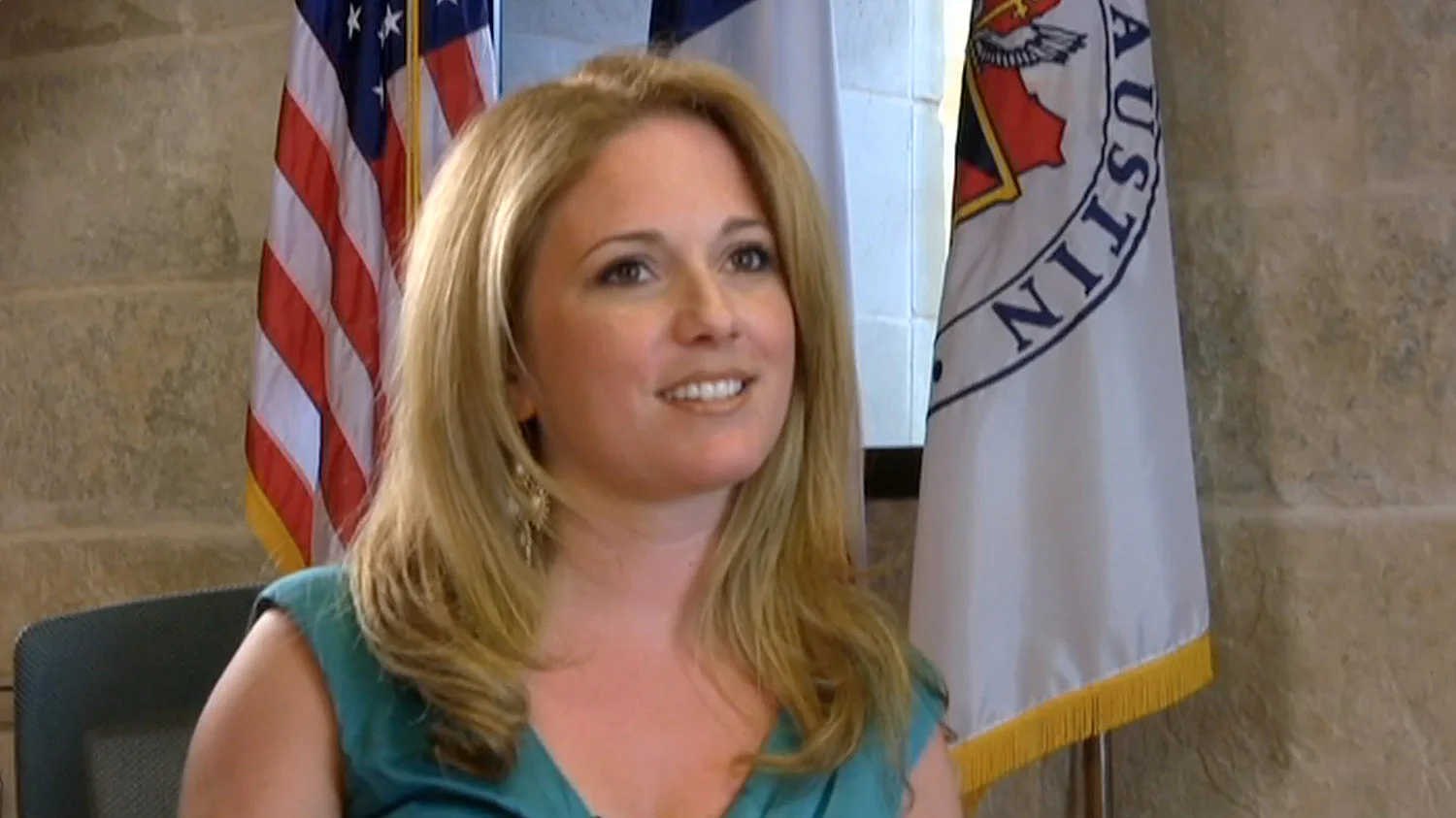
How Entrepreneur Works Through Isolation Challenges - Michael Olsen

In Chapter 15 of 16, social entrepreneur and technology consultant Michael Olsen shares the challenges that come with flexibility enabling him to work with anyone in the world at any time. Olsen finds it challenging to build connections over email and the phone and looks for other ways to build rich interactions. As a result, Olsen is prioritizing more in-person interaction on projects to build stronger, more trusted relationships.

How to Assess Kenya Mobile Health Care Project Viability - Michael Olsen


In Chapter 14 of 16 in his 2010 Cature Your Flag interview, social entrepreneur and technology consultant Michael Olsen walks through the Kilifi Kids non-profit decision making process for its mobile health (mhealth) project. First, Olsen and his team confirm there is community-based support within Kilifi to provide project resources. Two, his team identifies senior public health support, specifically at the Kenya Ministry of Health (MOH). Third, Olsen reviews at technology capability, ease of use, cost, and scalability and confirms technology, developed by organizations such as UNICEF, available and ready. Lastly, Olsen then confirms there is a story and an investment pitch that will resonate with project funders. Only after working through these decision inputs does Olsen green light and initiate the mobile health project.

Why Cell Phones Will Revolutionize Developing World Health Care - Michael Olsen

In Chapter 13 of 16, social entrepreneur and technology consultant Michael Olsen details the transformative potential of mobile health care - or mhealth - solutions across the developing world. Olsen specifically highlights public health and medical services access issues and how high cell phone penetration, especially in developing nations, can improve services scheduling, messaging, and provisioning in areas long without access to care.

What Rotary International Teaches About Balancing Service and Career - Michael Olsen

In Chapter 12 of 16, social entrepreneur and technology consultant Michael Olsen joins the 1.2 million Rotary International members across 150 countries. There, he learns how to integrate service into a balanced life and career. Olsen notes that beyond Rotary's motto, "Service Above Self," there is a focus on how to make contributions while also developing a lasting, fulfilling career. Olsen uses the Rotary approach, and Rotary funding, to create Kilifi Kids (www.kilifikids.org), a sustainable non-profit providing education and public health services from the Kilifi, Kenya community to the Kilifi, Kenya community.

How Non-Profit Assembles Mobile Health (mHealth) Project Team - Michael Olsen

In Chapter 11 of 16, social entrepreneur and technology consultant Michael Olsen founds a non-profit, Kilifi Kids (www.kilifikids.org) and builds relationships with Kenya-born project team members. The relationships develop across IT, education, and public health project initiatives and inform the organization's decision to pursue a mobile health care, or mhealth, initiative to use cell phones to improve health care data collection and service provisioning in Kilifi, Kenya local communities.

What Levers Create a Sustainable Social Enterprise - Michael Olsen

In Chapter 10 of 16, social entrepreneur and technology consultant Michael Olsen shares lessons learned on building a sustainable social enterprise. Olsen co-founded Kilifi Kids (www.kilifikids.org) through work with several Rotary Clubs. Firstly, he has found it is important to have the right people on board the team that are from the community, work in the community, and know the culture. In Kilifi Kids' case, this means putting local resources in place on the ground in Kilifi, Kenya. Secondly, Olsen puts a priority achieving business results, not simply donating money and services. Olsen measures productivity - individuals served - in same measure a traditional business measures profitability.

Why Non-Profit Measures Success Using Both Statistics and Stories - Michael Olsen

In Chapter 9 of 16, social entrepreneur and technology consultant Michael Olsen finds encouragement and possibility in measuring success using statistics and stories. Statistically, Olsen connects his non-profit Kilifi Kids (www.kilifikids.org) initiatives to results. Specifically, Olsen finds the group's 30,000 child de-worming initiative over time will add 6,000 years of school to Kenya's Kilifi District. Personal stories also help assess project success. Olsen uses handwritten letters to stay involved with secondary school scholarship recipients and learn how the investment is helping children advance in school.

How Non-Profit Created Investor Friendly Kenya Public Health Project - Michael Olsen

In Chapter 8 of 16, social entrepreneur and technology consultant Michael Olsen starts a non-profit with a focus on measurable and scalable positive outcomes. Olsen finds initial computer lab financing efforts difficult to map to outcomes (e.g. national testing, job placement) and looks to alternative project ideas. He finds intestinal parasites a huge challenge across schoolchildren and focuses project financing on high-impact, low-cost deworming medication solutions that connect 30,000 medicated students to an added 6,000 years of community schooling as a result of fewer sick days and drop outs.
Michael Olsen is the co-founder and executive of the non-profit organization Kilifi Kids (www.kilifikids.org) and is based in Atanta, Georgia.  Michael is currently pursuing a joint masters degree in business administration (MBA) and public health (MPH) at Emory University in Atlanta.  Olsen graduated from Stanford University, where he studied symbolic systems and the synthesis of computers, psychology, and philosophy.  After graduating Stanford, Olsen started web and SaaS applications consultancy Redwood Strategies. 

How to Build Sustainable Cross-Cultural Professional Relationships - Michael Olsen

In Chapter 7 of 16, social entrepreneur and technology consultant Michael Olsen shares how to best build cross-cultural professional relationships. First, Olsen highlights shared goals. Second, he recommends at minimum one in-person introduction. After forming his non-profit Kilifi Kids (www.kilifikids.org) in 2006, Olsen found an in-person visit to meet with the Kenyan project team in 2007 proved valuable building relationships and improving communication. Lastly, Olsen recommends persistence to maintain consistent progress working as team toward shared goals.

Why Managing International Project Teams Starts With Trust - Michael Olsen

In Chapter 6 of 16, social entrepreneur and technology consultant Michael Olsen shares how lessons learned doing software consulting have taught him the importance of building trusted relationships managing international projects. Olsen's non-profit, Kilifi Kids (www.kilifikids.org) works with a Kenyan team to execute initiatives. While Kenya carries a corruption stigma, Olsen has identified groups, specifically Kenyan Rotary Clubs, to provide a trusted foundation for money transfer, project staffing, and initiative execution. As a result, the organization continues to effectively roll out education and public health programs to support children, from scholarships to deworming to mobile health care.

How Stanford Global Health Education Reshapes Non-Profit - Michael Olsen

In Chapter 5 of 16, social entrepreneur and 2003 Stanford graduate Michael Olsen starts a non-profit, Kilifi Kids - www.kilifikids.org - with his brother to provide secondary school scholarships to Kenyan children.  After working with Rotary International on scholarships, Olsen references his Stanford International Health class and his studies on high impact, low cost interventions.  Using notes, Olsen steers his organization to finance deworming medication for 30,000 school children at 25 cents or one quarter per child. 

How Rotary International Shapes Family Humanitarian Spirit - Michael Olsen

In Chapter 4 of 16, social entrepreneur and technology consultant Michael Olsen follows the footsteps of his Wisconsin family, namely his grandfather and father, by joining Rotary International (www.rotary.org). Influenced by his father's leadership role as a Rotary District Governor, Olsen joins Rotary to pursue projects that ultimately allow him to affect positive change in the world with his non-profit Kilifi Kids (www.kilifikids.org).

How Disaster Relief Work Informs Technology Career Choice - Michael Olsen

In Chapter 3 of 16, social entrepreneur and technology consultant Michael Olsen shares how his mother's work selling network infrastructure equipment to provide disaster relief shaped his views on the transformational potential of technology. Olsen views technology innovation as problem solving and not problem causing.

How Stanford Symbolic Systems Studies Direct Career - Michael Olsen

In Chapter 2 of 16, social entrepreneur and technology consultant Michael Olsen channels his broad interests into studying symbolic systems at Stanford University. Olsen's studies take a multi-discipline perspective - computer science, history, philosophy - in his studies. Upon graduation, Olsen continues to work in insurance industry and founds an Internet consulting firm. The interdisciplinary approach helps Olsen balance pitching clients ideas and technology project execution.

Why Cross Discipline Work Fosters Creative Problem Solving - Michael Olsen

In Chapter 1 of 16, social entrepreneur and technology consultant Michael Olsen shares why he believes creative problem solving is so powerful when working at the intersection of disciplines. Olsen highlights his current work for www.kilifikids.org applying mobile technology solutions in context of public health in Kenya. Olsen finds motivation by seeking creative ways to use existing products and services by applying them in new industries.

Courtney Spence on Learning Work Ethic Working For Hillary Clinton

In Chapter 1 of 15 of her 2010 Capture Your Flag interview, non-profit executive and Students of the World founder Courtney Spence answers "During your experience working together in her press office, what did Senator Hillary Clinton teach you about work ethic?"  Spence shares how after graduating Duke University, she started working for Senator Hillary Clinton in her Washington D.C. press office. Senator Clinton inspires Spence through her rigorous daily work ethic including routine, preparation, and team engagement.

Transcript:

Erik Michielsen:  During your experience working together in her press office, what did Senator Hillary Clinton teach you about work ethic?

Courtney Spence:  She is the definition of incredible work ethic.  She was working from 7AM to 11PM every day.  And even when she had her few minutes off she would want to go throughout the offices talk to the interns and talk to people working and say, “Hey, how are you doing? Gosh, it’s so hot out there! What is this climate change thing? We gotta do something about that.”  She was just always thinking and always working and I think as a woman who has overcome so much and has become so successful, she is certainly an incredible role model for me.  And someone that I, as a young 22 year old - my first gig out of college - being able to be in her Washington office, watch her, learn from her, see that she would maybe, might get knocked down, but she’s gonna come up and come up stronger. I don’t think I would be the person I am today without that experience because after just being in her office for a month, I started getting to the office – I wanted to be the first one there.  I would wake up at 5 o’clock and I would be at the office at 6:30 – the doors would be close and I would just wait in the hallway until they opened.  Because I knew if she was working, I wanted to be working.  And I think that experience changed my life forever.

Erik Michielsen:  How did she make you feel part of the team?

Courtney Spence:  First of all she had such a large team, you know, she took the time to make sure that she said hello to everyone and made they were doing alright.  And then for me, the way she made me feel a part of the team was that – I worked in her press office, so I would sometimes do her press briefings before different interviews.  So, I would walk in and I had my little type sheet and here was everything I did all my research on here’s – and she would go through and sometimes she wouldn’t even have to look at it and I would sit back in the interview and I would just watch her incredible memory, her incredible passion.  It was great because I had to do the research, so I learned about what she was about to speak about, but in all honesty though she didn’t even really need that.


Courtney Spence on How U.S. Senatorial Candidate Ron Kirk Inspires After Loss

In Chapter 2 of 15 of her 2010 Capture Your Flag interview, non-profit executive and Students of the World founder Courtney Spence answers "What did working on Dallas Mayor Ron Kirk’s Senatorial Campaign teach you about remaining optimistic through failure?" Spence shares her experience joining Dallas mayor Ron Kirk's U.S. senatorial campaign. The campaign ultimately ends in defeat. Kirk inspires passion in his team that gives its all through his concession speech. In the loss, Kirk finds ways to encourage his team to remain hopeful and optimistic even in difficult times. Spence finds a positive message in Kirk's ability to recover after the loss and embrace his family. Kirk would go on to become a member of the Obama Administration as the 16th U.S. Trade Representative.

Transcript:

Erik Michielsen:  What did working on Dallas Mayor Ron Kirk’s Senatorial Campaign teach you about remaining optimistic through failure?

Courtney Spence:  I came on board to work for Mayor Kirk at the time, it was probably mid-summer, and once you get into a campaign, you are in the campaign and it is your life.  You may have a drink but it will be at 1 in the morning and it will be a quick cocktail and you’re going to bed and waking up early and doing everything over again.  My capacity within the campaign was such that I really got to know the mayor and really spend a lot of time with him and was able to witness fundraising calls and political calls and really see a side to him that I think don’t think many people got to see that were part of the campaign, especially at my young age.  So, the more I knew of him, the more I admired him and liked him and wanted it to give it my all and so, I remember election day.  We got up at 4.  I was on the corner holding up signs and we were going to win.  Because we just were.  The polls were wrong.  All these other rumors flying around, it doesn’t care because how can you now love this man? I love this man. We’re going to win.  And he gave his concession speech – I’m not sure if this is exactly it, but it was something at like 9 o’clock, it was pretty early.  I ran into a bathroom stall and cried.  And then we had the whole campaign, we all went to some bar in Dallas to sort of drink through the loss. The next day he was so optimistic and he was so encouraging and so thankful and so proud of the campaign because of all of us that had been involved.  So, I spent the next two weeks in my apartment doing a lot of reflection and lot – at first it was very devastating because I really had thought we were going to win, but then seeing Mayor Kirk after that, he was happy. He was back. He was with his daughters, he was with his wife, his life was moving on.  And I was like, “If he can get over this, I certainly can get over this.”


Courtney Spence on How U.S. Senate Campaign and Staff Jobs Shape Public Service Career

In Chapter 3 of 15, non-profit executive and Students of the World founder Courtney Spence answers "How have your assorted public services experiences shaped what you seek in a career?" Spence shares how she was raised in a very politically active household where she learned the power of the vote. Public service roles provide Spence purpose. After college, Spence begins a public service career in politics, working for both Senator Hillary Clinton and Dallas Mayor and U.S. Senatorial candidate Ron Kirk. The political experiences inform Spence's decision to pursue a different public service career as a non-profit founder of Students of the World.

Transcript:

Erik Michielsen:  How have your assorted public services experiences shaped what you seek in a career?

Courtney Spence:  Well, first of all I’m really thankful you used the term public service because I think the highest and best use of politics is public service.  I grew up in a very politically active household and I really believe in the power of the vote and the power of the elected official, whether it’s city council member or President of the United States.  And I was also raised by parents that instilled in me that I could be any of those things.  Now, that’s probably not going to be the case but you know it was still -- it was there.  So, this concept of public service, really giving back and serving a greater community beyond yourself is really what I think politics should be about and I was fortunate enough to work directly for two individuals who I think really understood that concept.  Senator Clinton didn’t have to run for office, she had her own legacy in her own right, but she felt the need and a desire and a sort of sense of responsibility to continue her life in public service after the White House.  And you see what she did to get through that and where she is now today, it’s – the change that she’s able to affect and the change that she has and the inspiration she has given to so many young girls all over the world is, and myself being one of them, is really powerful. 

After I spent about six or seven months in Senator Clinton’s office in DC, and then an opportunity to work for Ron Kirk’s senatorial campaign in Dallas came up and Senator Clinton was very encouraging of him, so we had a meeting and I said, “I think I need to go back to my home state and go help this guy win.”  So, I pretty much moved down to Dallas within a week and that was my second experience in politics.

I think for me, looking at a kind of career that I want, given my experience in the public service arena, it made me really challenge myself because I want to be in a place where I feel like I’m giving back at my highest and best use – my greatest potential.  I have been given so much in my life and therefore I should be giving a lot in my life.  I do it because it feels right and it feels good and makes me feel happy and it makes me feel like that’s the trajectory I need to be on.  Now, is that in politics? As I sort of sat back, I’m not sure if I’m great at making the compromises, great at running the campaigns.  I’m not sure that that’s in my chemical structure to be able to withhold or withstand all of that.  Is my highest and best use in the non-profit world? Maybe so.  Is it the Students for the World gig for a while and then something else?  Probably, but who knows?   I think that it’s just one of those things that makes me, has made me continuously re-evaluate what I’m doing with my life because I know that there is a responsibility to give back and understanding what you’re capable of doing and what you’re not capable of doing and what you’re good at and what you’re not good at is really an important part of that.