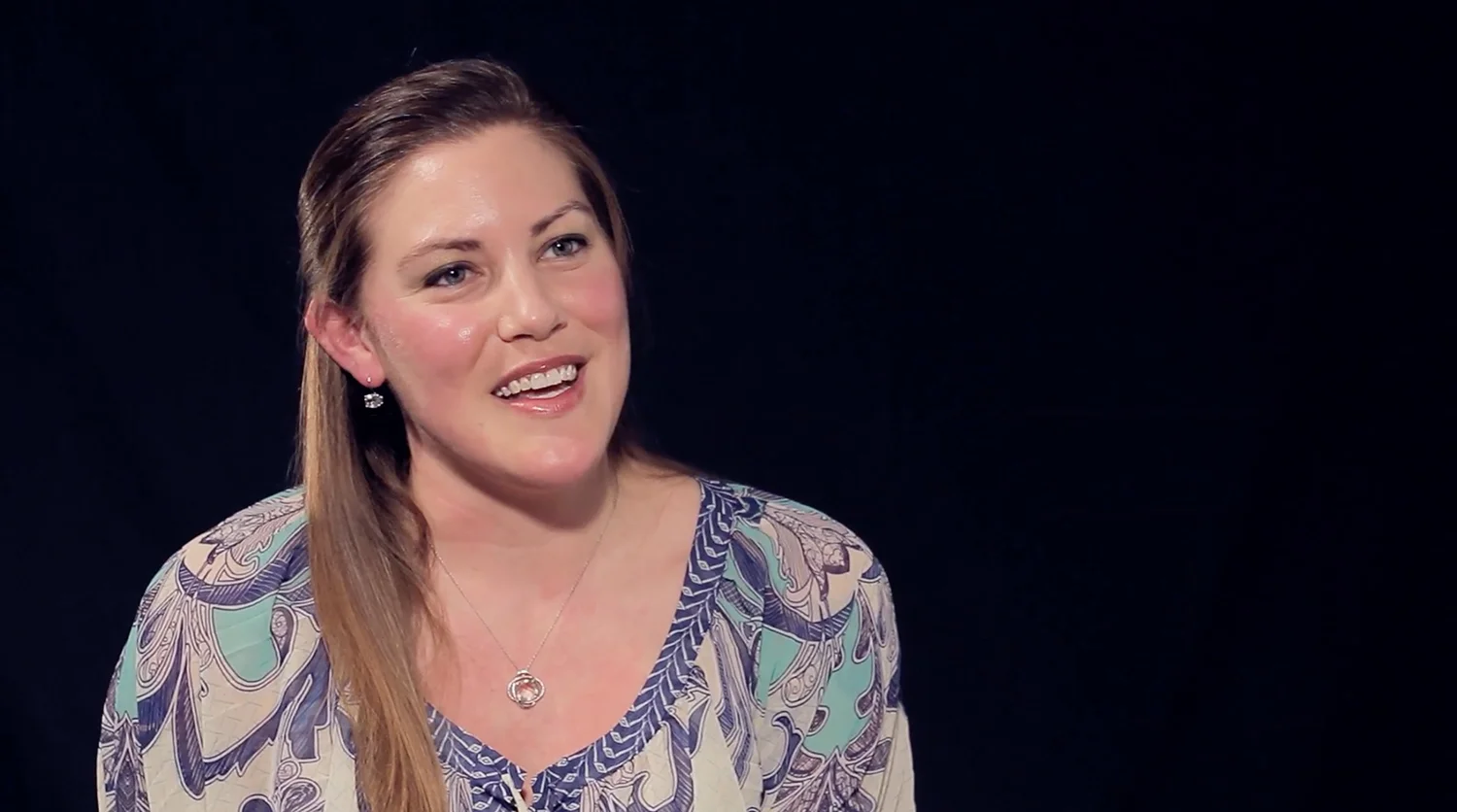
Courtney Spence on Why to Tell Stories of Progress and Not Problems

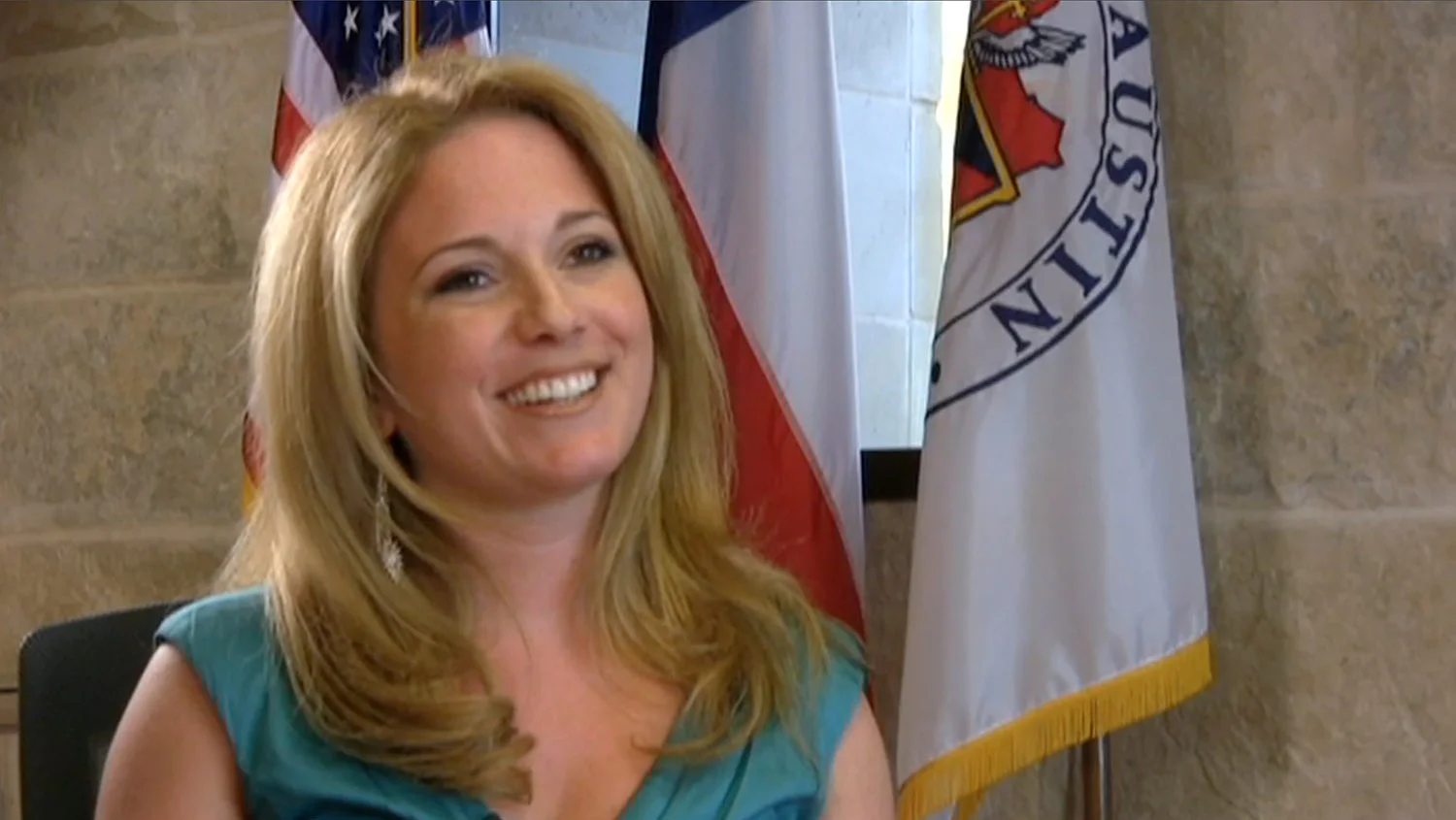
In Chapter 4 of 15 of her 2010 Capture Your Flag interview, non-profit executive and Students of the World founder Courtney Spence answers "Why do you focus on telling stories of progress versus stories of problems with your organization Students of the World?" Spence shares how she prioritizes positive story experiences over negative ones. Constantly inundated by war, poverty, disease, famine and economic depression, she feels negative journalism disengages and freezes people from the issue. Spence finds positive stories of progress is inclusive, engaging viewer to participate and get involved in a cause or project. Even if there is a challenge, be it human trafficking or HIV and AIDS, Spence sees possibility in telling that story through a positive lens of someone fighting the problem.

Transcript:

Erik Michielsen:  Why do you focus on telling stories of progress versus stories of problems with your organization Students of the World?

Courtney Spence:  It’s so important to tell stories of progress, to tell stories that are positive in some way because I think that really encourages people to want to know more, to want to get involved and to feel like they can do something about that cause or about that issue.  I mean, we are bombarded with messages of war, poverty, disease, famine, economic meltdowns.  Everything is so negative and I think that that makes me want to just disengage.  And “You know what? I can’t do anything about this stuff, it’s bigger than me.  I’ve got my own problems and I don’t want to learn about this anymore because everything is bad.”  So it kind of freezes people and makes them disengage from the world. 

So, when you show problems through the lens of someone that is doing something about that problem.  Someone that is on the ground, fighting the fight.  You recognize that this person gets up every morning and against all impossible odds continues to fight against HIV/AIDS, to fight against human traffickers and that they are out there living their life, dedicating themselves to solving a problem that is so much bigger than themselves or their family or their community.  You see you can affect change and affecting one life or affecting hundreds of lives is a positive thing.  And when you can see and celebrate these people that are doing these things on the ground I think it makes us want to be better people, it makes us want to be involved and makes us feel like, “Yes, we can overcome this because we can.”

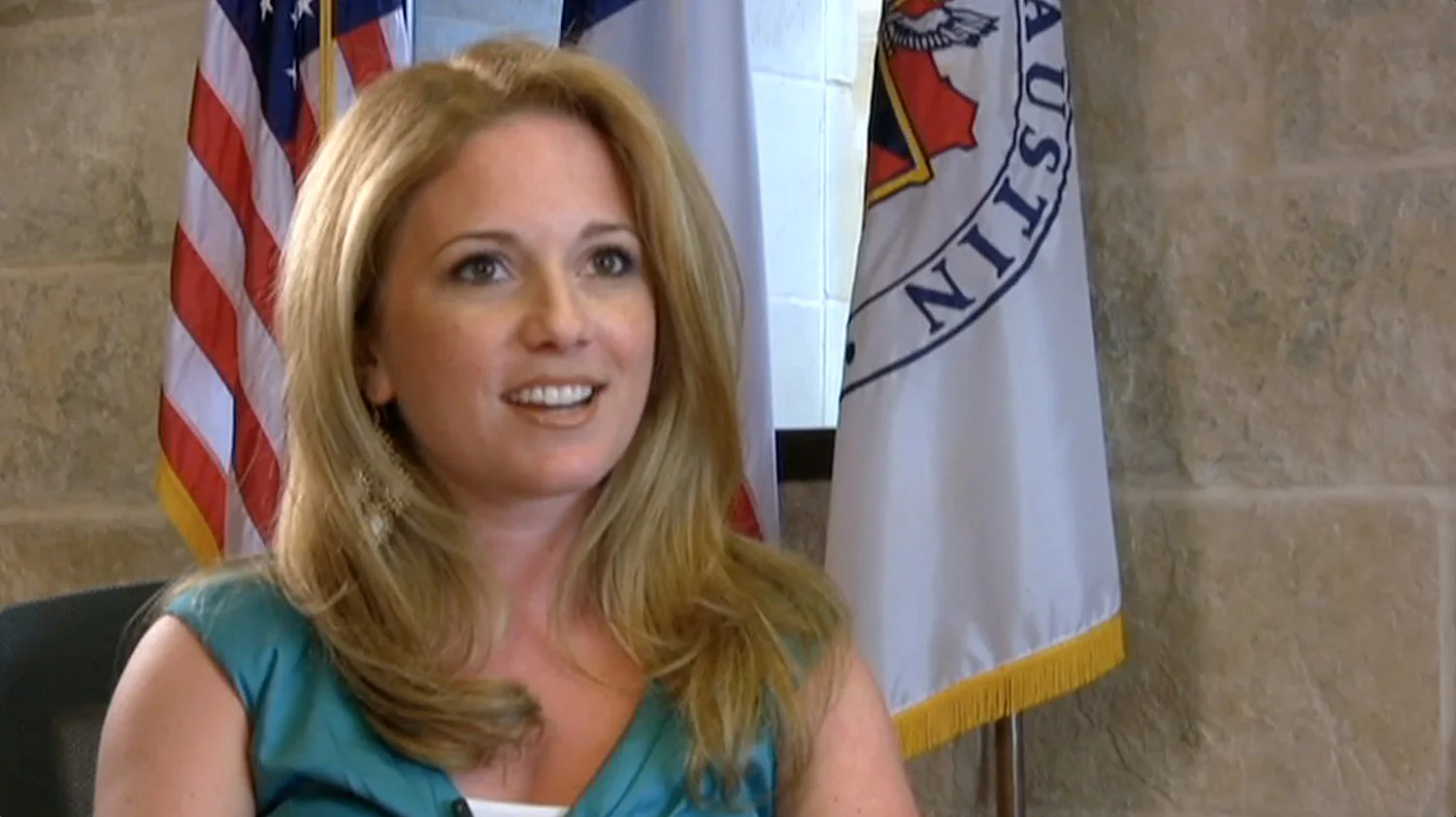
Courtney Spence on How Students of the World Develops Documentary Filmmakers

In Chapter 5 of 15 of her 2010 Capture Your Flag interview, non-profit executive and Students of the World founder Courtney Spence answers "What do you do and why do you do it?" She shares her organizational purpose to empower college students to travel abroad and tell the story of NGO work fighting problems on the frontlines. These locations range from New Orleans to India to Cambodia to other challenged areas. Students receive both impactful travel experiences gathering community stories on-location as well as post-production experience in Austin, Texas where projects are completed and, over time, distributed.

Transcript:

Erik Michielsen: What do you do and why do you do it?

Courtney Spence: So I created students of the world back as a sophomore at Duke University with a purpose to tell stories of progress. What we do is we take university students, we partner them with some of the most innovative organizations working all over the world, our students spend about four weeks on location where they immerse themselves in a community, form relationships, form friendships and really purpose to tell the stories of those that are the front lines fighting some of the worlds most pressing problems and whether that be in Cambodia, India or New Orleans. We are a chapter based nonprofit so we have chapters at various universities across the nation, one of our chapters is here in Austin, the University of Texas, and when the students return from their four weeks of production we bring them back to Austin for a six week sort of mega post production creative brainstorm where we all work on various multi media projects so it’s short films, it’s photo essays, it’s audio documentaries, audio documentaries over photo essays so it’s really sort of up to the individual student to figure out how they want to best tell the story of that organization, that individual.

Erik Michielsen: How do you define success in what you do?

Courtney Spence: There’s a few things that we look back every year, first and foremost the student experience, did our students, you know, were they safe? Did they enjoy themselves? Do they feel like they really had a purpose in doing what they did and do they feel that they were successful in helping craft these stories from these organizations and these individuals on the ground? How many people heard these stories? What sort of impact did that have? For example, we had our team from the University of Texas in Northern Thailand working with a woman who basically had taken in children that were being trafficked, children from off the streets, it was a really impactful experience for the students, they showed it to a single individual person here in Austin and the next thing we knew, a five thousand dollar check was being written to go directly to this woman to build a new house for the children she was caring for. So seeing those small moments where people are moved by the media, moved by the story and want to get involved, that is certainly successful for us.


Courtney Spence on How Curiosity and Listening Inform Successful Storytelling

In Chapter 6 of 15 of her 2010 Capture Your Flag interview, non-profit executive and Students of the World founder Courtney Spence answers "What have you learned about successful story telling through your nonprofit efforts?" Spence shares how listening and curiosity enable more successful storytelling. Spence has learned this over time creating her non-profit, Students of the World, that sends student documentary filmmakers abroad to work with Non-Governmental Organizations (NGOs) and the communities they serve across the globe. She highlights how both curiosity and listening provide individuals the space and security to open up and share their story.

Transcript:

Erik Michielsen: What have you learned about successful story telling through your nonprofit efforts?

Courtney Spence: I think the most important aspect to successful story telling comes from an honest and sincere sense of curiosity and from listening. I think a lot of times you read in books and you read articles and you go into a situation and you think you know the issue or you know the organization but we really tell our students to arm yourself with this knowledge but once you get to the ground and you meet the individuals that are dealing and facing these battles everyday, throw everything that you thought out the window and spend some time to just get to know the person, get to know where they live, get to know their families, really before you try and tell their story for them let them tell their own story and I think that that is hard to do in this day and age but I also think that when you find yourselves in these opportunities, particularly with the right individuals, they will open up so that you will be struck with the stories that come from them.

Courtney Spence on How Clinton Global Initiative Holds Non-Profits Accountable

In Chapter 7 of 15 of her 2010 Capture Your Flag interview, non-profit executive and Students of the World founder Courtney Spence answers "How is working with the Clinton Global Initiative enabling your organization’s purpose?" Spence shares how participating in the Clinton Global Initiative (CGI) has provided her organization both accountability and purpose. The three-day CGI conference brings together public and private sector organizations and leaders to share resources and collaborate. CGI measures participant action each year, rewarding teams that execute against goals with return invites to the conference.

Transcript:

Erik Michielsen: How is working with the Clinton Global Initiative enabling your organization’s purpose?

Courtney Spence:  I think a part of our approach at Students of the World is collaboration.  We collaborate with our students, we collaborate with other non-profits, we collaborate with post-partners here in Austin.  We really value collaboration and we definitely don’t have the corner on the smarts and we can’t do it alone. We are a non-profit. So, the Clinton Global Initiative, I was really struck with this idea that President Clinton was creating a conference, not to just talk about issues but hold people’s feet to the fire and say, “You’re going to do something about this.” 

So, basically the concept of the Clinton Global Initiative is you go for three days.  You have incredibly high level, inspiring, intensive conversations that always end with practical solutions that we can implement all over the world.  And then your responsibility is to partner with someone from there, start a new initiative, fund a new program.  And then for the following year, the CGI Staff, - the Clinton Global Initiative Staff – makes sure that you do what you said you were going to do, and if you didn’t, “Why was that?”  And if you just didn’t try, you’re not invited back.  So, it’s this concept of “Let’s talk about it, but let’s do something about it.”  So that really resonated with the purpose of Students of the World and seeing what they were doing, we recognized that we might be able to provide them with some media proof points – the storytelling of their member organizations and the progress they were making. 

We also recognized the need for ourselves to have a larger organization to partner with us to help us vet the organizations we work with.  In this day and age it’s very easy to throw up a website and say you do one thing and the last thing I want to do is to send a team of University of Texas students to Zimbabwe to find out that this organization isn’t doing what it said it was doing.  So, and we really were inspired by the membership of CGI, the organizations.  They take big organizations, small organizations.  So, really we kind of found a really great two-way partnership where they helped us identify incredibly innovative non-profit organizations to work with, and we in turn helped them in their storytelling of the conference with media and videos and photography.

Courtney Spence on How Non-Profit Uses Stop Doing List to Reset Strategy

In Chapter 8 of 15 of her 2010 Capture Your Flag interview, non-profit executive and Students of the World founder Courtney Spence answers "What have been your greatest lessons learned to date in leading your organization through a multi-city, multi-school growth phase?" Spence shares how lessons from Jim Collins' books "Built to Last" and "Good to Great" have helped her team overcome adversity around the 2008 and 2009 financial crisis. Surrounded by a strong team carrying shared passion and purpose, Spence is able to navigate funding challenges and downsizing to implement a more sustainable organizational strategy.

Transcript:

Erik Michielsen:  What have been your greatest lessons learned to date in leading your organization through a multi-city, multi-school growth phase?

Courtney Spence:  I think I’ll speak to two lessons learned.  The first lesson I really have learned came out of this most recent year.  2009 was certainly a difficult year for everyone, we were no exception to that.  We took on eight different partnerships, we had seven teams, we did incredible work.  I am the most proud of our work from 2009 of any work that we’ve ever done.  At the same time, right about the end of September, there wasn’t funding, we weren’t sure what was going to happen. Was there even going to even be a 2010 year?  We had to sort of step back and I personally had to get myself through a very negative place.  I mean, I was pretty down and this was something I had been working on for nine years and we were facing the possibility of, “Okay, maybe we’ll just stop for a year and do something else.”  And I had prepared myself for that because it was just such a difficult time for everybody financially and I knew that we weren’t going to be immune to the financial crisis that we just went through – or still going through.  But I have read Jim Collins quite a bit and I go back and re-read “Good to Great” and “Built to Last” and the “Stop Doing List” is something I have never been great at, but I think sometimes when you back is to a corner and you have no other options, you have to make hard decisions and I think you also get to make more creative and riskier decisions because of that.  So, I finally took his advice and we sat down with a big pad of paper and was like, “Here are all the things we’ve said we need be doing differently, or we don’t need to be doing this anymore, or we shouldn’t be doing this.” And we made some hard decisions, but out of that we are looking at stronger 2010 year than I ever imagined possible.  We have three full time staff.  We are so optimistic and things are falling into place right and left and I really feel like we are back on a new track that’s the right track.  Now, I’m sure things are coming up, bumps in the road, that will happen, but the idea that you can get to what you think is the bottom, the deepest, most, bottom, terrible place you can be in, and you can find a way to get out of that by making hard decisions but knowing that you have that courage within yourself to do that, I think is really an incredible lesson that I wouldn’t have learned if I hadn’t gone through what I went through last year. 

And I think the second lesson is – it’s really important to be able to work with a team that works, and I think, for me, work with a team that you love.  Particularly, the two women that I work with now, we are an incredibly strong team.  There is not ego involved.  Work is getting done.  Emails are going out – midnight, “ Hey, I’ve got this idea!” We all have the same passion, we all have the same sense of purpose and we love each other and I think it makes for such a successful environment.  What we have done in the last couple of months, I would never have dreamed.  So, I think it’s just as important as it is to love what you do or like what you do, I think it’s important to love or like the people you do it with.


Courtney Spence on How to Affect Social Change Using Documentary Media

In Chapter 9 of 15 of her 2010 Capture Your Flag interview, non-profit executive and Students of the World founder Courtney Spence answers "What inspired you to create Students of the World and what has you most hopeful about the legacy the organization can build over time?" Spence shares how she formed her organization after doing a travel abroad experience and working with the Center for Documentary Studies at Duke University. There she learned how to apply storytelling and documentary media as a tool to impact social change.

By connecting her international community immersion with her desire to help college student program participants apply creative and technical tools to showcase impactful stories, Spence founds her non-profit Students of the World to help students engage in projects where they learn and affect positive change through their actions.

Transcript:

Erik Michielsen: What inspired you to create Students of the World and what has you most hopeful about the legacy the organization can build over time?

Courtney Spence: It was my international experiences to date as a sophomore and it was also the Center for Documentary Studies at Duke, it’s a fantastic organization full of people who are so dedicated to this idea of storytelling but not just for the sake of storytelling but for having it go somewhere, they really believe in using documentary media as a tool for social activism and social change, that idea just blew me away.

I’m familiar with storytelling in media formats but the idea that you can use it for good was just -- it got me really excited. So it was could I find a way to marry those two ideas, one immersing yourself in international communities, challenging yourself as an individual, as a young person but also taking innate skills that you have at the time and really taking them and translating them into something that can make a difference. Young people can tell stories, young people know – especially now, I mean gosh, ten years later our students learned Final Cut when they were in sixth grade! I mean they speak through media, multimedia platforms, this is how they communicate so in many ways we were really lucky because technology and trends sort of followed this idea to date where I’m just blown away with the creativity that comes from these young people and there’s a real sense among so many of our students to give back.

So I think, for me that it is something that is really encouraging and when you talk about this legacy of Students of the World, I really – I hope that it becomes a way for young people to realize that they can make an impact now, you don’t have to take leadership courses to make a difference when you’re forty five, you can be a leader, you can be a change maker, you can be an influencer in your twenty, twenty-one, twenty-two years. But, you know as twenty-one year-old, twenty-two year-old but at the same time you have so much to learn so this concept of going in and saying ‘ We’re not going to tell you how to do this, I’m not here to teach you English, I’m here to just – tell me your story, let me learn from you and let me recognize that you’ve had infinite more experiences than I’ve had’, you know battling HIV on the ground, caring for orphaned children, dealing with human trafficking in Northern Thailand I mean these are issues that people at every age face day in day out and I think that if we can show young people that they can be involved but they also still have a lot to learn I think that that would be a good thing.


Courtney Spence on How Duke History Classes Fostered Openness to Foreign Culture

In Chapter 10 of 15 of her 2010 Capture Your Flag interview, non-profit executive and Students of the World founder Courtney Spence answers "How has your Duke education history degree helped you be more open and accepting of foreign cultures?" Spence shares how while studying history at Duke University she learned to be more open-minded when engaging foreign cultures. Duke's history department contributed to Spence's holistic collegiate experience by teaching her multiple viewpoints on world history. The process taught Spence and her classmates to appreciate the differences and go out and experience the cultures and explore the world to form their own opinions.

Transcript:

Erik Michielsen: How has your Duke education history degree helped you be more open and accepting of foreign cultures?

Courtney Spence: My experience at Duke was incredibly positive, it was a community that was very supportive of students, of big ideas, crazy ideas, dedicated themselves really to I think providing a holistic collegiate experience for their undergraduates. Every year that goes by I am more and more thankful for that opportunity. Particularly within the history department it was very… it was again like, everything that I had known, you know all of my education in American history, world history growing up I just had to sort of throw out of the window because I got there and I was taking Russian history and Intro to Latin American history and the African American Slave Trade and really things that were opening my eyes to the world was not as how I thought it had been, the history that I had built up in my head of ‘this is how the world worked’ wasn’t necessarily true and learning that within the framework of studying history you – there are different versions or different theories of historical study, so you can view history through a feminist lens you can, you know and seeing that – appreciating that there are so many different lenses through which we tell the story of our world and our community and our time.

It really has impacted me in the way that I go about my job because again I may think the situation in Northern Thailand is one thing but when I get there and you’re on the ground, it’s completely different and it’s not necessarily better or worse, it’s just not what you thought and so being open that and not being scared by that I think is an important thing that I’ve taken away.

Courtney Spence on How Common Human Spirit Prevails Across Varied Cultures

In Chapter 11 of 15 of her 2010 Capture Your Flag interview, non-profit executive and Students of the World founder Courtney Spence answers "What have you found most rewarding about immersing yourself in foreign cultures through traveling?" Spence details her travels to developing countries and what she has learned from the people she has met. Life and death issues, including famine, poverty, lack of clean water access and HIV / AIDS do not keep the people from being hopeful, cheerful, loving, and optimistic. Spence sees not only common themes across cultures but also a triumphant spirit in developing cultures not always present at home in the United States.

Transcript:

Erik Michielsen: What have you found most rewarding about immersing yourself in foreign cultures through traveling?

Courtney Spence: You know, I will be with people who have had life experiences that I will never be able to understand, I mean they were a child soldier at the age of fourteen, they were kidnapped, they were this, I mean we have worked with people who have had incredible hardship and at the same time they find humor in their life, they find love in their life, they find, you know -- you find that people are open to you and wanting to learn from you and genuinely, parents want a better life for their sons and daughters, like there’s commonalities among us all that, without sounding cheesy, they’re very true and I think I’ve also become very inspired by – the sense that I feel like sometimes people in these situations are happier than I find my friends back at home are, I mean everybody has their own sets of worries, everybody has their own sets of challenges and they are all valid, but I think that when you go particularly in the developing world and people are facing life and death issues, I mean it’s not ‘I can’t sleep so I need to take a pill’ it’s like – it’s HIV- AIDS it’s famine, it’s poverty, it’s lack of access to clean water, I mean, it’s life and death situations… but they’re not – there’s hope and there’s humor and there’s love and there is a sense of humanity and community that I don’t always feel like I find here and I think that that to me is knowing that people are out there facing things that I would never have been able to imagine ten years ago or even every year, I mean I  meet knew people, I just can’t imagine their life but they are – somehow there is optimism and there is love and that sort of the human spirit can triumph.

Courtney Spence on Why Uganda Human Rights Trip Refines Career Purpose

In Chapter 12 of 15 of her 2010 Capture Your Flag interview, non-profit executive and Students of the World founder Courtney Spence answers "How did your 2003 trip to Uganda change your life?" Spence reflects on her travels to Uganda in 2003 to work in HIV and AIDS public health efforts. Experiences there, from witnessing charitable acts of kindness and charity to engaging with refugee children rescued from the LRA and civil war, resonate with Spence's soul and inspire her continued work with Students of the World.

Transcript:

Erik Michielsen: How did your 2003 trip to Uganda change your life?

Courtney Spence: We went to Uganda to try and work with organizations that were fighting HIV-AIDS, Uganda is very famous for really tackling HIV-AIDS heads on and although it was - had some of highest percentage rates of infection, it has really been successful in lowering those rates. When we got there in 2003 the war in the north with the LRA, which is a rebel army led a madman named Joseph Kony, was really ravaging the north and ravaging the Acholi people, and there was 1.2 Acholi people at the time that were in refugee camps and everyone kept talking about the country as though it was split, I mean it was almost like a civil war, it’s like the south and the north, the north and the south and the south was where we had planned to spend the majority of our time. Well we got there and we had a camera and we had a member of parliament who was from the north who basically begged us to go up there and document what was going on. So three of us went up to the north for about a week, a week and a half and it was unlike anything I could’ve ever imagined, you couldn’t… you couldn’t write a fiction, you had 1.2 million people in refugee camps, the LRA is an army made up completely of children, so they go and they raid these camps and take a hundred, two hundred kids at a time, so much so that at the time it wasn’t safe for children to sleep at home or with their parents in these camps, they had to walk to town, sometimes up to ten kilometers each way.

They would sleep on the streets in town and you would go and there was thirty to forty thousand children at the time in Gulu. The concept that it is safer for children to sleep on the streets than it is for them to sleep with their families is something that I think us here, we can’t, you can’t fathom that, you cannot fathom that. At the same time we met people that were working on the ground, Human Rights Focus which was really an organization that was dedicated to calling out the government when they were mishandling the situations in the camps, which they were. We made friends with a group of young people in their twenties, early thirties, they created an organization called Charity for Peace and they were taking these children from the streets, volunteering, sleeping with them in basically a big school ground and they would divide up the children, girls on one side, boys on the other, provide them with some games, monitor them as they slept so there was some sort of sense of safety for these children on the streets. They took in seven thousand kids almost every night and it was like, people were doing things without any money, without any international support.

There was part of me that was inspired that people were doing something about it and it was -- it also just is a place that sort of resonated with my soul, I was there and I felt at home and I kind of feel this way about the world, I think there are certain places that resonate with your soul and it doesn’t necessarily have to make sense.


Courtney Spence on Innovative Ways to Finance a Non-Profit

In Chapter 13 of 15 of her 2010 Capture Your Flag interview, non-profit executive and Students of the World founder Courtney Spence answers "What have you found most challenging about nonprofit fundraising?" Spence discusses what she has learned raising money to finance her organization. She emphasizes limiting the time soliciting funds given the organization is built on its storytelling, not fundraising strength. She also positions the capital raising process with outsiders as an investment that comes with returns and not a charitable gift. After years learning from these experiences, Spence is now pushing to identify sustainable revenue sources to develop and expand her efforts.

Transcript:

Erik Michielsen: What have you found most challenging about nonprofit fundraising?

Courtney Spence: I like to joke that I’m in the nonprofit world, really heavy on the non-profiting side of things. It’s challenging, I think, you know, I’m hopeful that the nonprofit sector or the social sectors, which I think it should be called, can find ways to be more innovative about the way that we fund ourselves because we do provide such an added value, such service in some ways that the private sector or the government cannot. At the same time it’s very ironic that organizations, whether they report it or not, will spend fifty to eighty percent of their time doing something they’re not in the business to do. I mean granted, I understand you have to fund raise to be a nonprofit but – what we do is tell stories through media, like we don’t raise money for organizations.

At first it was hard for me to understand the difference of asking people for money and asking them to invest in the organization, we’re not, we’re not asking for a hand out, we’re not asking for charity even though that’s what it is, but we’re asking for people to invest in the idea, in these young people, in the organizations we work with and invest in the idea of the power of media to affect positive change. That’s pretty powerful, asking people for a donation isn’t. So, it’s understanding where you are, being confident in why you’re asking for money or why you need it because that is the way that nonprofits are structured but also for us right now it’s challenging ourselves to how can we find more sustainable, kind of, smarter sources of revenue because I believe in the power of what we provide.

Courtney Spence on How Confidence in Fundraising Inspires Investors

In Chapter 14 of 15 of her 2010 Capture Your Flag interview, non-profit executive and Students of the World founder Courtney Spence answers "Why is it important to learn to ask for money for something you believe in?" Spence discusses how to improve confidence and results asking for charitable and donor contributions. A confident ask comes from a clear definition of purpose in why you do what you do. The experience asking for financing or contributions teaches a fund raiser the extent he or she values the cause or campaign. When conviction exists, the resulting confidence in the "ask" translates into a more responsive and engaged investor and donor base.

Transcript:

Erik Michielsen: Why is it important to learn to ask for money for something you believe in?

Courtney Spence: It’s important because you will most likely do that for the rest of your life in some way, shape or form and I think it’s something that people are not comfortable with initially, I mean very few people are like ‘Yes, I will go and ask people for money and that’s great’. No, I mean I think it’s something that makes people uncomfortable, it makes people embarrassed, it makes people shy… but that’s if you look at it as if you’re asking someone to, like I said, for charity or for a donation, asking someone to invest in something you believe in is a powerful thing for you because it teaches you how, how much, how important that issue is to you, it teaches you why you value what you value, it makes you take a step back and by like ‘why – if I’m going to put myself out there I’ve got to know why I’m putting myself out there’. I think it teaches you that, you know, when we talk to our students about raising money, because they do raise money for their percentage of their participation in the trip, so when we talk to our students we say ‘you know the more that you ask people to invest in what you’re doing the more people actually care and the impact that you can make will be greater because people are a part of what you’re doing. They’ll follow your blog, they’ll want to see your final video because they were a part of it’ so it sort of broadens your community in a sense because people are involved and engaged. So you have to look at it as it’s not just a donation or a hand out it’s just asking people to become a part of a community that believe in what you believe in and if you what you believe in is a good thing, I think that’s a good thing.

Courtney Spence on How Rejection Can Strengthen Fundraising Resolve

In Chapter 15 of 15 of her 2010 Capture Your Flag interview, non-profit executive Courtney Spence answers "How did the Duke University Administration help your organization get started?" Spence shares how she secured school administration financing to launch what would eventually become her non-profit Students of the World. Spence pitches the idea to several Duke University administration officials. Early rejection pushes Spence to refine her pitch and continue presenting it to potential investors. Ultimately, Spence connects with the Vice President of Student Affairs, receives financing, and goes back to those who had rejected the idea and ultimately finance the project.

Transcript:

Erik Michielsen: How did the Duke University Administration help your organization get started?

Courtney Spence:  I wouldn’t be here today if it wasn’t for the Duke Administration, both for the people that said yes and for the people that said no.  I think I went on this journey my sophomore year and I tried to take a meeting with any person at Duke that would sit down and talk with me. Even if I didn’t think they were necessarily directly related to international documentary work and student activism and organizations.  I would take a meeting just to say, “Hey, let me tell you about this idea I have.  What do you think?”  And if it made sense for me to say, “Hey, would you – your office – would this be something you would invest in?” Or approach people for money, or who else should I speak to, or just for advice.  And we got a lot of “No’s” at the beginning and a lot of people were, I think sometimes, I think rightly so, administrations are a little bit hesitate to start up student organizations because they happen so frequently and because of turnover you see them die out once the founder graduates.  So, there is a hesitancy to invest heavily in sort of the crazier ideas initially, but I think by the people saying “No” it challenges you to go back and be like, “Do I really want to keep doing this? So, yes I do and yes I can.” 

And it also challenges you – “Well, what’s not quite right about this?  Why am I getting so many ‘No’s’ on this front?”  And then for us, it was a woman, Janet Dickerson, she was the Vice-President of Student Affairs at Duke at the time.  An incredible woman and I’ll never forget, we walked into her office – it was me and another student that was sort of co-founding the organization at that point.  We walked into Janet Dickerson’s office, told her what we wanted to do, had our little presentation and she said, “Yes.” When she said, “Yes.” She said, “Five thousand dollars.” “I’m going to set up a lunch meeting other related administrators and faculty members and sort of put their feet to the fire because I think this concept is new and kind of exciting.”  But what was really the most rewarding was there was a gentleman who had said, “No” you know that fall, so and you know, as we were trying to start the organization.  So, I went to him and he was like, “I think this is a great idea, but not one I think my office can invest in.”  I went back the following year and said, “Hey, so here’s what we did and this year we’re going to Cuba and is this something you want to be invested in?”  And he said, “Yes.”


How Window Shopping Informs Product Design - Richard Moross

In Chapter 1 of 17, Moo.com founder Richard Moross admits his pleasure in window shopping and embracing the consumer experience. An entrepreneur, Moross enjoys making things people will consume. A consumer and lover of product, Moross learns to understand product design and market demand through window shopping, spotting emerging trends, scoping newly released products. The experience propels Moo's ongoing pursuit of design excellence.

Why British Stationers and Tailors Inspire Product Design - Richard Moross

In Chapter 2 of 17, entrepreneur and Moo.com founder Richard Moross finds inspiration in fine crafted goods. Certain trades, including bespoke tailors and custom English stationers, are dying, being replaced by cheaper, mass produced product. This is a tragedy, notes Moross, as the fine attention to detail and personalization provide a personal consumer connection that raises confidence. The classic made to order craftsmanship inspires Moross in his own endeavor at printing company Moo.

How to Create Transformational Consumer Experiences - Richard Moross

In Chapter 3 of 17, entrepreneur, innovator and Moo.com founder Richard Moross shares what he learned working and world renown design agency and experience consultancy Imagination. Today, Imagination is the largest independent design agency in the world. Here, Moross learns firsthand what authors Pine and Gilmore termed "The Experience Economy". Moross learns premium pricing comes from experience integration. At his company Moo (www.moo.com), he integrates this experience element in nearly every consumer interaction, pushing the relationship into what Pine and Gilmore term a "transformational business" in line with Maslow's Self Actualization stage in the hierarchy of needs.

How Details Enable Sustainable Design Differentiation - Richard Moross

In Chapter 4 of 17, entrepreneur, innovator and Moo.com founder Richard Moross provides background into why increasing consumer intelligence, via research and education, makes details as important as ever in product and experience design. Moross aspires to create differentiated produce in an increasingly homogenized world in what he does at his company, Moo (www.moo.com). From ordering to fulfillment to messaging, Moross always looks for new ways to stand out in what he creates and how it is shared.

What Tiffany and Apple Teach About Brand Storytelling - Richard Moross

In Chapter 5 of 17, entrepreneur, innovator and Moo.com founder Richard Moross uses Seth Godin's phrase "Be Remarkable" to unify his company, Moo (www.moo.com) around a common goal. Moross references Tiffany and Apple as inspirations behind why innovative product packaging creates winning consumer experiences and lasting brand stories. Moross frames this approach as shipping product that takes into account sympathy for the surrounding box.

How Manufacturer Institutes Green Business Practices - Richard Moross

In Chapter 6 of 17, manufacturing company founder and CEO Richard Moross shares the ongoing rollout of green business practices for his printing company Moo (www.moo.com). Moross and his team constantly seek ways to innovate printing technologies, materials, and packaging to create more environment-friendly product.