How to Live a Healthier Life at 40 - Matt Curtis

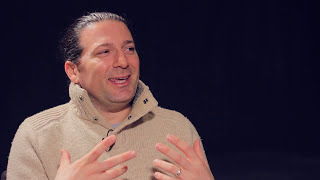
In Chapter 6 of 18 in his 2012 Capture Your Flag interview, public affairs and communications strategist Matt Curtis answers "How Are Your Personal Priorities Changing As You Get Older?"  Curtis shares how he is getting more serious about his health, including what he eats, how he exercises, and when he sleeps.  As he turns 40, he finds he has more energy and, as a result, is more positive, outgoing, and happy.  Matt Curtis is the director of government relations at HomeAway Inc. Previously he was communications director for Austin mayors Lee Leffingwell and Will Wynn.  In 2011, Curtis won "Austinite of the Year" in the Austin Under 40 Awards.  He earned his bachelor's degree in radio, television and film from the University of North Texas.

What It Means to Be a Community Leader - Matt Curtis

In Chapter 7 of 18 in his 2012 Capture Your Flag interview, public affairs and communications strategist Matt Curtis answers "What Does It Mean to Be a Leader in What You Do?"  Curtis aims to make his a community a better place that he found it.  He notes the challenges that come with leading in a fast growing city of Austin, Texas.  He notes it requires defining goals, effective messaging, recruitment of the messengers, and then securing commitments from individuals and organizations to work toward goals.  Matt Curtis is the director of government relations at HomeAway Inc. Previously he was communications director for Austin mayors Lee Leffingwell and Will Wynn.  In 2011, Curtis won "Austinite of the Year" in the Austin Under 40 Awards.  He earned his bachelor's degree in radio, television and film from the University of North Texas.

How to Cultivate a Future Generation of Leaders - Matt Curtis

In Chapter 8 of 18 in his 2012 Capture Your Flag interview, public affairs and communications strategist Matt Curtis answers "What Has Been Most Exciting Thing About Making the Transition From Winning Austinite of the Year to Encouraging a Future Generation of Leaders in Austin?"  Curtis reflects on his time as Austinite of the Year and how he is turning his attention to promoting more formal program alumni involvement to support future award winners in the Austin community.  Matt Curtis is the director of government relations at HomeAway Inc. Previously he was communications director for Austin mayors Lee Leffingwell and Will Wynn.  In 2011, Curtis won "Austinite of the Year" in the Austin Under 40 Awards.  He earned his bachelor's degree in radio, television and film from the University of North Texas.

How Community Leader Adapts As Responsibilities Grow - Matt Curtis

In Chapter 9 of 18 in his 2012 Capture Your Flag interview, public affairs and communications strategist Matt Curtis answers "How are Your Community Responsibilities Changing?"  Curtis notes that as he gains age and experience he will need to be a more experienced leader and find more strategic ways to support his community.  He notes the importance of doing more sustainable work and more with less.  Matt Curtis is the director of government relations at HomeAway Inc. Previously he was communications director for Austin mayors Lee Leffingwell and Will Wynn.  In 2011, Curtis won "Austinite of the Year" in the Austin Under 40 Awards.  He earned his bachelor's degree in radio, television and film from the University of North Texas.

How Mentor Network Guides Long Term Life Choices - Matt Curtis

In Chapter 10 of 18 in his 2012 Capture Your Flag interview, public affairs and communications strategist Matt Curtis answers "At This Point in Your Life, Where Are You Seeking Advice and Coaching?"  Curtis notes how he goes to a variety of people for advice, including a network of advisors and mentors from his Whole Foods, Austin breakfast crowd.  He notes the importance of learning from older community leaders successes and failures.  Matt Curtis is the director of government relations at HomeAway Inc. Previously he was communications director for Austin mayors Lee Leffingwell and Will Wynn.  In 2011, Curtis won "Austinite of the Year" in the Austin Under 40 Awards.  He earned his bachelor's degree in radio, television and film from the University of North Texas.

How to Better Manage Time and Commitments - Matt Curtis

In Chapter 11 of 18 in his 2012 Capture Your Flag interview, public affairs and communications strategist Matt Curtis answers "How Are You Learning to Better Manage Your Time and Commitments?"  Curtis shares why using a notebook has been so helpful writing out his "To Do" items and how he works through these each day.  He shares why he favors using his notebook and not his cell phone or computer.  Matt Curtis is the director of government relations at HomeAway Inc. Previously he was communications director for Austin mayors Lee Leffingwell and Will Wynn.  In 2011, Curtis won "Austinite of the Year" in the Austin Under 40 Awards.  He earned his bachelor's degree in radio, television and film from the University of North Texas.

How to Break Out of a Comfort Zone - Matt Curtis

In Chapter 12 of 18 in his 2012 Capture Your Flag interview, public affairs and communications strategist Matt Curtis answers "Where is Your Comfort Zone and What Do You Do to Break Free of Living in It?  Curtis recalls his apartment couch potato days from his 20s and 30s and how moving to a small downtown Austin place has forced him to be more active.  Matt Curtis is the director of government relations at HomeAway Inc. Previously he was communications director for Austin mayors Lee Leffingwell and Will Wynn.  In 2011, Curtis won "Austinite of the Year" in the Austin Under 40 Awards.  He earned his bachelor's degree in radio, television and film from the University of North Texas.

Why to Ask About Company Culture in a Job Interview - Matt Curtis

In Chapter 13 of 18 in his 2012 Capture Your Flag interview, public affairs and communications strategist Matt Curtis answers "What Company Qualities Did You Seek When Looking for a New Job?"  Curtis shares the question he now always asks in a job interview.  He shares team sports experiences and how playing basketball taught him the importance of positivity and teamwork and why he carries those lessons closely in his professional life.  Matt Curtis is the director of government relations at HomeAway Inc. Previously he was communications director for Austin mayors Lee Leffingwell and Will Wynn.  In 2011, Curtis won "Austinite of the Year" in the Austin Under 40 Awards.  He earned his bachelor's degree in radio, television and film from the University of North Texas.

When to Leave a Job and Start Something New - Matt Curtis

In Chapter 14 of 18 in his 2012 Capture Your Flag interview, public affairs and communications strategist Matt Curtis answers "When Have You Had to Walk Away Something Dear to Your Heart?"  Curtis shares how he has left political jobs for new challenges and how the process and resulting experiences have allowed him to learn and grow.  Matt Curtis is the director of government relations at HomeAway Inc. Previously he was communications director for Austin mayors Lee Leffingwell and Will Wynn.  In 2011, Curtis won "Austinite of the Year" in the Austin Under 40 Awards.  He earned his bachelor's degree in radio, television and film from the University of North Texas.

How Positivity Improves Productivity - Matt Curtis

In Chapter 15 of 18 in his 2012 Capture Your Flag interview, public affairs and communications strategist Matt Curtis answers "How Do You Get Yourself Into a Flow State of Productivity?"  Curtis shares how he gets into a zone by working and crossing items off his lists.  This causes him to feel more positive emotions which in turn help him enter a flow state of productivity.  Matt Curtis is the director of government relations at HomeAway Inc. Previously he was communications director for Austin mayors Lee Leffingwell and Will Wynn.  In 2011, Curtis won "Austinite of the Year" in the Austin Under 40 Awards.  He earned his bachelor's degree in radio, television and film from the University of North Texas.

What It Means to Work in Government Relations - Matt Curtis

In Chapter 16 of 18 in his 2012 Capture Your Flag interview, public affairs and communications strategist Matt Curtis answers "What Does It Mean to Work in Government Relations?"  Curtis shares he applies best practice models best suited to community needs within the relevant municipal, county, state, and federal level.  Matt Curtis is the director of government relations at HomeAway Inc. Previously he was communications director for Austin mayors Lee Leffingwell and Will Wynn.  In 2011, Curtis won "Austinite of the Year" in the Austin Under 40 Awards.  He earned his bachelor's degree in radio, television and film from the University of North Texas.

How to Use Government Experience in Private Sector Job - Matt Curtis

In Chapter 17 of 18 in his 2012 Capture Your Flag interview, public affairs and communications strategist Matt Curtis answers "How Are You Applying Your Government Experience Working in a Private Sector Job?"  Curtis shares how his experience working across local, state, and federal governments has given him the knowledge to help private communities better navigate the political landscape.  He notes how positive and solutions-oriented initiatives are more successful than simply pointing out problems.  Matt Curtis is the director of government relations at HomeAway Inc. Previously he was communications director for Austin mayors Lee Leffingwell and Will Wynn.  In 2011, Curtis won "Austinite of the Year" in the Austin Under 40 Awards.  He earned his bachelor's degree in radio, television and film from the University of North Texas.

Finding Meaningful Work in Public Service Career - Matt Curtis

In Chapter 18 of 18 in his 2012 Capture Your Flag interview, public affairs and communications strategist Matt Curtis answers "What Makes Your Work Meaningful?"  Curtis shares how he finds joy and fulfillment working across communities, governments, and individuals solving problems.  He notes how his current private sector job allows him to make a measurable difference across communities by connecting private and public sector channels.  Matt Curtis is the director of government relations at HomeAway Inc. Previously he was communications director for Austin mayors Lee Leffingwell and Will Wynn.  In 2011, Curtis won "Austinite of the Year" in the Austin Under 40 Awards.  He earned his bachelor's degree in radio, television and film from the University of North Texas.

Bijoy Goswami on How Family Relationships Change With Age

In Chapter 1 of 17 in his 2012 Capture Your Flag interview, leadership philosopher Bijoy Goswami answers "How Are Your Family Relationships Changing As You Get Older?"  Goswami discusses how his parent relationships are becoming less instructional and more collaborative and peer based.  He discusses ways, including annual family gatherings, that allow the relationships to flourish and provide support across the family. 

Bijoy Goswami is a writer, teacher, and community leader based in Austin, Texas.  He develops learning models, including MRE, youPlusU, and Bootstrap, to help others live more meaningfully.  Previously, he co-founded Aviri Software after working at Trilogy Software.  Goswami graduated from Stanford University, where he studied Computer Science, Economics, and History. 

Transcript: 

Erik Michielsen: How are your family relationships changing as you get older?

Bijoy Goswami: You know, we moved from specific relationships like my mom and dad, you know, and they were in charge of our life and telling us what to do, to we’re all on the journey together and we’re helping each other with our journeys, you know. So, it’s less of a structure, it’s more of these fellow travelers that I've gotten to be with my journey for all my life.

My parents and my brothers, you know, almost all my life so, but we get to reflect and help each other through the journey and so it’s becomes peer to peer, you know process rather than a structured process and so it’s much less of you’re supposed to be doing this or how it’s going but it’s much more of reflection, helping someone express themselves more fully, more completely and having that long history. No one else has the history of knowing the deep thread that kind of ties it all together for, for, you know.

So, I think that’s been really fun and for us we get together as a family once a year at least in Hong Kong, get together for Christmas that’s our tradition. But that’s also our time to sort of sink up, calibrate. We’re always in touch of course during the year, too but that’s really a good time for us to sink up, calibrate, talk about stuff, get reflected, get reset and then take on the next year.

Career Advice From Don Quixote and Bruce Lee

In Chapter 2 of 17 in his 2012 Capture Your Flag interview, leadership philosopher Bijoy Goswami answers "What Has Your Passion for the Peforming Arts Taught You About the Power of Preparation?"  Goswami discusses how preparation and repetition enable a more full immersion in a creative place.  Bijoy Goswami is a writer, teacher, and community leader based in Austin, Texas.  He develops learning models, including MRE, youPlusU, and Bootstrap, to help others live more meaningfully.  Previously, he co-founded Aviri Software after working at Trilogy Software.  Goswami graduated from Stanford University, where he studied Computer Science, Economics, and History. 

Transcript: 

Erik Michielsen:  What has your passion for the performing arts taught you about the power of preparation?

Bijoy Goswami:  The importance of peace. Preparation is really important, you know, I find this to be true of lots of things. You know, performing arts is, you’ve gotta keep doing something over and over again so that you can get rid of all the practice and just be in the moment. So, this is this funny thing of these three stages, you know, of the journey.

Going back to that three-part process. If you just come in and you're kind of buffoon, you’re just kind of like, “Oh”, you know. A guy named Robert Johnson talks about Don Quixote as sort of that stage one, he shows up to the game and he’s just like, “What’s up?,” and you know he’s just, “I'm a warrior”, “No you're not. You know, you have no idea what you’re doing”, you know, and then sort of you get to that point where you take that but then you start getting to this point where you now have, you start developing your skills and capabilities, right? But then you’re still practicing; you're still working in a way that you’re following a rule set, okay? But if you keep going then what happens is you actually go back in this third place you become Don Quixote again but with all these knowledge behind you.

So, in Zen it’s like the beginner’s mind, right? So, the beginner’s mind is like, oh show up to, Bruce Lee we’ll talk about, you know, show up to the fight. Well, if you’ve not practiced today and you show to the fight, you’re gonna get your ass, you know, kicked but if you show to the fight and you have all the stuff behind you 10,000 hours, 20,000 hours then you can truly be in a creative space. You can now say, it’s all in you. It’s not that you're just keeps discarding it. It’s actually all there but you're calling upon, you know, as needed.

So, I think preparation, you know, is something you just have to – You’ve gotta do all the time and rehearsal for a play is kind of a mini example of what you do in life, you know, you spend those hours rehearsing, rehearsing, rehearsing so that you could come and you're not anymore thinking about the lines and the set and where am I moving and you’re just being, you're being Hamlet, you're being the character and you’re in that moment and you're going for it. So, preparation is that – is the difference between a bumbling fool and someone who’s a master.

Crafting a Personal Philosophy to Reach Your Full Potential

In Chapter 3 of 17 in his 2012 Capture Your Flag interview, leadership philosopher Bijoy Goswami answers "At This Moment in Your Life, Where Are You Seeking Advice and Coaching?"  Goswami shares his life model and where he finds himself in it as he continues his journey on understanding his place in the world and how he can realize his potential by living a certain way.  Bijoy Goswami is a writer, teacher, and community leader based in Austin, Texas.  He develops learning models, including MRE, youPlusU, and Bootstrap, to help others live more meaningfully.  Previously, he co-founded Aviri Software after working at Trilogy Software.  Goswami graduated from Stanford University, where he studied Computer Science, Economics, and History. 

Transcript: 

Erik Michielsen:  At this moment in your life, where are you seeking advice and coaching?

Bijoy Goswami:  you know, I've been on this journey as you’ve been tracking for the last few years and it’s really been interesting, I've realized that, you know, even the last few years I've on a threshold of something very interesting which is, which is what I call Bijoyism or you know, Bijoyist like what is it to be me, you know. What is it to have my own complete philosophy, understanding of the world.

And what I realized is I would go to this sort of three-step process. The, you know, the stage one where you simply live according to other people’s rules. Stage two, you let go of what you’ve been given and then the third stage, you start to really live according to your own aesthetics and your own idea of what is you’re trying to create in the world. So, to me what’s really interesting is, I know a lot of friends who have done that in different aspects of their life, they might be, they might have broken the mold in entrepreneurship, they might have broken the mold in relationships or sexuality or whatever it is and for me it’s just interesting to step fully over that threshold now that all the different pieces have all gotten to this third stage, I feel like.

So, I think what is it to live that fully integrated stage three is really what I'm looking at and I think you have a lot of leadership in stage one, you have a lot of folks that – Stage one is broadly external. How do you create things in the external world, how do you make more money, how do become more powerful, how do you – You do all that. We have a lot of those leaders in that. You have Stage two, which is the spiritual journey broadly speaking. People who have gone in the inner world and I think you have less of the stage three, it is sort of like, it’s like, you know, the population is in this progression. So, I think people like, you know, I think it’s interesting because people like Steve Jobs I think are a stage three person. Where you examine his life, the biography is really great. You look at someone who’s really integrated, you know, spiritual, the material and then he’s creating, he’s just creating, you know.

So, I think it’s interesting because I think there are not as many guides for the stage three way of living and that’s what I'm beginning to curate. It’s like look at how do you – Is there a way to teach that? Is there a way to learn that? Is there a way to articulate it? Who is articulating it? Because most of the time it gets articulated in terms of the other two.

How to Let Go and Make Space for Something New in Your Life

In Chapter 4 of 17 in his 2012 Capture Your Flag interview, leadership philosopher Bijoy Goswami answers "How Are Your Community Responsibilities Changing?"  Goswami shares how he has been developing and why he is letting go of existing responsibilities to make space for something new.  He sees it as a process or cycle that allows him to distill his purpose.  Bijoy Goswami is a writer, teacher, and community leader based in Austin, Texas.  He develops learning models, including MRE, youPlusU, and Bootstrap, to help others live more meaningfully.  Previously, he co-founded Aviri Software after working at Trilogy Software.  Goswami graduated from Stanford University, where he studied Computer Science, Economics, and History. 

Transcript: 

Erik Michielsen:  How are your community responsibilities changing?

Bijoy Goswami:  What I found is this three-stage process in terms of finding your way, you start with another way. You’re painting, let other people paint upon you. Second, you start to strip off that paint and a lot of what I've been doing the last while is stripping off some of this paint and that has meant actually not being as integral to things like Bootstrap Austin or things like that and say, how can I take a backseat, how can I let go of some of these things so that I can make a space for something new.

So, again, I find it to a cycle. It’s not like I’m, you know, going away from everything fully but it’s part of I'm saying, I'm doing that process so I can find out what the next way of engaging is. So, I think I might have brought up the Banksy analogy where I hack systems. I try to intervene inside of systems but I'm don’t necessarily try to hold on to them or be part of them for much—a long time. So, what I found is I'm still involved, I'm still engaged but in terms of projects where I am assisting those projects, I go in and I leave, you know, rather than try to be ongoingly in them.

So, that’s a lot of what’s been happening. I think it’s given me the opportunity to then say okay. What am I really trying to – How am I distilling all that into something that I'm really putting forward in the world.

How to Be More Creative by Changing Your Surroundings

In Chapter 5 of 17 in his 2012 Capture Your Flag interview, leadership philosopher Bijoy Goswami answers "How Has Changing Your Surroundings Made You More Creative?"  He notes how altering patterns and routines creates a more open-minded or curious mindset that fuels his creative thinking. 

Bijoy Goswami is a writer, teacher, and community leader based in Austin, Texas.  He develops learning models, including MRE, youPlusU, and Bootstrap, to help others live more meaningfully.  Previously, he co-founded Aviri Software after working at Trilogy Software.  Goswami graduated from Stanford University, where he studied Computer Science, Economics, and History. 

Transcript: 

Erik Michielsen:  How has changing your surroundings made you more creative?

Bijoy Goswami:  You know, you get into patterns, right? So, when I'm in Austin I'm in my pattern. I mean, there’s a set of things that I do and I think Austin is a very creative place because there’s so much serendipity that happens both from things like South By and other festivals, Fuse Box and things like that happen through the year and they sort of immerse you into these different environments but otherwise with those happening you’re kind of on a particular pattern.

I think you start to get grooved in, you know, things start to solidify and you don’t really think outside the box but when things like South By happens, it’s really interesting because it’s actually an experience layered on to the same environment all of a sudden I'm in a different mode, you know, and so it’s a very interesting thing because you’re not going toward something you’re more open to receiving things. So, your mindset is very different. You’re saying, oh, what’s new? What’s interesting? You’re looking up and around rather than forward and ahead. So, I think that’s what that does, I mean, in Austin our festivals do that.

For me, it’s whenever I travel that’s what happens. I mean, you know, I go to London or go to UK or I was in Oslo last year, I mean, it’s just always interesting because – and it’s also funny because you see the similarities of what makes culture the same but you also see all these differences and you’re like, oh, that’s really interesting and I can see where that came from and the weather influenced this and, you know. So, I think it just jogs you out of your routine, which is really cool.