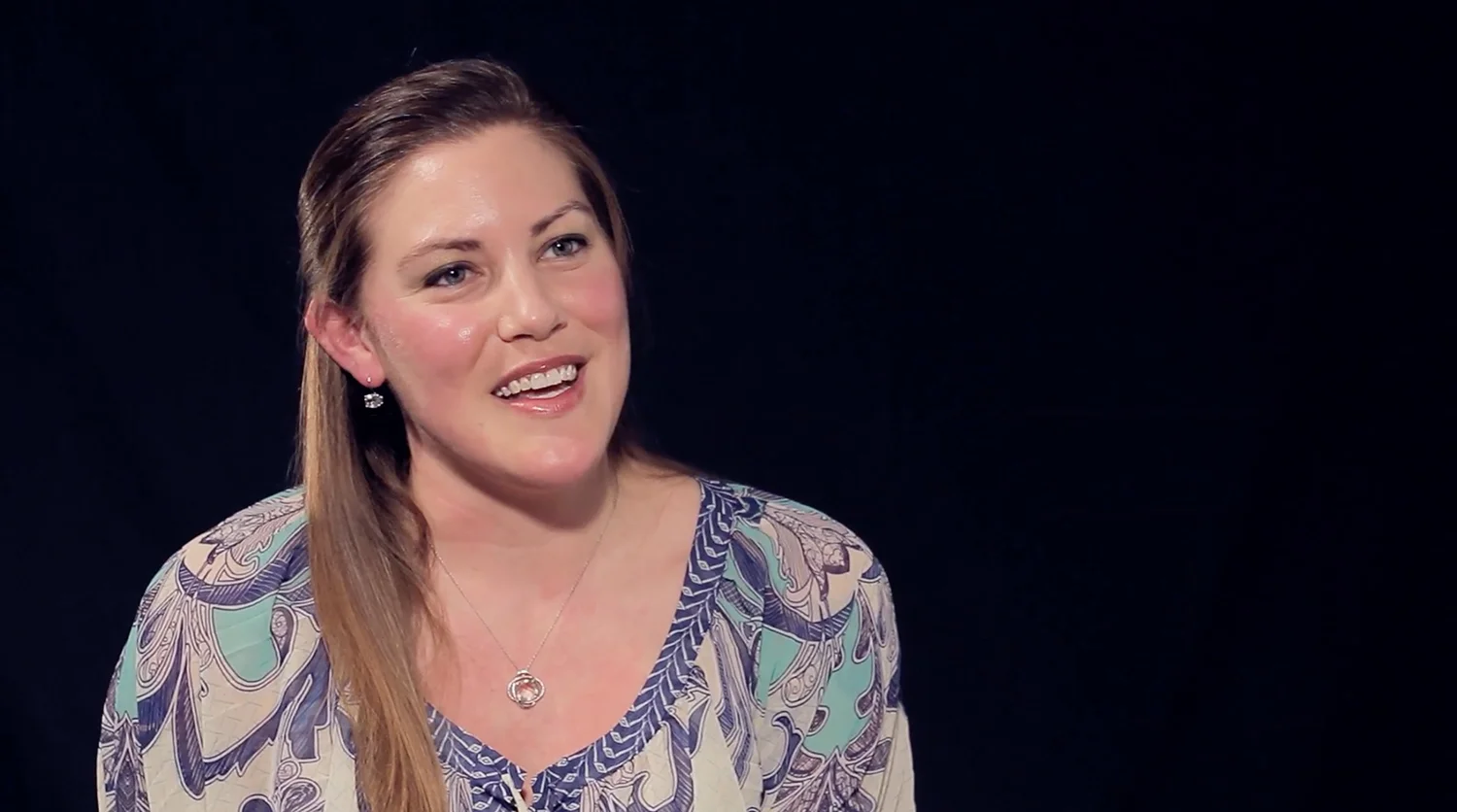
How Teenager Learns Work Ethic From Parents and Music Job - Lauren Serota

In Chapter 3 of 18 in her 2011 Capture Your Flag interview with host Erik Michielsen, interaction designer and researcher Lauren Serota shares how her parents and music industry teenage jobs shaped her work ethic. Her parents teach Serota the value of hard work and balance. Her music public relations jobs teach her the importance of not only building relationships but also to meet someone with an open mind. Serota is an interaction designer at frog design - http://frogdesign.com - and a professor at the Austin Center for Design - http://ac4d.com . She earned her bachelors degree in industrial design from the Savannah College of Art and Design (SCAD).

Why Choose SCAD to Study Industrial Design - Lauren Serota

In Chapter 4 of 18 in her 2011 Capture Your Flag interview with host Erik Michielsen, interaction designer and researcher Lauren Serota shares who she came to choose Savannah College of Art and Design, or SCAD, for college. Interested in industrial design, Serota also considers another top school, the Rhode Island School of Design, or RISD. Ultimately, the curriculum, culture, and location inform her decision to stuy in Savannah. Serota is an interaction designer at frog design - http://frogdesign.com - and a professor at the Austin Center for Design - http://ac4d.com . She earned her bachelors degree in industrial design from the Savannah College of Art and Design (SCAD).

Transcription: 

Erik Michielsen:  Why did you choose to study at the Savannah College of Art and Design instead of RISD?

Lauren Serota:  So I found out about the Savannah College of Art and Design.  I was in high school.  I really liked making stuff.  I was into sculpture.  I had a fantastic art teacher who pretty much gave me my own – like she made my own class, so she’s like ‘we’re gonna make a 3D design II just for you, and you can go play with clay all day and build things out of wood.  So she knew that I wanted – I knew that I wanted to build things or make things for a living, and she knew that I was probably going down that path as well, and so we had people from SCAD that came to my high school.  And I knew that I wanted to go to art school. 

I looked at like, you know, the local state schools like ASU, U of A, and then RISD was in the ranks, and then the SCAD people came, and I had never heard of the school prior to them.  And I said ‘oh, this is kind of a cool option.’  They have this budding industrial design program.  It seems it’s something I might be into.  I’m gonna go visit colleges, so I’ll visit RISD and I’ll visit SCAD.  So I went to RISD first, and, you know, it’s a beautiful campus.  It’s in Providence.  It’s hilly.  They have this great program at Brown where you can go take classes at Brown.  It was really compelling, but I just didn’t like the northeast.  I never gelled with the people, and the industrial design program my perception then was that it was really more based on form giving and style and making things beautiful in the sculpture of product. 

And when I went out to SCAD, first of all, I fell in love with the city.  Savannah is beautiful, warm, with weird stuff going on, the Spanish moss, it’s kind of spooky, and so I loved that.  And then the industrial design program was focused on process.  So it was like ‘oh we have a problem that we’re solving by – you know, we’re going through this process to solve the problem, at the end of it is a product,’ and now I know that at the end of it is a product, a service, a reorganization, or nothing, but I really appreciated that there was this – the kind of regimented, scientific thing that they went through that made a lot of sense, and it started with the people. 

So I started learning about the people, that were going to be using the thing that they’re making, and they explained it really well.  And the program was growing, they were moving into a new building, and it just seemed like something I wanted to be a part of.  It just seemed like the right fit.

What Makes a Near-Peer Mentoring Relationship Valuable - Lauren Serota

In Chapter 5 of 18 in her 2011 Capture Your Flag interview with host Erik Michielsen, interaction designer and researcher Lauren Serota shares how mentor Jon Kolko encouraged her independence and built her self-confidence. While studying at the Savannah College of Art and Design (SCAD), Serota forges a mentoring relationship her professor, Kolko. Only a few years older than Serota, Kolko provides presence and encouragement as a mentor to help Serota gain confidence in her work and become more independent in her aspiration. Serota is an interaction designer at frog design - http://frogdesign.com - and a professor at the Austin Center for Design - http://ac4d.com . She earned her bachelors degree in industrial design from the Savannah College of Art and Design (SCAD).

How to Find Purpose in a Design Career - Lauren Serota

In Chapter 6 of 18 in her 2011 Capture Your Flag interview with host Erik Michielsen, interaction designer and researcher Lauren Serota discusses where she finds purpose in her career. Specifically, through her social sciences background and design research, Serota finds purpose learning to make things for people.  As a practicing designer, she notes product design - interaction, fashion, graphic, etc. - is about value added utility.
To identify this utility, she draws upon social science experience in anthropology, sociology in qualitative marketing research across cultures. This informs the resulting product design efforts. Serota is an interaction designer at frog design - http://frogdesign.com - and a professor at the Austin Center for Design - http://ac4d.com . She earned her bachelors degree in industrial design from the Savannah College of Art and Design (SCAD).

How Learning From Failure Makes You Stronger - Lauren Serota

In Chapter 7 of 18 in her 2011 Capture Your Flag interview with host Erik Michielsen, interaction designer and researcher Lauren Serota shares why failures are more meaningful learning experiences than successes. Failure is a preparation and learning mechanism she uses to continuously improve. Serota notes the value learning how to get out of a bad place, be it a bad day or a dark life moment. She finds it more educational that simply doing something right. The more wrong things you do, and the more times you identify the right way to do things, the more success you will have. Ultimately, learning from failure makes one stronger. Serota shares a lesson learned from her parents' marriage. Serota is an interaction designer at frog design - http://frogdesign.com - and a professor at the Austin Center for Design - http://ac4d.com . She earned her bachelors degree in industrial design from the Savannah College of Art and Design (SCAD).

How SCAD Alumna Finds First Job and Builds Design Career - Lauren Serota

In Chapter 8 of 18 in her 2011 Capture Your Flag interview with host Erik Michielsen, interaction designer and researcher Lauren Serota graduates at the top of her college class and then struggles to find work. She broadens her horizons and takes a design recruiting job, where she learns about people and hones her interests. Ultimately, the experience positions Serota for design research work. Serota is an interaction designer at frog design - http://frogdesign.com - and a professor at the Austin Center for Design - http://ac4d.com . She earned her bachelors degree in industrial design from the Savannah College of Art and Design (SCAD).

How Research Experience Informs Design Career - Lauren Serota

In Chapter 9 of 18 in her 2011 Capture Your Flag interview with host Erik Michielsen, interaction designer and researcher Lauren Serota shares how her design career has developed. After high school DJ and Music PR jobs, Serota attends Savannah College of Art and Design (SCAD) to study industrial design. Over time she focuses on formative design stages, specifically design. After multiple early career jobs, she lands a design researcher job at Lextant. Serota is an interaction designer at frog design - http://frogdesign.com - and a professor at the Austin Center for Design - http://ac4d.com . She earned her bachelors degree in industrial design from the Savannah College of Art and Design (SCAD).

Enjoying the Challenges of Working in Design Research - Lauren Serota

In Chapter 10 of 18 in her 2011 Capture Your Flag interview with host Erik Michielsen, interaction designer and researcher Lauren Serota shares what she finds intellectually stimulating and rewarding working in her design research role. He notes three specific parts of the design research process. The first is project preparation - identifying participants and what to ask them. The second is effectively interviewing participants and gathering data. The third is translating that data into a useful design solution, including business and political considerations. Serota is an interaction designer at frog design - http://frogdesign.com - and a professor at the Austin Center for Design - http://ac4d.com . She earned her bachelors degree in industrial design from the Savannah College of Art and Design (SCAD).

How Creative Builds Consulting Career - Lauren Serota

In Chapter 11 of 18 in her 2011 Capture Your Flag interview with host Erik Michielsen, interaction designer and researcher Lauren Serota shares how working at smaller consulting firms prepared her for her current role at global innovation firm frog design. Early consulting roles required Serota to wear many hats and learn not only consulting skills but also the business of consulting. A move into product design research firm Lextant teaches Serota more about the intersection of design and client service, preparing her for the larger stage working with a globally distributed team at frog. Serota is an interaction designer at frog design - http://frogdesign.com - and a professor at the Austin Center for Design - http://ac4d.com . She earned her bachelors degree in industrial design from the Savannah College of Art and Design (SCAD).

What are the Career Benefits of Volunteering - Lauren Serota

In Chapter 12 of 18 in her 2011 Capture Your Flag interview with host Erik Michielsen, interaction designer and researcher Lauren Serota shares how volunteering has impacted her learning and development. Serota finds volunteering a supplement to her work experience. Volunteering allows Serota to make a community contribution while getting an opportunity to learn. Serota is an interaction designer at frog design - http://frogdesign.com - and a professor at the Austin Center for Design - http://ac4d.com . She earned her bachelors degree in industrial design from the Savannah College of Art and Design (SCAD).

How UNICEF mHealth Project Uses Design Thinking to Innovate - Lauren Serota

In Chapter 13 of 18 in her 2011 Capture Your Flag interview with host Erik Michielsen, interaction designer and researcher Lauren Serota shares how her frog design team assisted UNICEF to further develop African mobile health - mhealth - projects. Focused on the last mile of health care in rural areas, frog helps UNICEF plan how to address the motivations of community health workers - CHWs - in context of the project design. Ultimately, frog provides visual aids to help socialize and unify pilot project participants. Longer term, the tools and ongoing relationship will help the project scale more thoughtfully. Serota is an interaction designer at frog design - http://frogdesign.com - and a professor at the Austin Center for Design - http://ac4d.com . She earned her bachelors degree in industrial design from the Savannah College of Art and Design (SCAD).

Why Experiences are More Valuable Than Material Goods - Lauren Serota

In Chapter 14 of 18 in her 2011 Capture Your Flag interview with host Erik Michielsen, interaction designer and researcher Lauren Serota shares why she places a higher value on experiences than material goods. Serota notes material goods are temporary and do not exist unless someone uses them. She focuses more on the user experience, as experiences are ultimately the end goal, not the product itself. She shares a story from working abroad in Zambia where material goods were rendered useless when lacking experience design and associated instruction. Serota is an interaction designer at frog design - http://frogdesign.com - and a professor at the Austin Center for Design - http://ac4d.com . She earned her bachelors degree in industrial design from the Savannah College of Art and Design (SCAD).

How Designer Learns by Teaching Graduate School - Lauren Serota

In Chapter 15 of 18 in her 2011 Capture Your Flag interview with host Erik Michielsen, interaction designer and researcher Lauren Serota shares why she teaches. She teaches to learn from aspiring young design professionals coming from different backgrounds and skills. Serota orchestrates the room by facilitating idea exchange and sharing, resulting in a powerful classroom learning experience. This not only inspires Serota but also informs her work at frog design. Serota is an interaction designer at frog design - http://frogdesign.com - and a professor at the Austin Center for Design - http://ac4d.com . She earned her bachelors degree in industrial design from the Savannah College of Art and Design (SCAD).

What Draws Creative to Practical Problem Solving - Lauren Serota

In Chapter 16 of 18 in her 2011 Capture Your Flag interview with host Erik Michielsen, interaction designer and researcher Lauren Serota shares why she is drawn to practical problem solving. As someone who enjoys making things, Serota is drawn to going beyond the conceptual to physically address the issue or concern. Serota is an interaction designer at frog design - http://frogdesign.com - and a professor at the Austin Center for Design - http://ac4d.com . She earned her bachelors degree in industrial design from the Savannah College of Art and Design (SCAD).

How to Create Interactive Design Experiences - Lauren Serota

In Chapter 17 of 18 in her 2011 Capture Your Flag interview with host Erik Michielsen, interaction designer and researcher Lauren Serota describes how people and choreography play into an interactive design experience. She notes how some design experiences are intentionally seamless or organic, such as using a mobile phone, whereas others are planned. Serota is an interaction designer at frog design - http://frogdesign.com - and a professor at the Austin Center for Design - http://ac4d.com . She earned her bachelors degree in industrial design from the Savannah College of Art and Design (SCAD).

What Role Does Objectivity Play in Experience Design - Lauren Serota

In Chapter 18 of 18 in her 2011 Capture Your Flag interview with host Erik Michielsen, interaction designer and researcher Lauren Serota shares what role objectivity plays in designing experiences. She notes her aim is less to be objective and more to consider the experience from the user's perspective. It is more about putting herself in the shoes of the various research subjects who will interact with the product or experience. Serota is an interaction designer at frog design - http://frogdesign.com - and a professor at the Austin Center for Design - http://ac4d.com . She earned her bachelors degree in industrial design from the Savannah College of Art and Design (SCAD).

How to Harness and Refine Ambition as You Mature - Bijoy Goswami

In Chapter 1 of 15 in his 2011 Capture Your Flag interview with host Erik Michielsen, leadership philosopher Bijoy Goswami shares what his getting easier and harder in his life. Experience has taught him how his life works in nine year cycles, with two years discovering the next phase and seven years acting on it. This part, Goswami notes, is what is getting easier. The more challenging element is being able to bring together the cycles, the models, and the ambitions under one life umbrella. This continues to challenge him as he ages. Goswami lives in Austin, TX, where he develops models, including MRE, youPlusU, and Bootstrap, to help others live more meaningfully. He teaches his models through community activism, lectures, writing, and online communication. Previously, he co-founded Aviri Software after working at Trilogy Software. Goswami graduated from Stanford University, where he studied Computer Science, Economics, and History.

How to Break Out of a Comfort Zone and Learn New Things - Bijoy Goswami

In Chapter 2 of 15 in his 2011 Capture Your Flag interview with host Erik Michielsen, leadership philosopher Bijoy Goswami shares how he breaks out of his comfort zone. He does this by embracing activities and experiences he normally would not seek. This may mean attending movies he knows nothing about or going to events or conferences not directly aligned with his career or personal interests. The different environment provides the intellectual stimulation he then uses to develop and refine his interests and ambition. Goswami lives in Austin, TX, where he develops models, including MRE, youPlusU, and Bootstrap, to help others live more meaningfully. He teaches his models through community activism, lectures, writing, and online communication. Previously, he co-founded Aviri Software after working at Trilogy Software. Goswami graduated from Stanford University, where he studied Computer Science, Economics, and History.