How Austin, Texas Turned Residents into 750,000 Publicists - Matt Curtis

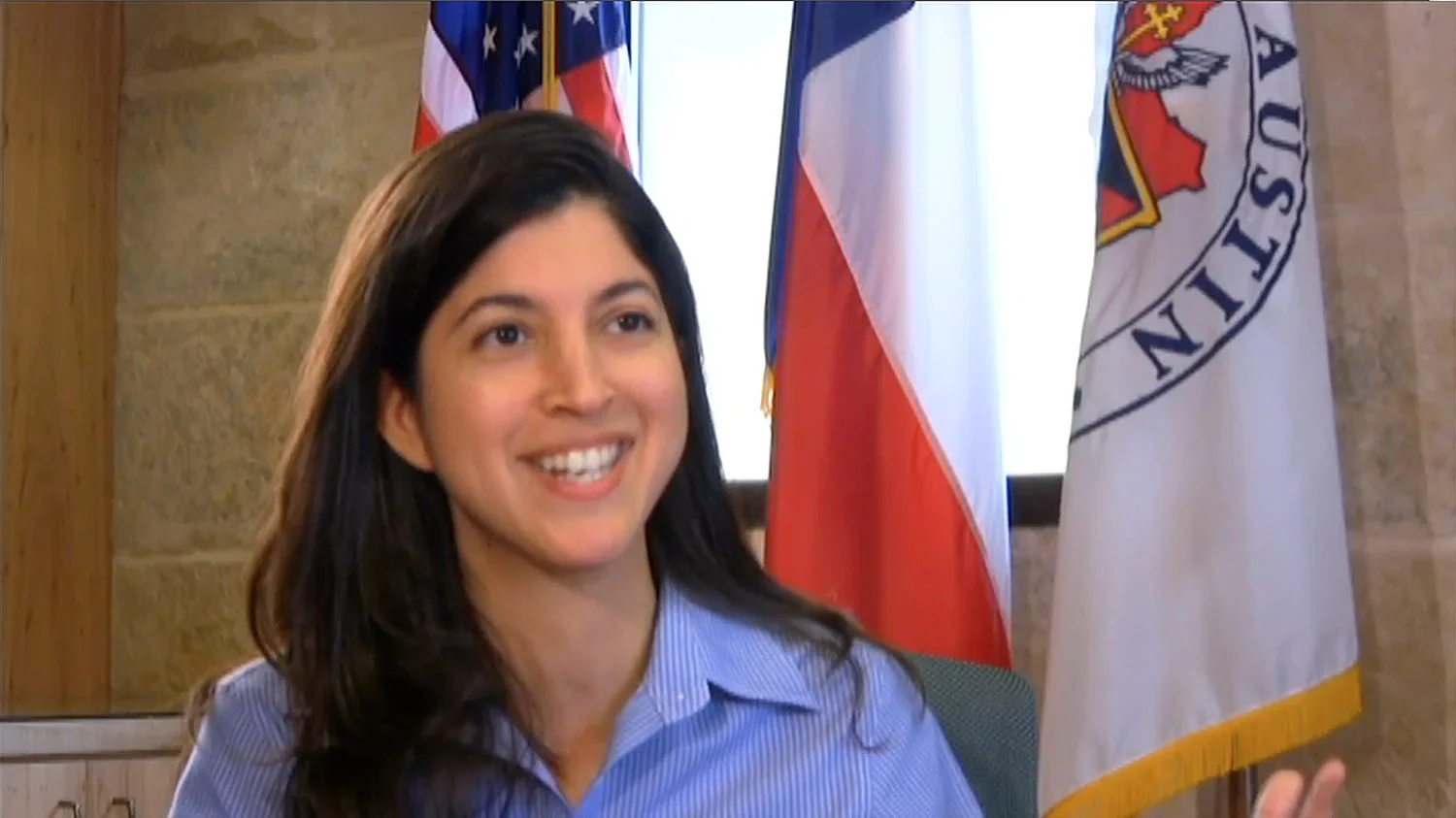
In Chapter 10 of 17, public affairs and communications strategist Matt Curtis showcases Austin, Texas' secret marketing weapon: its residents. Curtis describes Austin as a city of 750,000 publicists who vigorously and happily promote their town when traveling outside it. Curtis, chief of staff for mayor Lee Leffingwell, notes that the civic pride not only unites Austin's people, but it also increases city tourism income to help the city grow.

What Defines Citizenship - Matt Curtis

In Chapter 9 of 17, public affairs and communications strategist Matt Curtis defines citizenship as building your community up to a better place than which you found it. Curtis invokes a camping comparison to visualize this. He believes donating time and money, complemented by voting and active participation in understanding the political issues central to the public conversation enable citizenship. Curtis is chief of staff for Austin, Texas Mayor Lee Leffingwell.

How Sun Tzu's Art of War Improves a Political Campaign Strategy - Matt Curtis

In Chapter 8 of 17, public affairs and communications strategist Matt Curtis learns effective political campaign management from Sun Tzu's writings, specifically "Art of War." Tzu advises to engage the enemy with a common maneuver and defeat the enemy with an uncommon manuever. Curtis concentrates on the innovative, looking for unique ways to differentiate his campaign and defeat the opposition. During Austin mayoral candidate Will Wynn's campaign, Curtis implements an alternating publicity campaign using one week of policy followed by one week of fun fluff. Curtis finds these little things, in between the common policy maneuvers, put his campaign over the top.

How Citizen Participation Improves Community Decisions - Matt Curtis

In Chapter 7 of 17, public affairs and communications strategist Matt Curtis highlights citizen participation theory as a central element in influence strategy around public works and community projects. Rather than focus on consensus building, Curtis promotes participation and the educational elements required to fully inform both sides on the issue. This decreases extreme party influence and creates an open communication that results in revision and, hopefully, project approval.

Why Working a Political Campaign Can Be Life Changing - Matt Curtis

In Chapter 6 of 17, public affairs and communications strategist Matt Curtis shares the excitement and challenge that come with managing political campaign operations under short deadlines. Curtis finds common ground comparing political campaign leadership to that of General George Patton. In short, it must move fast and be decisive to be effective. The participatory campaign process can be life-changing, and Curtis encourages young people to experience campaign strategy from the inside as a volunteer.

How Press Secretary and Journalism Teacher Bob Mann Leaves a Legacy - Matt Curtis

In Chapter 5 of 17, public affairs and communications strategist Matt Curtis shares the story of Bob Mann, a Democratic Party Press Secretary for Ted Kennedy, a Carter Administration official, and an inspiration to generations of students, including Bush press secretary Karen Hughes. Mann, a career newspaperman, immerses himself into politics and, over time, education, teaching journalism at several Texas schools, including Huston Tillotson University of Texas, Texas State, and SMU. At the sunset of his career, Mann has not only left a legacy across his Democratic political party work as legislative aide and press secretary, but more importantly as that one teacher who made the greatest difference to so many aspiring communications professionals.

How Political Public Affairs Career Stays Creative and Fun - Matt Curtis

In Chapter 4 of 17, public affairs and communications strategist Matt Curtis shares how to keep local politics publicity and promotion fun and exciting. Curtis came into political public relations after starting his career in film publicity. Curtis defines publicity as an extreme on the public relations and strategic communications spectrum, opposite from reactive public information officer responsibilities. Curtis embraces the publicity element in local Austin, Texas politics, balancing serious efforts such as Hurricane Katrina disaster relief with light-hearted campaigns such as "Polar Bear" swimming days for the community and press.

How to Find Fulfillment Serving Others in Crisis - Matt Curtis

In Chapter 3 of 17, public affairs and communications strategist Matt Curtis shares how an early Catholic education ingrains a lifetime focus on serving others. Curtis finds fulfillment serving community in Austin, Texas, where he balances simple tasks such as helping eldery with groceries with more complex ones, such as Hurricane Katrina disaster relief. Throughout, Curtis finds immense fulfillment helping others each day.

Why Public Servant Defines Role As Soldier of the Community - Matt Curtis

In Chapter 2 of 17, public affairs and communications strategist Matt Curtis enters politics and soon finds himself more attracted to the public service element specific to a local community. As Chief of Staff for Austin's mayor, Curtis looks beyond the daily political local, state, and national stories to use his waking hours serving individuals around town.

How Politically Active Family Inspires Public Service Career - Matt Curtis

In Chapter 1 of 17, public affairs and communications strategist Matt Curtis, shares the family experiences informing his decision to become a public servant. Curtis grows up learning from two politically active grandparents, focused intently on helping individuals in northeastern Pennsylvania. One grandparent was president of the local coal miners union and the other led a club running democratic politics in northeastern Pennsylvania. They teach Curtis the value of service and inspire his move to become a soldier of the community.

What Motivates an Author to Write - Nina Godiwalla

In Chapter 1 of 14, "Suits: A Woman on Wall Street" author Nina Godiwalla shares why she writes. Daily interactions with inspiring individuals motivates Godiwalla to reflect, learn, and embrace the creative medium. Godiwalla embraces shared experiences and the associated inspiration Godiwalla and, it is hoped, her readers encounter.

Transcript:

Erik Michielsen: Why do you write?

Nina Godiwall: I want to constantly be growing as a person and for writing I think it’s an opportunity to actually stop and reflect on what goes on because I think we can just live our life and never reflect and never learn from it and for me writing is that opportunity to stop and think and learn.

What I hope and I do this, this is what I like to do through writing, is I’m constantly interacting with people, I definitely have a world that I create where I am with people that I find inspiring and I hope to inspire other people, through writing I think of it as sharing an experience and letting people create that experience, take in that experience and create for themselves what they need to and for me that is my way of sharing and kind of reciprocating. And with writing I think it’s interesting because you have that opportunity not just to see the people that you meet in person in your life but you have that opportunity to affect people that you may never know, you may never see them.

How Sharing and Reciprocation Improve Learning - Nina Godiwalla

In Chapter 2 of 14 of her 2010 Capture Your Flag interview, author Nina Godiwalla answers "Why are sharing and reciprocation essential to how you learn?" Godiwalla highlights human nature to compare and contrast oneself with others.  Sharing and reciprocation highlight how there is so much to learn from others.  Using this approach enables improved personal growth.  Godiwalla notes how sharing and reciprocation have allowed her to be progressively more open-minded as an adult.

Nina Godiwalla is the author of "Suits: A Woman on Wall Street" and the founder and CEO of Mindworks, a provider of leadership, stress management, and diversity training programs. Before starting her business and writing her book, Godiwalla worked at Johnson & Johnson and Oxygen Media and investment banking at Morgan Stanley. Godiwalla earned an MBA from Wharton, a MA from Dartmouth and a BBA from the University of Texas.

Transcript:

Erik Michielsen: Why are sharing and reciprocation so essential to how you learn?

Nina Godiwalla: I definitely look to other people to learn about myself, I think we define ourselves through other people, we’re constantly… when we’re with people we decide how we’re going to be like that person and how we’re not going to be like that person, it’s just our nature of comparing and contrasting and I think that sharing and reciprocating is just critical in doing that because you’re taking things to a different level, you’re not just saying ‘this is the way it is’, you’re saying ‘ how can I, how can we learn from each other’ and for me I think that’s just a critical way of, again, going back to growth, growing as a person.

Erik Michielsen: And how as that approach kinda changed as you’ve gotten older?

Nina Godiwalla: I think when I was younger I thought I knew everything and there’s moments where I still think I know everything but really I definitely see it as… I definitely think I’ve transformed quite a bit in that I realize there’s so much I can learn from other people and I was definitely one of those kids that didn’t always see the world that way.

How Prison Entrepreneurship Program Inspires Volunteer - Nina Godiwalla

In Chapter 3 of 14, "Suits: A Woman on Wall Street" author Nina Godiwalla volunteers at the Prison Entrepreneurship Program to teach convicted felons business and life skills necessary to successfully re-enter society. Through the process, Godiwalla unexpectedly learns from the prisoners, who share stories of mental transformation.

Transcript:

Erik Michielsen: What did you learn teaching character building and relationship skills to inmates as part of the Prison Entrepreneur Program?

Nina Godiwalla: I actually wrote an article about that for the Houston Chronicle because I was really moved by the experience. We were brought in with the idea that we were business leaders and we were going to be teaching these inmates about how to run a business and I was really excited about that, I thought these people are going to be coming out very soon and regardless of what they’ve done, it’s not a conversation about what did you do in past, it’s ‘hey you’re going to be out and you’ll be out soon and what can we come in and teach you and how can we help you be successful when you come out?’

That was my impression going in and that was a lot of business people’s impression, I think there was about thirty of us at the time when I went and I was a little bit floored by the experience because it ended up the prisoners taught us, at least me, something much more significant and it was largely about building their own character and… what was amazing is… these people were just so happy, they had really gone through like a significant mind-shift and mental transformation through this program that they were experiencing and they came in and honestly, I’ll be honest they really inspired a bunch of business people and the business people were completely humbled walking in and thinking ‘what can I teach you’ was our attitude and I walked out that day and I thought these were people full of passion full of energy. I never expected to walk into a prison and have people that passionate and that was a transformational experience for me. And you could see that these people, the way they shared their stories and were very open, they had personally, several of the ones that spoke had gone through some very difficult times and really used those difficult experiences to transform in a very positive way.

Erik Michielsen: Can you remember like one of the stories that sticks with you most?

Nina Godiwalla: There’s one story because it’s so close to heart for a lot of business people is that, there was just a guy that, he was a sales guy and he’d gone out drinking and the way he explained it is ‘That’s what we did, I was in sales and we used go out, we were with clients we would drink, came home, I had a couple drinks that night, I was on the freeway and I probably didn’t see it fast enough but there was a parked car on the freeway on the side’ and he ran into the car and killed somebody. And he said ‘You know, I’ve been in sales for forty years’ and… I think for business people we expected… expect someone to just be murdering people just randomly all these, you know, ridiculous thoughts and fears that were going through our head and it was just, a lot of the stories were, you know, some guy put software on his wife’s computer or girlfriend’s computer and was in jail so. What was insightful is that a lot of people were in situations that it wouldn’t be crazy for someone that you, someone in our world to know somebody that might be in that situation and just to give people that opportunity, that second chance.


Why to Challenge Yourself to Experience New Things - Nina Godiwalla

In Chapter 4 of 14, author Nina Godiwalla answers "How has experimentation helped you live more fully in how you live each day?" Godiwalla shares why she constantly seeks new experiences to broaden her perspective on life and the decisions she makes.  Godiwalla prioritizes pushing beyond the socioeconomic and professional environments she sees daily.  She finds value seeing how other people operate and do things differently.

Nina Godiwalla is the author of "Suits: A Woman on Wall Street" and the founder and CEO of Mindworks, a provider of leadership, stress management, and diversity training programs. Before starting her business and writing her book, Godiwalla worked at Johnson & Johnson and Oxygen Media and investment banking at Morgan Stanley. Godiwalla earned an MBA from Wharton, a MA from Dartmouth and a BBA from the University of Texas. 

Transcript:

Erik Michielsen: How has experimentation helped you live more fully in what you do each day?

Nina Godiwalla: I just think it’s critical to my world. I constantly want to see new things, I want to see how people are operating, I want to have a better understanding of other people and people’s perspectives and, you know, we live in our world and a lot of times as much as I do like to experiment and see different things, day to day I’m with people not that different from me, I’m with people that are just similar, professionally, socioeconomic class and I love to get out and do and see different things. And really what it is, is it challenges me, it challenges me to realize I’m operating on assumptions everyday and that is what I think is critical in life. To me that’s growing, that’s growing as a person, trying to understand other people’s perspective, trying to move forward and come up with something that’s bigger than just ‘This is my – this is my little life in my little world’.


How Female Investment Banker Confronts Stereotyping - Nina Godiwalla

In Chapter 5 of 14 of her 2010 Capture Your Flag interview, author Nina Godiwalla answers "How have you embraced being a fish out of water in your education, career and travels and what have you enjoyed most about the challenges they present?" Godiwalla shares how she finds herself a fish out of water in New York City upon graduating college.  Coming from Texas, public schools, and Parsi education into Wall Street as a female investment banker teaches Godiwalla about outsider status firsthand.  Godiwalla makes the most from an oft uncomfortable experience by turning lessons learned into education opportunities for other women considering an investment banking career.

Nina Godiwalla is the author of "Suits: A Woman on Wall Street" and the founder and CEO of Mindworks, a provider of leadership, stress management, and diversity training programs. Before starting her business and writing her book, Godiwalla worked at Johnson & Johnson and Oxygen Media and investment banking at Morgan Stanley. Godiwalla earned an MBA from Wharton, a MA from Dartmouth and a BBA from the University of Texas.

Transcript:

Erik Michielsen: How have you embraced being a fish out of water in your education, career and travels and what have you enjoyed most about the challenges it presents?

Nina Godiwalla: When I went to New York I felt like I went to a different country and in a lot of ways I did, I mean I was going into a completely, the people I was with were a completely different socioeconomic class, not all of them but a lot of them, a lot of, they were all Ivy League, I was a kid, I was a public school kid coming from UT and there were other public school kids, it was just coming from Texas, it just the everything put together. I didn’t know people perceived Texas as so different in the US, that was probably one of the most startling things for me is that I didn’t know I was supposed to be living on a ranch.

There’s always been a sense of an outsider because I was an immigrant so I know I can be like other people but at the same, I mean I can be like the average American if I need to be, but I know that when I walk into my parents’ house, there’s a completely different environment that I walk into. And so that… going into that investment banking I think it was just startling for me, I didn’t know how different I was, I mean it made my childhood experience of growing up in a suburb as an immigrant look like nothing and then again, like I said, being a woman I didn’t even know that was going to be such a big deal, it’s just all of a sudden all these different aspects of my life that were everyday to me became suddenly they were outsider status and… that was very, to have all those different things happen all at once was, was challenging for me. That’s what I try and do for my book is look back at it and say ‘What can I learn from this?’ and that’s all I can do and I can help share the experience for other people that might be going through the same thing and after that, there it is.


How Parsi Immigrant Community Builds Support Network - Nina Godiwalla

In Chapter 6 of 14 in her 2010 Capture Your Flag interview, author Nina Godiwalla answers "What does it mean to be Persian-Indian-American living in the United States today?" Godiwalla connects her ancient Persian-Indian, or Parsi, culture to modern times through experiencing the benefits of immigrant community support across the United States.  Descended from 10th century Iranian Zoroastrians who immigrated to India and, the United States based Parsi culture is small and extremely close-knit. The culture values achievement and organizes a network to promote successful community members.  Godiwalla experiences this first hand as she relocates to Philadelphia to enter MBA studies at the University of Pennsylvania Wharton School of Business.  Unexpected support provides Godiwalla firm footing to successfully transition into a new home and school.

Nina Godiwalla is the author of "Suits: A Woman on Wall Street" and the founder and CEO of Mindworks, a provider of leadership, stress management, and diversity training programs. Before starting her business and writing her book, Godiwalla worked at Johnson & Johnson and Oxygen Media and investment banking at Morgan Stanley. Godiwalla earned an MBA from Wharton, a MA from Dartmouth and a BBA from the University of Texas.

Transcript:

Erik: What does it mean to be a Persian-Indian-American living in the United States today?

Nina: Persian-Indian is kind of an easier way of explaining it to people what it is; it’s actually called, it’s called Parsi is the name of the community and it’s really based off of a religious background, it’s Zoroastrianism, which is, what I -- the way I describe it is some people remember the word cause you remember you learned it in your seventh grade history class, it was literally a vocabulary word as I remember it and it’s a very, very ancient religion that was based out of ancient Persia and it was a very prominent religion thousands of years ago. There’s a group of people, some of them stayed but some of them fled and moved to India and those people are called Parsis, they’re originally Persians and they fled to India but this was a very long time ago, like maybe a thousand years ago or so.

So that group has a mixed culture, because their ancestry is Persian, their culture is Indian and my parents, they grew up in India and then we were born and raised -- their kids were born and raised in America so I was born here and it’s a very small community, there’s only about a hundred -- the numbers are all crazy but about two hundred thousand in the world today. When they moved to the US, you tend to move to the cities where the other ones live because everybody helps each other out and so they’re in the largest cities, Houston, my parents came to Houston because it’s one of the places where there is this very tight Parsi community. And one of the things I’ve found from my experience is that they’re very focused on achievement and people being successful and just as immigrants, I think the combination of my parents being immigrants and going through such difficult times, and growing up in a community where, it’s also a community that is very tight and wants, I’ve found, people to be successful, their community members to be very successful.

The combination has been this incredible support system for me and every moment, like when I got an internship in New York City and we’d never -- I’d never been to New York City, we didn’t know anything about it, it was scary when you’re coming out of this tiny little suburb in Houston. I had a whole ‘nother community over there that was going to support me, somebody gave a place, one of our what we call “aunties” gave me a place to live and for free, she was just like ‘Absolutely we want you, you got a job here, this is fantastic come live with me for free, I want you to succeed, I want things to go well for you’. People would throw me birthday parties, I mean I’d never met these people. It’s just, you know, it’s just that kind of environment of, and my husband is in Mauritius right and he, somebody learned that he, he met a Parsi person and he mentioned ‘Oh my wife is Parsi’ and she was like ‘Well come on over! Come to our house!’ and it’s that kind of environment wherever you are in the world somebody’s going to invite you to their house if they know what you are and I actually, I was very insistent about keeping my last name because it actually, people find you, like the Parsis find you.

When I went to business school and I was Wharton I got an email within my first two weeks of being there and there’s so few Parsi but like one woman from some side of the Penn side emailed me and said ‘I found the two or three Parsis that were, like, enrolled this year’ and it was just this fascinating thing and then of course she had like little events for us and she kind of hosted us and it’s just this really fascinating, like, very unusual for modern day to grow up in that kind of a community.


 

How Second Generation Immigrant Opens Dialogue with Parents - Nina Godiwalla

In Chapter 7 of 14 of her 2010 Capture Your Flag interview, "Suits: A Woman on Wall Street" author Nina Godiwalla shares the difficulty expressing her experiences as a second-generation Parsi immigrant to her parents. Godiwalla turns to writing, where she is able to share her side of the story and, specifically, go into detail on the challenges of being both an American girl and an outsider from an immigrant family. The difficult process teaches Godiwalla about her parents own experiences and difficulties, ultimately creating an openness allowing both sides to understand the other.

Transcript:

Erik Michielsen: What have your experiences as a second-generation immigrant taught your parents about what it means to be American?

Nina Godiwalla: Wow, what have I taught my parents? It’s funny, we just, my, I feel like every day can be a culture clash in our household, I was just with my family this weekend and it was funny, my mom was like ‘I’m not going to do it that way! That way’s American! You’re trying to force me to do it that way!’ and I was like ‘I don’t want to do it that way! This is the way we do it!’ And after I’ve written my book, which is, I have to say a lot of things have aired out because largely the book is -- what the book covers, part of what it covers, is how I kind of grew up in this American Culture, my parents grew up in a different country and had no idea what we were going through, I mean they just couldn’t have even, I still remember my mom like saw something on TV, she was like ‘There aren’t drugs in your school are there?’

I mean we never had anything like that, it was just always this constant, you know we’re operating on two different planes and for them, it’s been a learning experience on both sides, it’s been such an extreme learning experience and my book allows me to tell my side of ‘Hey dad, when you were telling me to do this the whole time this is what I was going through’ and it hasn’t allowed my parents to ever say their side, it’s very much my perspective and that’s all I know and what just dumbfounds me about my parents is I’d always expected like a guilt trip like ‘Do you understand I did this and this and this? And do you understand…’ and you get it a little bit from them but it’s just so rare, to know how different their experience was and what I’m getting after writing my book and having -- I had to have my parents read it and say ‘Look this is what’s going out, you can be mad at me, we can talk about it, whatever’ I’ve had them read it and you know they’ve had to, it’s not their perspective, it’s my perspective and what is beautiful for me though is it’s opened up this conversation and I wanted the book to open up a dialogue for a broader audience, I never expected it would open up a dialogue for my family.

And what’s great to me is my dad just doesn’t complain about life, it’s just this is what it is, everyday is this is what it is, it’s just, its very rare that he complains and he, just to hear his perspective on some stuff for the first time in my life to hear him say -- and I’m not even necessarily getting it from him, his brother was actually helping me understand, he said ‘Do you understand that we did this and this and this?’ and just thought ‘No, my dad’s never said that to me, he’s never said how difficult it was for them when they came from America, I don’t understand’.

And I don’t know their perspective and it’s been, it’s -- and I think that’s why it can be very difficult when you’re having completely experiences and I honestly, they can’t understand and we want to understand each other but, wow, I just have to say it’s so completely different. And I’m excited that my family’s moving towards that, we’re trying. It’s not easy and I think it’ll take a very long time but we’re trying to open up that dialogue and I hope to learn their perspective and all we can do right now is just learn from each other as much as we can.


How Austin Leadership Group Creates Community Purpose - Nina Godiwalla

In Chapter 8 of 14 of her 2010 Capture Your Flag interview, "Suits: A Woman on Wall Street" author Nina Godiwalla joins Leadership Austin to apply her corporate experience in helping the local community. The experience exposes Godiwalla to new groups, which broadens her thinking. As a result, Godiwalla finds new ways to apply her passion to be responsible and accountable in her actions.

Transcript:

Erik Michielsen: What has your involvement in Leadership Austin done to shape your sense of community responsibility and citizenship?

Nina Godiwalla: So the Leadership Austin brings together people that are passionate about seeing our community as bigger and passionate about making a difference in the community, so we have business -- people in the business world, people in the nonprofit world, artists, people in the political world and how do we all come together and learn from each other. For me specifically, for me it’s been a really interesting experience because one, I was not exposed to these people, I have very much been in corporate America for the majority of my professional life and those are the people I learned from, so for me, I feel like it’s allowed me to think much broader about completely different perspectives really.

I didn’t know what is was like to, what a lobbyist, what their life was like and for me I’m finding passion within all these different groups and I feel this complete responsibility of how do we come together and actually do something. And one great example is we had an education day and we had students actually come in from the high schools and tell us ‘this is what it’s like, this is what’s working for me in high school and this is what’s not’ and in central Texas there’s a lot of issues around education, in terms of they need to be brought up to different standards and so we got to hear from people that have these great experiences and people that are not. And Austin is described as somewhat segregated so if you live in certain parts of town you may never see other people from different socioeconomic classes and that kind of a thing. So you can chose to live in that world but Leadership Austin has taught me that’s not ok, it’s not ok to live in that world and it’s not ok just to be with your own kind of people.

And what I think is amazing what they’re doing is saying that there is some sort of accountability because one of the things I thought was great that they did in education class is say ‘Ok you can send your kids to that fantastic school, you can have your kids around all those other kids that way, but when your kid gets out there might not be a job for your kid and let us explain to you the business reason, the whole reason why that if you don’t pay attention to what’s happening in this other neighborhood it’s going to affect your life’. And on one hand I thought how unfortunate that we have to say that to people, that you have to be concerned because it’s going to affect your kid’s life, but if that’s what it is, that’s what it is. You know, if that’s what’s going to convince people that we’re all one and we need to figure out a way to work together and it’s amazing because people really do start to listen, it was like suddenly like ‘Oh really, my kid’s not going to have a job?’