Business & Economy

What Embodies the Entrepreneurial Spirit - Hattie Elliot

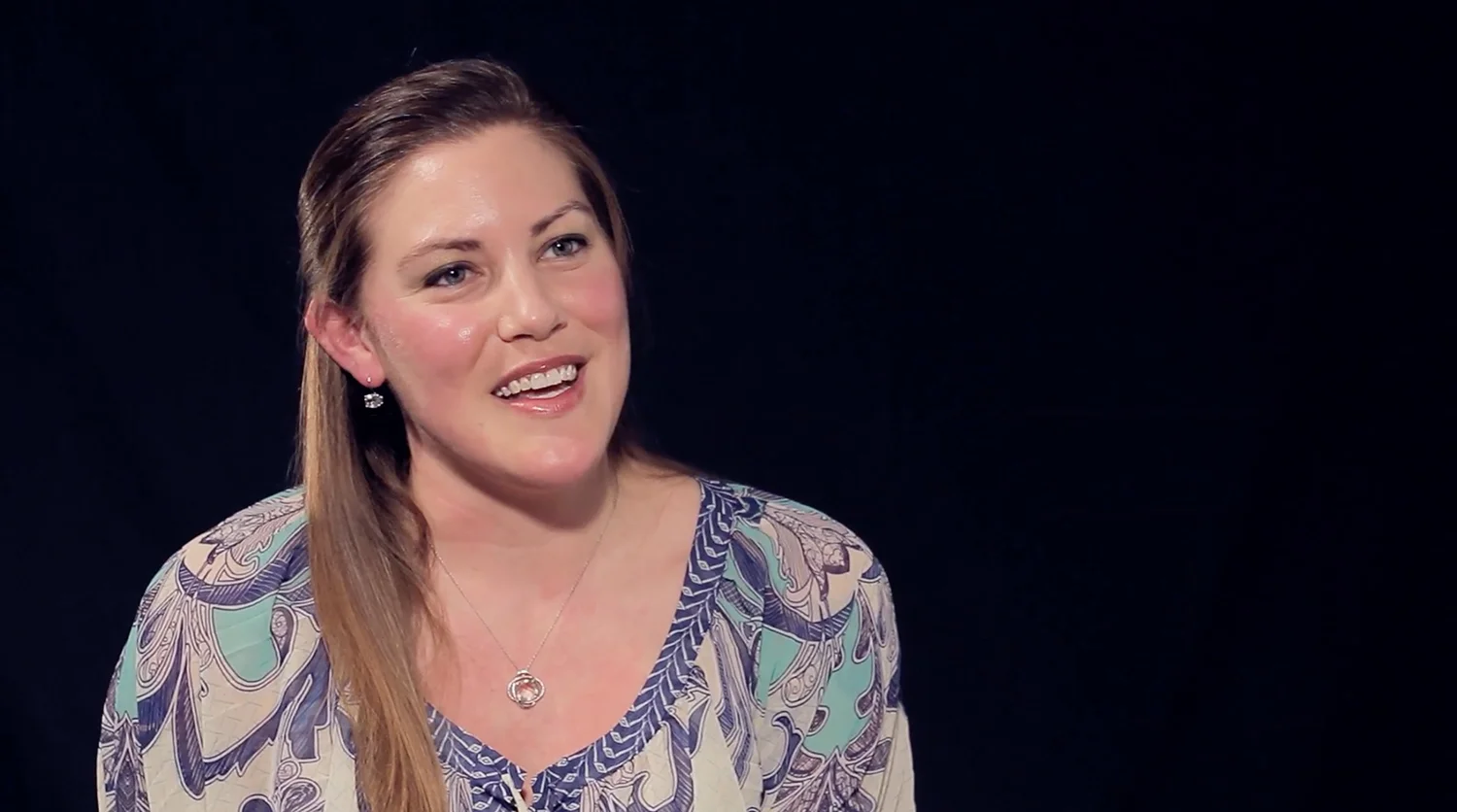
In Chapter 2 of 16, entrepreneur and connector Hattie Elliot discusses how she uses a strong constitution to remain focused and accountable day in and day out as an entrepreneur. Knowing there will be lows and highs, Elliot stays positive through persistence and a longer-term focus on her business goals and objectives.

How Entrepeneur Gets Start Selling Frogs as Child - Hattie Elliot

In Chapter 1 of 16, entrepreneur and connector Hattie Elliot gets her first business experience as a child partnering with her cousin to sell frogs around her grandmother's house on Fire Island. The experience foreshadows what is to come, as Elliot would go on to start a series of business ventures, including The Grace List.

How to Assess Business Idea Merit and Take Action - Marc Ferrentino

In Chapter 17 of 17 of his 2010 Capture Your Flag interview with host Erik Michielsen, engineer and Chief Technology Architect Marc Ferrentino highlights how he deconstructs business ideas, gathers feedback, refines ideas, plans product development, measures costs, plans sales and, ultimately, makes a decision to stop or proceed. Ferrentino focuses specifically on evaluating Internet enterprise businesses versus consumer based businesses, highlighting the significant capitalization requirements between the two.  Ferrentino holds a BS in electrical engineering from the University of Michigan.  After leaving Goldman Sachs, he worked for several years in New York City based startups before joining Salesforce.com.  

View more career learning and development videos at http://www.captureyourflag.com

Follow Capture Your Flag on Twitter:  http://www.twitter.com/captureyourflag

Follow Capture Your Flag on Facebook:  http://www.facebook.com/captureyourflag

How Silicon Valley and Silicon Alley Cultures Differ - Marc Ferrentino

In Chapter 16 of 17 of his 2010 Capture Your Flag interview with host Erik Michielsen, engineer and Salesforce.com Chief Technology Architect Marc Ferrentino compares and contrasts East Coast - notably New York City's Silicon Alley - and West Coast - notably Silicon Valley - technology company cultures.  West Coast technology executives typically have touched the technology and programmed software, invest more in quality assurance, and organize create more holistic product management structures than East Coast counterparts.  Ferrentino notes exceptions but says more often than not these are striking differences between cultures.  Ferrentino holds a BS in electrical engineering from the University of Michigan.  After leaving Goldman Sachs, he worked for several years in New York City based startups before joining Salesforce.com.  

View more career learning and development videos at http://www.captureyourflag.com

Follow Capture Your Flag on Twitter:  http://www.twitter.com/captureyourflag

Follow Capture Your Flag on Facebook:  http://www.facebook.com/captureyourflag

How to Evaluate a Startup Business Idea - Marc Ferrentino

In Chapter 15 of 17 of his 2010 Capture Your Flag interview with host Erik Michielsen, engineer and Salesforce.com Chief Technology Architect Marc Ferrentino shares how he evaluates Internet startup business ideas. Ferrentino advises against getting too attached to one idea. He follows up with research learning the industry and identifying needs and potential paying customers. After gathering feedback, he reviews business model and startup costs.  Ferrentino holds a BS in electrical engineering from the University of Michigan.  After leaving Goldman Sachs, he worked for several years in New York City based startups before joining Salesforce.com.  

View more career learning and development videos at http://www.captureyourflag.com

Follow Capture Your Flag on Twitter:  http://www.twitter.com/captureyourflag

Follow Capture Your Flag on Facebook:  http://www.facebook.com/captureyourflag

How to Leave a Startup Job on Your Own Terms - Marc Ferrentino

In Chapter 14 of 17 of his 2010 Capture Your Flag interview with host Erik Michielsen, engineer and Salesforce.com Chief Technology Architect Marc Ferrentino reflects on why it is more difficult to walk away from a startup on one's own terms than it is to stay. Comparing the band of brothers experience to pledging a fraternity, emotional attachment happens easily, especially given how startups nearly always have world changing ambitions. Ferrentino compares the trap many fall into acknowledging losses with stock portfolios, namely a stock is not an official loss until you sell it. In the same way, a startup often is not perceived as a failure until you leave it.

Ferrentino holds a BS in electrical engineering from the University of Michigan.  After leaving Goldman Sachs, he worked for several years in New York City based startups before joining Salesforce.com.  

Transcript: 

Erik Michielsen: Why is walking away from a start-up so difficult and what’s your own experience here?

Marc Ferrentino: So I’ve walked away from a couple of start-ups. It is very difficult. Start-ups are amazing, its one of the best experience you can possibly have, it’s the most fun you can possibly have. It really is. It is, it’s kind of like, it’s a little like pledging in that respect when you go through the process where you’re, you’re very band of brothers, its you against the world. You’re, you’re there till god knows what time of night you’re eating horribly, you’re you know but its amazing and its exciting.

So I think because of that you wind up getting, you, you can’t help yourself getting emotionally attached to the start up, to the idea, to the people around you and to the vision really that you have and some that’s vision of the product the vision of changing the world, which is typically what you’ll see when you, at a lot of start ups its that idea that you can somehow change the world and of course the vision of grandeur vision of greatness of some kind of exit that will put you on easy street. It becomes very hard to walk away, you’re, you’re basically saying goodbye to a dream you’re acknowledging, you’re also acknowledging a little bit failure, which is not easy to do.

It’s that idea that if I don’t stop, I don’t quit, I didn’t fail yet… its like, like you make a bad stock trade, you know, you didn’t, you didn’t really… until I sell it I haven’t really lost money yet. You know? And that’s kind of, that’s a, that’s a bit of it, a big piece of it and what winds up happening is you wind up staying there too long, you wind up dragging on your time there and then you become resentful in a lot of cases and it takes, its very hard for most people to walk away to say ‘Ok, you know what? I don’t think this is going to happen, I’m going to walk away’ cause it, it gets masked as ‘you’re quitting’ or ‘you’re a traitor’ or you’re something else, you know, you’re, you’re not you’re not a believer anymore and that makes you, you know, you’re a bad person because of it and a that’s just not a lot of case, a lot of times the case. So it’s a very, very difficult to do and it takes, you have to be a stronger to walk away from it than to stay.


Learning Leadership and Motivation at Goldman Sachs - Marc Ferrentino

In Chapter 13 of 17 of his 2010 Capture Your Flag interview with host Erik Michielsen, engineer and Salesforce.com Chief Technology Architect Marc Ferrentino learns how to motivate and lead teams while working at investment bank Goldman Sachs after college. Ferrentino then applies a best of breed confidence building framework building teams across several software startups. Specifically, Ferrentino highlights the importance of making people feel part of something bigger, part of an elite team. As a result, individuals work harder to differentiate against competition while holding themselves to a different standard.
Ferrentino holds a BS in electrical engineering from the University of Michigan.  After leaving Goldman Sachs, he worked for several years in New York City based startups before joining Salesforce.com.  

View more at http://www.captureyourflag.com

Follow Capture Your Flag on Twitter:  http://www.twitter.com/captureyourflag

Follow Capture Your Flag on Facebook:  http://www.facebook.com/captureyourflag

How Stretch Goals Build Career Confidence - Marc Ferrentino

In Chapter 12 of 17, engineer and Salesforce.com Chief Technology Architect Marc Ferrentino shares how an early career startup role after leaving Goldman Sachs dramatically raised his self confidence. Specifically, the role pushed Ferrentino to put himself in uncomfortable places and forced him to tackle challenges and learn new things quickly.

Why Corporate Roles Make for Great First Jobs - Marc Ferrentino

In Chapter 11 of 17, engineer and Salesforce.com Chief Technology Architect Marc Ferrentino shares why college graduates should spend at least a year working at a large corporation. Ferrentino highlights established training and development programs that teach basic skills and unlock professional potential. Ferrentino equates a first year at a corporation as the 5th year in college. There one learns how large organizations operate. This knowledge can then be applied to future jobs at startup companies.

How Goldman Sachs Turns Graduate into Professional - Marc Ferrentino

In Chapter 10 of 17, engineer and Salesforce.com Chief Technology Architect reflects on his time working at Goldman Sachs upon graduating college. There he learns how to be a professional and to operate and survive in the work place. In retrospect, Ferrentino has learned to appreciate the services and training large corporations provide entry-level employees. Ferrentino advises college graduates spend time at large corporations to learn professionalism and build confidence.

How Fatherhood Made Exec More Socially Consicious - Marc Ferrentino

In Chapter 7 of 17, engineer and Salesforce.com Chief Technology Architect Marc Ferrentino finds himself more socially conscious and philanthropic after becoming a father. Ferrentino finds inspiration with the Gates Foundation and how individuals can make contributions working on technologies and for companies advancing the human cause.

How Salesforce Exec Converted to Cloud Computing - Marc Ferrentino

In Chapter 6 of 17, Salesforce.com Chief Technology Architect Marc Ferrentino shares how he discovered cloud computing and software as a service (SAAS) and why he continues to do so in his current role. Ferrentino converted to the cloud computing model shortly after Salesforce.com, embracing the application framework that makes it easy for business uses to build schema, business logic, and interfaces for software.

How Software Executive Uses Math to Solve Problems - Marc Ferrentino

In Chapter 2 of 17, engineer and Salesforce.com Chief Technology Architect Mark Ferrentino loads up on advanced mathematics coursework while studying electrical engineering at University of Michigan. Calculus, linear algebra, and matrix algebra helped Ferrentino develop rules and logic to find patterns in interactions, including relationships and sales.

How Storage and Cloud Technologies Improve Web Advertising - Ken Rona

In Chapter 12 of 12, business analytics expert Ken Rona highlights how innovative storage solutions, in particular information appliances, and cloud computing are redefining how marketers analyze human and consumer behavior. On-demand cloud computing server access - including the Amazon cloud - is creating opportunities for advertisers to outsource data centers and focus more on core competencies serving clients.

How to Build a Career in Business Analytics Marketing - Ken Rona

In Chapter 11 of 12, business analytics expert Ken Rona discusses what to consider when planning a career in business analytics marketing. Core analytics competency - using tools including SAS, SPSS, and Excel - is critical in making the most of the data. Moreover, curiosity is critical, especially on framing questions around the business context. Finally, communication skills - bringing it the last mile - are fundamental to career development.

How Business Analytics Create More Effective Ad Campaigns - Ken Rona

In Chapter 10 of 12, business analytics expert Ken Rona highlights career and industry development from his web data work at iXi to his current role at [x+1] (www.xplusone.com). Rona works in data strategy and runs advertising display client analytics. He applies consumer behavior marketing, statistics, and client services experience to assess data providers and help clients understand and optimize online advertising campaign effectiveness.

What Product Managers Do in Data and Software Businesses - Ken Rona

In Chapter 9 of 12, business analytics expert Ken Rona shares how his progressive product management marketing experience in data and software driven industries has shaped his views on what makes businesses successful. Rona gravitates toward businesses that build differentiated products that solve needs. He compares it to sculpting and craftsmanship, specifically how the result builds sustainable advantage.