


Business & Economy

Simon Sinek on How to Identify Your Passion and Create Results From It

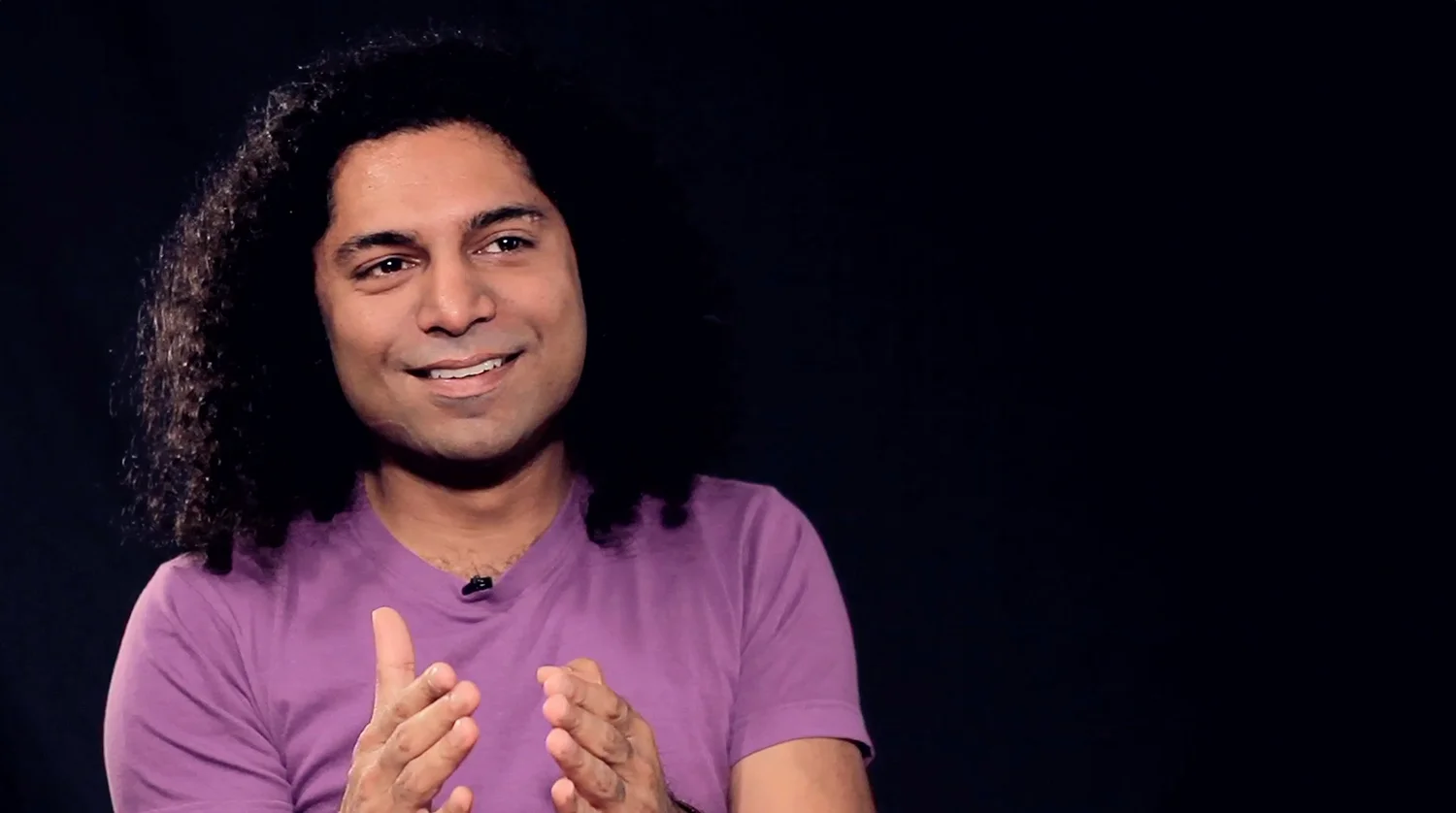
In Chapter 16 of 16 of his 2009 interview with Capture Your Flag host Erik Michielsen, "Start With Why" author Simon Sinek shares why passion is a result and not an action. Finding one's passion requires creating a process to make it actionable. Sinek shares why the first step is to identify what you love and then to continue to enable this root element through action.

Simon Sinek is a trained ethnographer who applies his curiosity around why people do what they do to teach leaders and companies how to inspire people. He is the author of "Start With Why: How Great Leaders Inspire Everyone to Take Action". Sinek holds a BA degree in cultural anthropology from Brandeis University.

Transcript

Erik Michielsen: What are your thoughts and what is your approach in finding and building upon passions?

Simon Sinek: Passion is not an actionable word. It is correct that those who do what they are passionate about do better, but it is not helpful advice.  The question is where does passion come from?  Passion is a result.  Passion is an energy.  Passion is the feeling you have when you are engaged in something you love.  Passion is the feeling you have when you would probably do this for free and you can't believe someone pays you for it.  We mistake that passion is something we do in our private lives but it shouldn't be done in our careers.  I'm a firm believer in you are who you are and anyone who says they are different at home than they are at work then in one of those two places you are lying.  The goal is to make everything you do at home at work something you are excited to do.  So how do you find the thing that you are excited to do?  It is easier than you think.  What are the things you would do for free?  What do you do when nobody tells you to do them? How can you recreate that feeling and be paid for it? I'm very involved in the art world.  I love to go to museums and galleries and I love to go see dances and performances because I want to see how others are interpreting the world.  That inspires me.  New ideas, new thoughts, new ways of looking at the world are things that interest me, privately, and I seek it out and pay money for it.  So, does that mean I have to have a career in the arts?  No.  That means I have to have a career where new ideas are explored, where people are experimenting and trying things out and I have to explore new ideas and try things out and I'm just as excited to go to work each day as I am to go do something on a Saturday night.  The idea of finding your passion is ironically simple. You should be doing something you love sometime. What is the stuff that you enjoy and what is the stuff that you love?  Who are the people you love and what do they all have in common?  

How to Write a Blog Relevant to Hollywood Media Executives - Caroline Giegerich

In Chapter 10 of 13, Caroline Giegerich starts her Daily Marauder blog is born to aggregate digital media news and information in daily digest form for Hollywood Executives and confronts challenge blogging early morning and evenings while working full-time at HBO.

What Working at HBO Teaches About Media Business Models - Caroline Giegerich

In Chapter 9 of 13, working at HBO teaches digital marketer Caroline Giegerich the difference between advertising-supported broadcast network and subscription cable network and the challenges associated with developing a subscription-model friendly digital media business strategy.

How to Apply Philosophy Education to a Business Job - Caroline Giegerich

In Chapter 7 of 13, Brown University graduate Caroline Giegerich learns to apply her classic education in philosophy and pre-med to modern digital media roles at HBO and the Los Angeles Times.  Giegerich finds her philosophy Logic education especially valuable as she deconstructs arguments and works through business problems in sales and business development.

How to Turn Direct Marketing Sales into a Networking Tool - Caroline Giegerich

In Chapter 5 of 13, Caroline Giegerich graduates Brown University and moves to New York City to begin her career in marketing.  Giegerich first secures a sales job in direct marketing to get exposure to ad campaigns and event planning. Through this experience, works toward her goal to meet as many people as possible across the New York City business and arts community. Over time, the new skills and relationships to open additional doors and opportunities in media and publishing.  

How Travel to Italy Helped Reset Career Plans - Caroline Giegerich

In Chapter 4 of 13, Caroline Giegerich unexpectedly finds medical school an unappealing career option after a hospital internship.  Learning the study of science does not necessarily translate to a practical medical career.  Upon graduating from Brown University, Giegerich finds restitution and catharsis on a trip to Bologna, Italy.  Ultimately, she resets and returns to New York for her next chapter, an entry-level job in direct marketing sales. 

What Duke MBA Learns Working at Goldman Sachs - Phil McKenzie

In Chapter 4 of 13, Goldman Sachs teaches Phil McKenzie attention to detail.  More specifically, McKenzie learns to define and execute rigid, shortcut free, operational procedures to maintain a high performance level in his trading floor environment.  Phil McKenzie graduated from Howard University and earned an MBA from the Duke University Fuqua School of Business.  Before starting FREE DMC and the Influencer Conference, McKenzie worked for eight years in sales and trading at Goldman Sachs.

How Goldman Sachs Trading Job Empowers Entrepreneur - Phil McKenzie

In Chapter 3 of 13, as a Goldman Sachs trader, Phil McKenzie shares how he learned to deal with chaos and, more importantly, build upon this experience in approaching balance as a start-up entrepreneur in publishing marketplace.  McKenzie graduated from Howard University and earned an MBA from the Duke University Fuqua School of Business.  Before starting FREE DMC and the Influencer Conference, McKenzie worked for eight years in sales and trading at Goldman Sachs.

Leaving Goldman Sachs Banking for Philanthropy and Arts Job - Phil McKenzie

In Chapter 2 of 13, Phil McKenzie departs his Goldman Sachs trading role to join a Brooklyn non-profit.  There, he builds start-up publishing company Free Magazine, catered to modern professionals - Renaissance men - in arts, philanthropy, music, film, and current affairs.  McKenzie graduated from Howard University and earned an MBA from the Duke University Fuqua School of Business.  Before starting FREE DMC and the Influencer Conference, McKenzie worked for eight years in sales and trading at Goldman Sachs.

How a Winery Created an Optimistic, Innovative Culture - Patty Green

In Chapter 7 of 7, Oregon winemaker Patty Green shares how staying positive while managing change allows her to be opportunistic.  Green promotes a creative work culture that embraces, not shuns, change.  She experiments with business partners, focusing evolving relationships.  All the while, Green diversifies her thinking while maintaining a consistent winemaking style.  A more positive personal and professional outlook results.

How Consistent Wine Style Offsets Vintage Variability - Patty Green

In Chapter 6 of 7, Oregon winemaker Patricia Green shares how she keeps her consistent style amidst  vintage variance. This seamless approach not only provides her wines a marketing and branding platform, but also in creates a unified team and partner culture that works together as a family.

How Winemaker Has Learned to Make Exceptional Pinot Noir - Patty Green

In Chapter 5 of 7 of her 2009 Capture Your Flag interview with host Erik Michielsen, Willamette Valley winemaker Patty Green discusses how her style has evolved through experience.  She shares how winemaking style develops over repetition.  Progressively, she has learned to understand what to remove from the process and what to keep year over year within a narrowly defined harvest window. Green reflects on the simplicity presented by the winemaking process and the complexity presented by honing winemaking style year over year. This style develops over selective farming with significant focus on time management and prioritization, as all decision-making for each vintage comes down to a very narrowly defined harvest window.  Green owns Patricia Green Cellars in Newberg, Oregon. 

How Richard Sommer Started Oregon Wine Industry in 1961 - Patty Green

In Chapter 4 of 7, Willamette Valley winemaker Patty Green discusses her mentor, Richard Sommer, an Oregon winemaking visionary, pioneer, and Hillcrest Vineyard founder.  Sommer provided then-novice winemaker Green non-traditional mentoring and support during her late-80s Hillcrest tenure. Sommer, who passed away the afternoon of this interview, filmed July 28th, 2009, influenced many by helping others, embracing nature, and building Oregon's wine vinifera - Old World wine grape focus - from nothing starting with a 1961 Umpqua Valley planting.

How Winemaker Builds Loyal Employee and Farmer Bonds - Patty Green

In Chapter 3 of 7, Oregon winemaker Patty Green finds full overlap between her professional and personal pursuits.  As a result, employee accountability and fit become even more important. She highlights the importance of relationships and how this played into all Torii Mor employees following her to Patricia Green Cellars along with her farming partners.

How Pinot Noir Winemaker Learned Sales and Operations - Patty Green

In Chapter 2 of 7, Willamette Valley, Oregon winemaker Patty Green learns operations skills by producing 20,000 cases in her first vintage at Hillcrest Vineyard (Over twice the volume of Patricia Green Cellars today). Later, upon joining Torii Mor Winery in 1993, Green's responsibilities expand beyond operations into marketing and sales.

Planning Corporate and Public Interest Law Careers - Julia Green

In Chapter 2 of 9, Julia Green reflects on her Georgetown Law School experience.  While there, Gatto remembers sharing an uncertainty toward career and purpose with her classmates and peers.  Hiring companies present lucrative opportunities and students, unfamiliar about goals with career planning, accepting them not seeing alternative opportunities, especially given student loan obligations. Green highlights the benefit attending law school immediately upon college graduation, namely having a law degree by age 25. She also highlights the recruiting dichotomy between corporate law and public interest law and the necessary initiative required to push beyond the corporate recruiting marketing and promotion and into exploring public interest opportunities.